Korean Kimchi Soup Recipe
I still remember the first time I made this Korean Kimchi Soup Recipe on a rainy evening – the house smelled like a cozy noodle shop and my kitchen felt instantly warmer. I come back to this bowl when I want something honest and spicy, something that tastes like time spent fermenting and a family recipe handed down in spirit. This soup is bold but easy, which is why I reach for it on weeknights and when friends drop by unexpectedly. If you love deep, tangy heat and silky tofu, the Korean Kimchi Soup Recipe will probably become a fast favorite.
How This Recipe Became My Rainy-Day Favorite
One late autumn night, when the wind rattled the windows and I had little more than a jar of vintage kimchi and some pork in the fridge, I threw a pot together almost on a dare. The first spoonful was smoky, bracing, and oddly familiar – like a hug you did not know you needed. I remember the precise sound of the onions sizzling and the bright sting of ginger and garlic blooming in the pan. The kimchi softened and released that fermented tang that made the broth hum, and the tofu soothed the spice with a gentle satiny presence. That night I learned the power of simple ingredients treated with patience, and I started writing notes on small changes – a touch more gochujang here, a splash of fish sauce there. Over the years those little edits turned into my go-to Korean Kimchi Soup Recipe, the one I make when I want comfort that’s not saccharine but honest and complex.
The Ingredients That Make It Sing
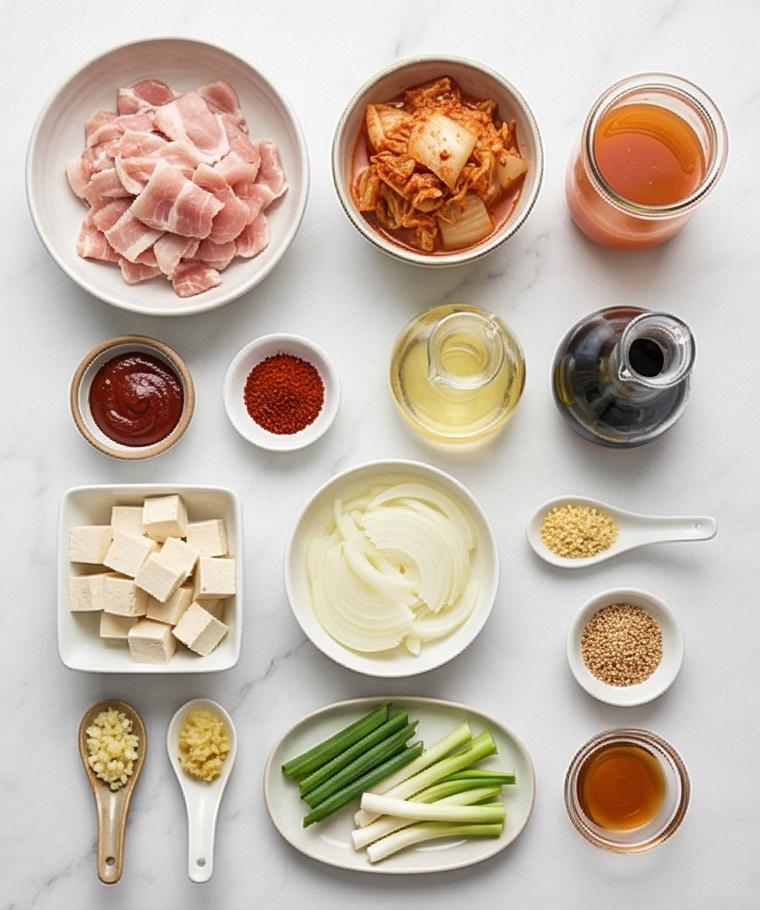
- Neutral oil: Provides a clean medium for searing pork – can use vegetable or canola oil; avoid olive oil for high-heat searing.
- Pork belly or shoulder: Adds savory richness and mouthfeel – substitute with thin-sliced beef or extra-firm tofu for vegetarian swaps.
- Kimchi (solids): The fermented heart – choose well-fermented napa kimchi; milder kimchi gives a gentler tang.
- Gochujang and gochugaru: Provide spicy, savory depth – adjust to taste or use more gochugaru for texture.
- Stock, soy, fish sauce: Build the umami base – use anchovy or chicken stock, or vegetable stock to keep it vegetarian.
Essential Kitchen Tools and Why They Matter
Start with a short list to keep the flow smooth. The right tools speed things up and make textures more reliable.
- Heavy, wide cooking vessel: A heavy pan or Dutch oven gives even heat for searing and simmering; a wide surface helps the pork caramelize.
- Sharp knife and cutting board: Thin, even slices of pork and kimchi assure uniform cooking; a bench scraper helps transfer ingredients.
- Ladle and wooden spoon: For gentle stirring so tofu stays intact and for scraping fond when deglazing.
- Fine grater or microplane: For fresh ginger so it integrates without fibrous bits – a small box grater is an okay substitute.
- Measuring spoons/cups and a heatproof bowl: For accurate seasoning and cooling or holding reserved kimchi juice.
Step-by-Step Preparation Guide
Step 1: Sear the pork and soften the onion
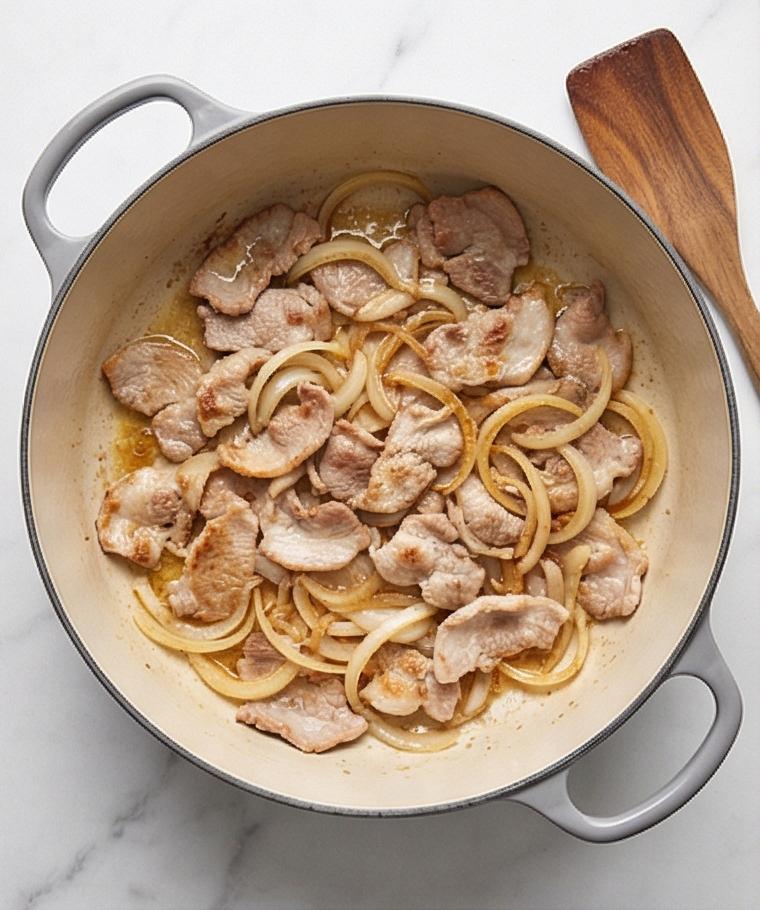
Heat a tablespoon of neutral oil in a heavy, wide cooking vessel and add the thinly sliced pork in a single even layer. Cook the meat until it loses its raw pink color and the edges begin to caramelize – look for small bronzed edges and glossy rendered fat pooling at the base; add the thinly sliced yellow onion and continue cooking until the onion is translucent and just beginning to soften. The resulting mixture should read as warm bronze ribbons of pork punctuated by soft, glassy onion strands, with fat rendered but not greasy; transfer the finished sear back onto the cooking vessel and set the scene for the next stage.
Step 2: Bloom aromatics and fold in the kimchi
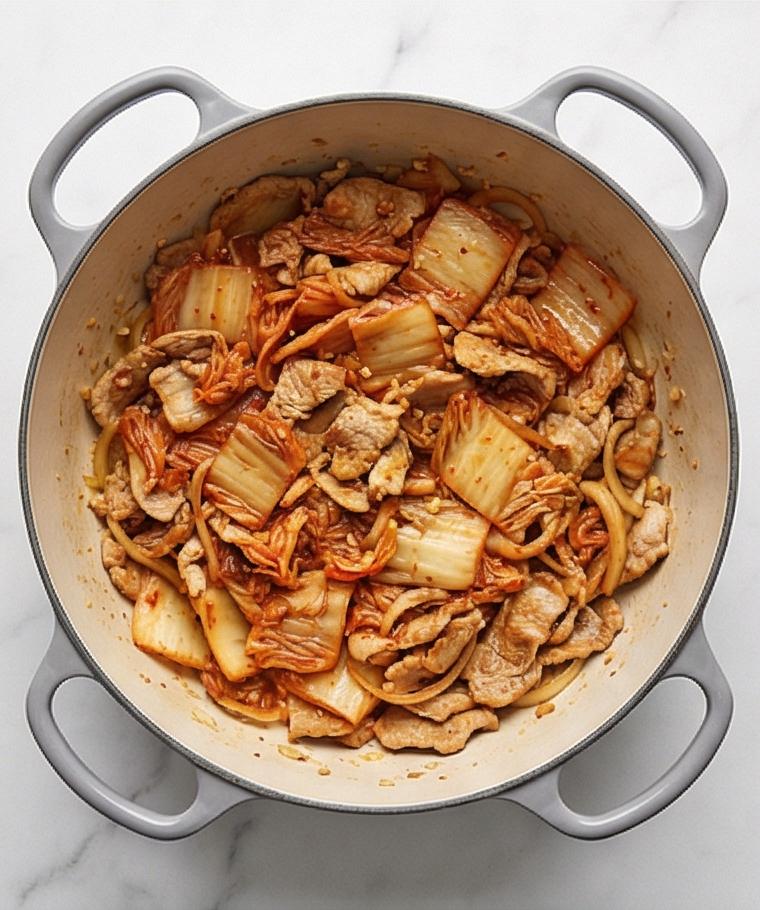
Lower the heat and add the minced garlic and finely grated ginger to the pork-and-onion mix, stirring constantly until fragrant but not browned – the mixture should smell lively and sharp. Immediately fold in the roughly chopped, well‑fermented napa kimchi (solids only) and continue to cook until the kimchi softens, its edges slightly wilted and showing hints of deeper, roasted red color. At this point the pan holds a textured, layered medley: tender pork pieces, softened strands of onion, and kimchi that has relaxed into the mix, syrupy at the edges and releasing a savory umami perfume.
Step 3: Build the spicy paste and toast the pepper
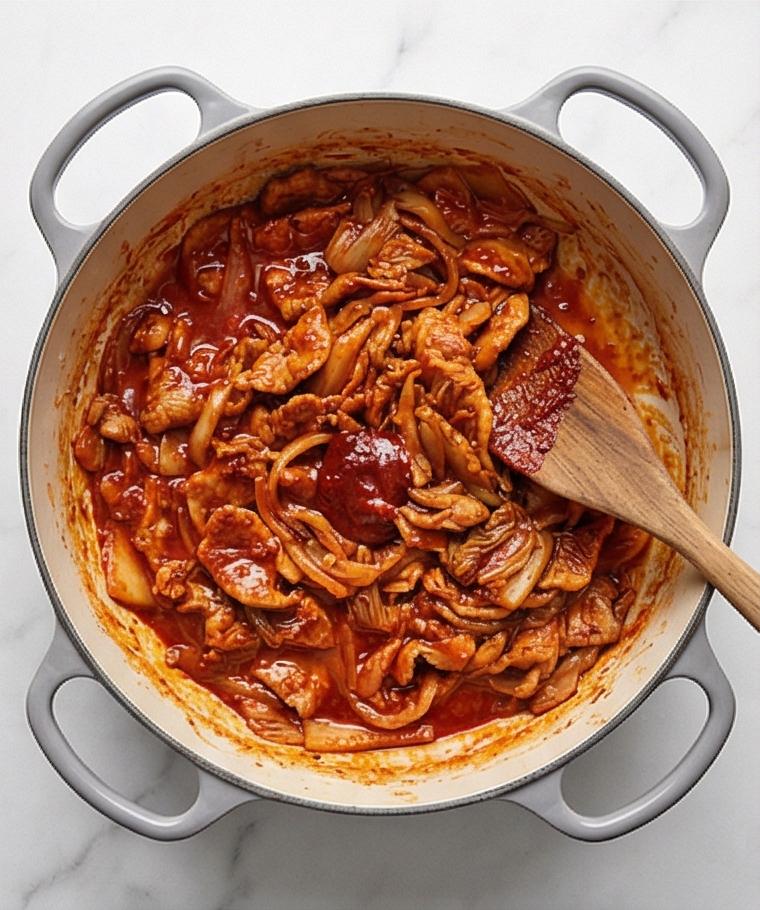
Reduce heat to medium-low and spoon in the gochujang, sprinkle the gochugaru and sugar, stirring vigorously so the pork–kimchi mixture becomes evenly coated in a thick, glossy red paste. Keep the motion steady for about a minute so the paste dissolves and toasts lightly against the meat and vegetables – the surface should look cohesive and paste-like, with the chili oil separating slightly at the edges and the whole pan taking on a unified deep-red sheen. This is the concentrated flavor core of the soup, sticky and aromatic.
Step 4: Add stock and kimchi brine, bring to a gentle boil and simmer
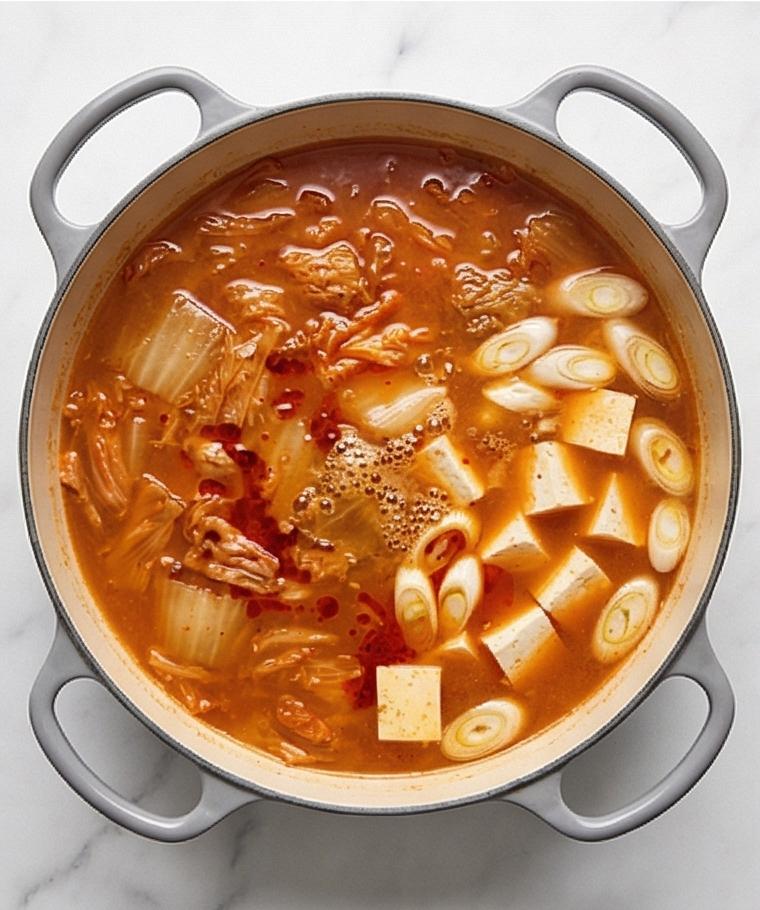
Pour in the room‑temperature stock and the reserved kimchi juice, scraping any fond from the bottom so those brown bits dissolve into the broth. Bring the mixture up to a steady gentle boil (visible consistent bubbling across the surface) and add the soy sauce and fish sauce; then reduce to a low simmer and cover partially, letting the broth mellow for 15 to 20 minutes until the kimchi is very tender and the liquid tastes deep and balanced. The pot at this stage should show a translucent reddish-orange broth studded with softened kimchi and floating droplets of chili oil – the texture has moved from paste to a rich, soupy glaze.
Step 5: Gently warm tofu and finish cooking
Carefully slide the drained tofu cubes into the simmering broth along with the white parts of the sliced green onions, stirring with a gentle hand so the tofu remains intact. Simmer for a few minutes until the tofu has absorbed some of the broth and warmed through; taste and adjust seasoning with small splashes of soy or fish sauce if needed, or dilute slightly with hot stock or water if the soup feels too intense. The soup will now display soft, satiny tofu, tender kimchi and thin strips of pork suspended in a silky, savory-red broth.
Step 6: Final seasoning, garnish and serve
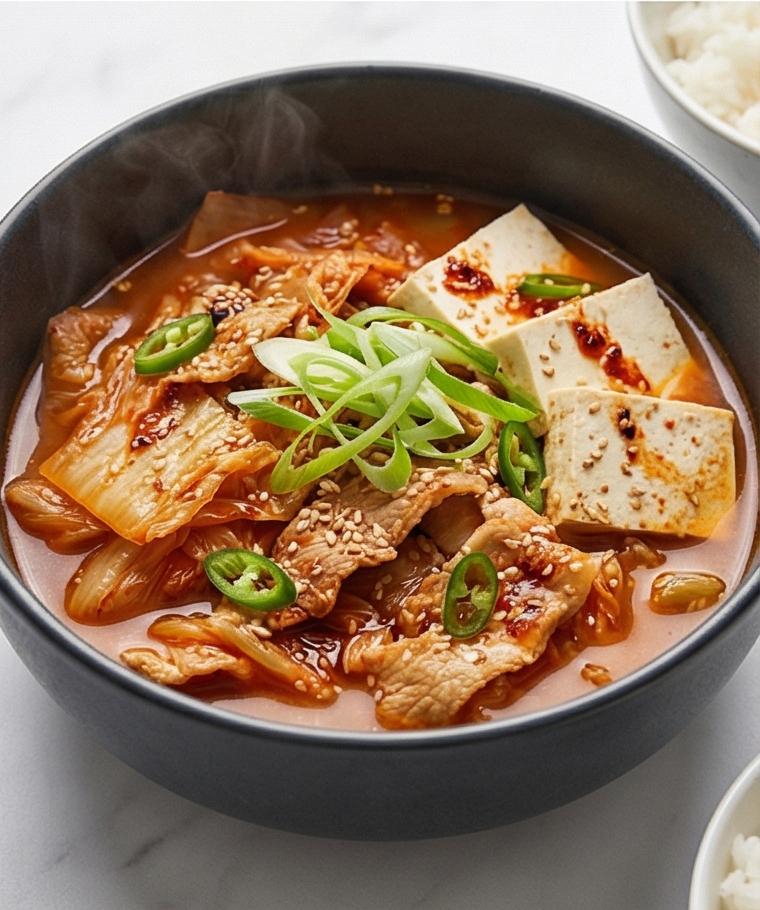
Turn off the heat and finish with a teaspoon of toasted sesame oil and a grind of black pepper, then fold in the green parts of the scallions. Ladle the steaming soup into a deep, wide-rimmed matte bowl and garnish with toasted sesame seeds and thin slices of fresh green chili if desired; serve immediately alongside a small bowl of hot short-grain rice. The final bowl should feel invitingly rustic yet refined: glossy chili oil rims, tender tofu cubes, curled strips of pork and bright scallion ribbons resting on a luminous, warm broth.
Making It Your Own
I experimented by swapping the pork for shiitake mushrooms and smoked tofu one winter – the results were earthy and satisfying. Try a vegetarian version with anchovy-free broth and extra mushrooms; it keeps the savory backbone while cutting the pork. For a heartier winter stew, add potato cubes or rice cakes in step 4 and simmer until tender. When summer arrives, lighten it with more green onion tops and a squeeze of lime right before serving.
How to Serve
If I were hosting, I would ladle generous bowls of Korean Kimchi Soup Recipe into wide bowls and place small plates of banchan – pickled cucumbers, seasoned spinach – around the table. Offer hot short-grain rice so guests can spoon or add rice to their bowl. For larger groups, double the recipe and simmer in a large pot, keeping extra stock warm on the side for topping up. For a low-key meal for two, divide into two bowls and present with steamed rice and crisp kimchi on the side.
Storage and Reheating Tips
Leftovers deepen in flavor overnight as the kimchi continues to mellow in the broth. Store cooled soup in an airtight container in the refrigerator and consume within 3 to 4 days.
To reheat, warm gently on the stovetop over medium-low heat so the tofu does not break up and the flavors re-integrate – add a splash of hot stock or water if it seems too concentrated. Avoid microwaving at high power which can make the tofu rubbery.
Common Mistakes and How to Avoid Them
One common slip is overheating the garlic or ginger until they burn – keep the heat low when you bloom aromatics so they stay fragrant. Another is adding too much kimchi juice or soy sauce at once – taste as you go and balance acidity and salt gradually. If the soup turns out too salty or intense, dilute with hot stock or a little water and re-season carefully. Enjoy the trial and error – each batch teaches you more about your preferences.
Final Thoughts
Give the Korean Kimchi Soup Recipe a try this week – it rewards curiosity and small adjustments. Once you know the basic proportions, you can make it spicier, milder, meaty, or vegetarian and still get a bowl that feels like home.
Frequently Asked Questions
- Can I make the Korean Kimchi Soup Recipe vegetarian? Yes – use vegetable stock, skip the fish sauce and anchovy stock, and increase mushrooms or firm tofu for umami.
- How spicy will this dish be? It is moderately spicy by default – adjust gochujang and gochugaru to taste to dial heat up or down.
- Can I use fresh kimchi instead of well-fermented kimchi? Fresh kimchi is fine but the flavor will be brighter and less tangy; let it sit a day or two for more depth if possible.
- How long does the soup keep in the fridge? Store for 3 to 4 days in an airtight container; flavors deepen but consume within that window for best texture.
- Can I freeze this soup? Yes – freeze in portions but note that tofu texture softens after freezing; reheat gently and stir well.
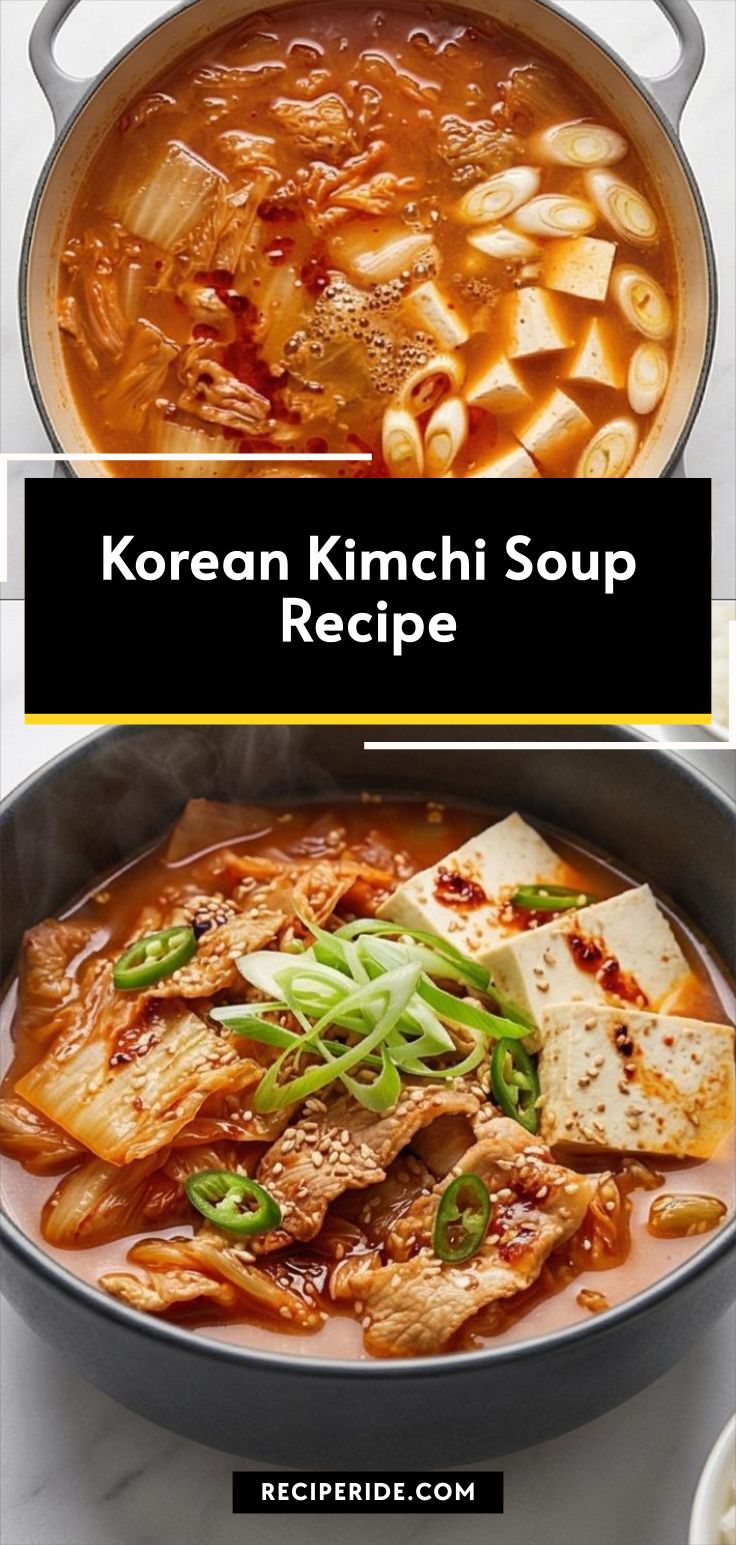
Korean Kimchi Soup Recipe
Make Korean Kimchi Soup Recipe tonight - tangy, spicy, and comforting with pork, tofu, and rich kimchi broth.
Ingredients
Instructions
Step 1: Sear the pork and soften the onion
Heat a tablespoon of neutral oil in a heavy, wide cooking vessel and add the thinly sliced pork in a single even layer. Cook the meat until it loses its raw pink color and the edges begin to caramelize — look for small bronzed edges and glossy rendered fat pooling at the base; add the thinly sliced yellow onion and continue cooking until the onion is translucent and just beginning to soften. The resulting mixture should read as warm bronze ribbons of pork punctuated by soft, glassy onion strands, with fat rendered but not greasy; transfer the finished sear back onto the cooking vessel and set the scene for the next stage.
Step 2: Bloom aromatics and fold in the kimchi
Lower the heat and add the minced garlic and finely grated ginger to the pork-and-onion mix, stirring constantly until fragrant but not browned — the mixture should smell lively and sharp. Immediately fold in the roughly chopped, well‑fermented napa kimchi (solids only) and continue to cook until the kimchi softens, its edges slightly wilted and showing hints of deeper, roasted red color. At this point the pan holds a textured, layered medley: tender pork pieces, softened strands of onion, and kimchi that has relaxed into the mix, syrupy at the edges and releasing a savory umami perfume.
Step 3: Build the spicy paste and toast the pepper
Reduce heat to medium-low and spoon in the gochujang, sprinkle the gochugaru and sugar, stirring vigorously so the pork–kimchi mixture becomes evenly coated in a thick, glossy red paste. Keep the motion steady for about a minute so the paste dissolves and toasts lightly against the meat and vegetables — the surface should look cohesive and paste-like, with the chili oil separating slightly at the edges and the whole pan taking on a unified deep-red sheen. This is the concentrated flavor core of the soup, sticky and aromatic.
Step 4: Add stock and kimchi brine, bring to a gentle boil and simmer
Pour in the room‑temperature stock and the reserved kimchi juice, scraping any fond from the bottom so those brown bits dissolve into the broth. Bring the mixture up to a steady gentle boil (visible consistent bubbling across the surface) and add the soy sauce and fish sauce; then reduce to a low simmer and cover partially, letting the broth mellow for 15 to 20 minutes until the kimchi is very tender and the liquid tastes deep and balanced. The pot at this stage should show a translucent reddish-orange broth studded with softened kimchi and floating droplets of chili oil — the texture has moved from paste to a rich, soupy glaze.
Step 5: Gently warm tofu and finish cooking
Carefully slide the drained tofu cubes into the simmering broth along with the white parts of the sliced green onions, stirring with a gentle hand so the tofu remains intact. Simmer for a few minutes until the tofu has absorbed some of the broth and warmed through; taste and adjust seasoning with small splashes of soy or fish sauce if needed, or dilute slightly with hot stock or water if the soup feels too intense. The soup will now display soft, satiny tofu, tender kimchi and thin strips of pork suspended in a silky, savory-red broth.
Step 6: Final seasoning, garnish and serve
Turn off the heat and finish with a teaspoon of toasted sesame oil and a grind of black pepper, then fold in the green parts of the scallions. Ladle the steaming soup into a deep, wide-rimmed matte bowl and garnish with toasted sesame seeds and thin slices of fresh green chili if desired; serve immediately alongside a small bowl of hot short-grain rice. The final bowl should feel invitingly rustic yet refined: glossy chili oil rims, tender tofu cubes, curled strips of pork and bright scallion ribbons resting on a luminous, warm broth.
Notes
- Taste and adjust seasoning gradually - add soy or fish sauce in small amounts.
- If soup is too intense, dilute with hot stock or water and re-season.
- Use well-fermented kimchi for deeper flavor; fresh kimchi will be brighter.
- Warm leftover soup slowly to preserve tofu texture.
- Substitute mushrooms for pork to make a vegetarian version.