I still remember the first time I roasted wedges instead of fries; the kitchen filled with warm, toasty perfume and everyone kept stealing extra pieces. I make the Baked Potato Wedge Recipe whenever I want something comforting but a little elevated, and it never fails to disappear at the table. This Baked Potato Wedge Recipe balances a crispy, seasoned crust with a fluffy center, and the parmesan perk really brightens each bite. It’s an easy routine—simple prep, straightforward roasting—yet it feels special enough for guests.
How This Recipe Became My Rainy-Day Favorite
It was a cold, drizzly Saturday when I first tested this Baked Potato Wedge Recipe for friends who’d been hiking all morning. I remember the kitchen lights low, the oven door opening and sending a wave of fragrant steam across the counter. The wedges came out crackling, with little browned pockets of parmesan and paprika at the tips. My friend closed her eyes mid-bite and said, “This tastes like a warm blanket.” Cooking them felt like stitching together tiny comforts: the crunch under the teeth, the pillowy center, the bright parsley on top. That afternoon made this recipe more than a side dish; it became a way to share warmth.
Why These Ingredients Matter
- Russet Potatoes: The starchy, high-amylose texture gives a fluffy interior and a crisp exterior when roasted. Choose firm, unbruised potatoes; Yukon Golds can work if you prefer a creamier center.
- Parmesan Cheese: Adds savory depth and a little crust when it browns. Substitute Pecorino or finely grated Asiago if needed.
- Olive Oil: Coats and crisps the wedges while carrying the spices. Use a mild extra-virgin or a neutral oil for higher smoke points.
- Salt and Spices: Salt, garlic powder, onion powder, paprika, and black pepper build the base flavor. Smoked paprika or cayenne are fun swaps for heat.
- Parsley: A bright finish that lifts the dish. Swap for chives or cilantro for a different note.
Essential Kitchen Tools
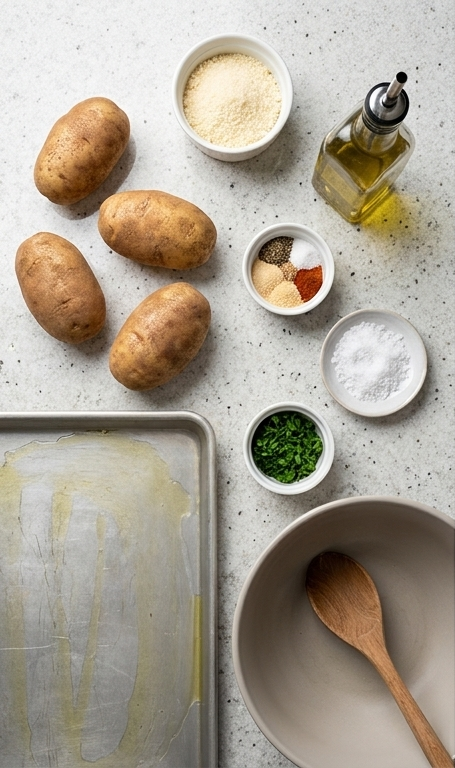
A few simple tools make this Baked Potato Wedge Recipe effortless and consistent. A roomy baking sheet ensures the wedges roast instead of steam, and a thin metal spatula helps flip them without breaking the crisp crust. A large mixing bowl gives you space to toss wedges evenly, and a microplane for the parmesan keeps the cheese light.
- Large rectangular baking sheet: Promotes airflow and even browning; line with parchment if you want easier cleanup.
- Large mixing bowl: For tossing oil and spices without mess.
- Microplane or fine grater: Freshly grated parmesan melts and crisps better than pre-grated.
- Thin metal spatula: Flips wedges cleanly without crushing them.
- Kitchen towel or paper towels: Essential if you soak the wedges; they must be dry before oil.
Step-by-Step Preparation Guide
Step 1: Preheat and prepare the sheet
Preheat the oven to 425°F and brush a large rectangular baking sheet lightly with olive oil so it sits ready and glistening on the surface. While the oven warms, have a small glass jar of olive oil with a narrow spout, a tiny white ramekin of freshly grated parmesan, and small glass spice jars for the salt, garlic powder, onion powder, paprika, and black pepper assembled nearby — everything neat and accessible on the Luna Pearl granite.
Step 2: Quarter the potatoes and (optionally) soak
Cut each scrubbed russet potato in half lengthwise, then cut each half lengthwise into quarters so each potato yields 8 wedges. If you want extra-crispy exteriors and a pillowy interior, soak the wedges in cold water for about 30 minutes, then drain and pat them very dry on a clean kitchen towel. Patting completely dry is key; the dry, fluffed surface takes on oil and seasoning far better.
Step 3: Make the spice-parmesan mix and toss the wedges
In a small bowl, combine two tablespoons of the grated parmesan with the salt, garlic powder, onion powder, paprika, and black pepper, stirring until evenly blended. In a large mixing bowl toss the dried potato wedges with about three tablespoons of olive oil until each wedge shows a thin glossy coating, then sprinkle the spice-parmesan blend over the potatoes and toss gently until every wedge is evenly speckled and lightly coated. Transfer the seasoned wedges to the greased rectangular baking sheet and arrange each piece cut-side down in a single layer, spacing them so air circulates for an even roast.
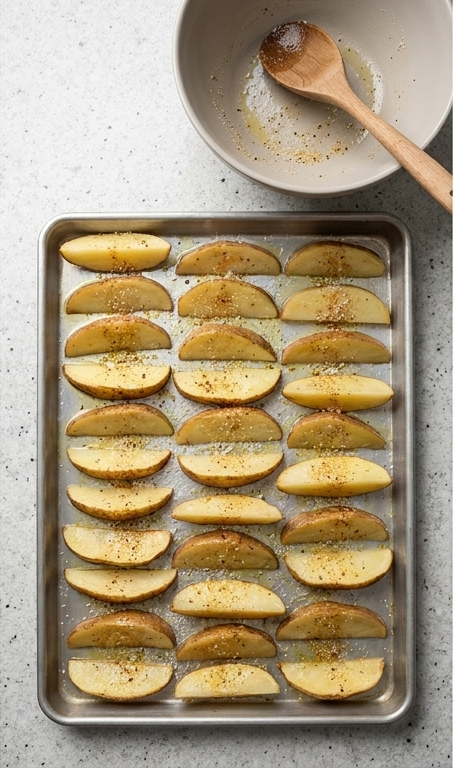
Step 4: Roast and flip for even color and crispness
Roast the wedges on the baking sheet for 20 to 25 minutes until the undersides are turning golden and the edges begin to caramelize. Remove the sheet, flip each wedge to the other cut side with a spatula so the opposite faces can brown, and return the same rectangular sheet to the oven for another 10 to 15 minutes, watching for deep golden-brown, blistered edges, and an overall crunchy exterior with a soft, steaming interior.
Step 5: Finish, season, and serve warmly
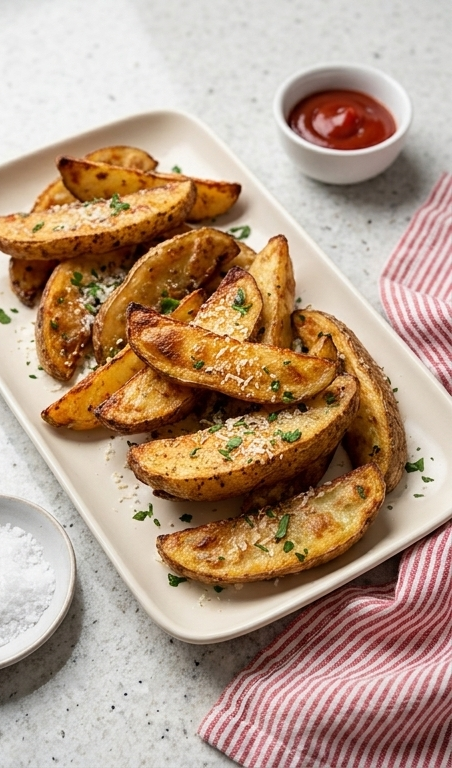
Once roasted to your preferred crispiness, transfer the wedges back to the same rectangular tray or to a matching rectangular serving platter to preserve the geometric presentation and temperature. Sprinkle the remaining grated parmesan over the hot wedges and scatter the chopped parsley for a bright herb contrast. Serve immediately with a small white dipping bowl of ketchup and a little plate of flaky sea salt nearby for finishing touches — the wedges should glisten with a savory crust and show coarse seasoning speckles across their warm, rustic surfaces.
Making It Your Own
Try these variations as mini experiments. For a smoky twist, swap regular paprika for smoked paprika and add a pinch of cumin. If you want a tangy, baked-parmesan crust, toss the wedges with a tablespoon of lemon zest and a splash of white wine vinegar before roasting.
For a vegetarian punch, sprinkle nutritional yeast with the parmesan to boost umami and make the recipe vegan by replacing parmesan with a firm, savory vegan cheese. In winter, add a dusting of finely chopped rosemary; in summer, finish with lemon and a handful of chopped basil. For more heat, add cayenne or crushed red pepper to the spice mix.
If you need gluten-free or lower-fat swaps, use an oil sprayer to reduce oil and leave out the cheese or choose a dairy-free alternative. Each tweak changes the personality of the Baked Potato Wedge Recipe while keeping the same satisfying base.
How to Serve
If I am hosting, I place the wedges on a warm rectangular platter and keep extra flaky salt and dipping sauces in small bowls. For a casual dinner, serve with ketchup and an herby aioli; for something more composed, offer a yogurt-tahini dip and a crisp green salad. To feed a crowd, double the batch and roast on two sheets, rotating them halfway through for even color.
For portioning, plan about 3 to 4 wedges per person as a side, or 6 to 8 wedges if people will graze. Garnish with extra parmesan and a scattering of parsley, and serve immediately; the wedges are at their peak texture right out of the oven.
Storage and Reheating Tips
Leftover wedges keep well in the fridge for up to 3 days if stored in an airtight container. Let them cool to room temperature first to avoid trapping steam. When you reheat, use a hot oven or a skillet to revive the crispness rather than the microwave.
To re-crisp, spread wedges on a baking sheet and warm in a 400°F oven for 8 to 12 minutes, or pan-fry briefly in a little oil over medium-high heat. If you soaked the potatoes originally, you may notice a small texture change after refrigeration; pan-frying helps recover that crunch.
Common Slipups and How to Fix Them
The biggest mistake is overcrowding the sheet; wedges steam instead of roast. Give each piece room and use a second sheet if needed. Another common issue is not drying after an optional soak; damp wedges will not crisp. Pat them completely dry.
If your wedges brown too quickly but stay firm inside, reduce oven temperature slightly and give them a bit more time. If they turn out bland, finish with flaky sea salt and extra parmesan so the surface flavor pops.
Ready to Try It?
If you love a simple, satisfying side that still feels a little special, give this Baked Potato Wedge Recipe a go. Tweak the spices, play with the finishing herbs, and make it yours; I promise it will be one of those dishes you call on again and again.
Frequently Asked Questions.
- Q: Can I use other potatoes? A: Yes, Yukon Gold or red potatoes work, but russets give the crispiest contrast between crust and interior.
- Q: Do I have to soak the potatoes? A: No, soaking is optional but recommended for extra-crispy results; always dry thoroughly if you soak.
- Q: Can I make these ahead? A: You can par-roast and finish before serving, or reheat fully in a hot oven or skillet for best texture.
- Q: How do I make them vegan? A: Swap parmesan for nutritional yeast or a vegan cheese and use a neutral oil.
- Q: What dips pair best? A: Ketchup, garlic aioli, yogurt-tahini, or spicy sriracha mayo all complement these wedges.
Baked Potato Wedge Recipe
Make a crispy Baked Potato Wedge Recipe with parmesan, paprika, and parsley for an easy, crowd-pleasing side.
Ingredients
Instructions
Step 1: Preheat and prepare the sheet
Preheat the oven to 425°F and brush a large rectangular baking sheet lightly with olive oil so it sits ready and glistening on the surface. While the oven warms, have a small glass jar of olive oil with a narrow spout, a tiny white ramekin of freshly grated parmesan, and small glass spice jars for the salt, garlic powder, onion powder, paprika, and black pepper assembled nearby — everything neat and accessible on the Luna Pearl granite.
Step 2: Quarter the potatoes and (optionally) soak
Cut each scrubbed russet potato in half lengthwise, then cut each half lengthwise into quarters so each potato yields 8 wedges. If you want extra-crispy exteriors and a pillowy interior, soak the wedges in cold water for about 30 minutes, then drain and pat them very dry on a clean kitchen towel. Patting completely dry is key; the dry, fluffed surface takes on oil and seasoning far better.
Step 3: Make the spice-parmesan mix and toss the wedges
In a small bowl, combine two tablespoons of the grated parmesan with the salt, garlic powder, onion powder, paprika, and black pepper, stirring until evenly blended. In a large mixing bowl toss the dried potato wedges with about three tablespoons of olive oil until each wedge shows a thin glossy coating, then sprinkle the spice-parmesan blend over the potatoes and toss gently until every wedge is evenly speckled and lightly coated. Transfer the seasoned wedges to the greased rectangular baking sheet and arrange each piece cut-side down in a single layer, spacing them so air circulates for an even roast.
Step 4: Roast and flip for even color and crispness
Roast the wedges on the baking sheet for 20 to 25 minutes until the undersides are turning golden and the edges begin to caramelize. Remove the sheet, flip each wedge to the other cut side with a spatula so the opposite faces can brown, and return the same rectangular sheet to the oven for another 10 to 15 minutes, watching for deep golden-brown, blistered edges, and an overall crunchy exterior with a soft, steaming interior.
Step 5: Finish, season, and serve warmly
Once roasted to your preferred crispiness, transfer the wedges back to the same rectangular tray or to a matching rectangular serving platter to preserve the geometric presentation and temperature. Sprinkle the remaining grated parmesan over the hot wedges and scatter the chopped parsley for a bright herb contrast. Serve immediately with a small white dipping bowl of ketchup and a little plate of flaky sea salt nearby for finishing touches — the wedges should glisten with a savory crust and show coarse seasoning speckles across their warm, rustic surfaces.
Notes
- Soak wedges in cold water for 30 minutes for extra crispiness, then dry thoroughly.
- Pat potatoes completely dry before tossing with oil and spices to ensure a crisp crust.
- Use a roomy baking sheet and avoid crowding to prevent steaming.
- Reheat in a 400°F oven or skillet to restore crunch instead of microwaving.
- Freshly grate parmesan for the best melting and browning results.