I fell for this Gazpacho Recipe the first summer I had ripe tomatoes in the garden. It felt like a revelation to turn sun-warmed tomatoes into a chilled, bright soup that needs no stove at all. I make the Gazpacho Recipe when I want something fast, healthy, and endlessly refreshing. This version keeps things simple and honest: bread for body, olive oil for silk, and sherry vinegar for a bright lift.
How Gazpacho Became My Porch-Party Staple
One late July evening, I carried a bowl of this Gazpacho Recipe out to the porch and watched the light go gold over the neighborhood. The first spoonful was cool and unapologetically tomato-forward, with little pops of pepper and cucumber that felt like tiny fireworks. My friend closed her eyes and asked for the recipe between mouthfuls; by the end of the night everyone wanted a jar to take home. I remember the smell most vividly: a clean, vegetal sweetness, threaded with garlic and that olive oil sheen on top. It was comfort and celebration at once, a recipe that turned a small gathering into a memory. Since then I make it when the garden is generous and when I want to impress without fuss.
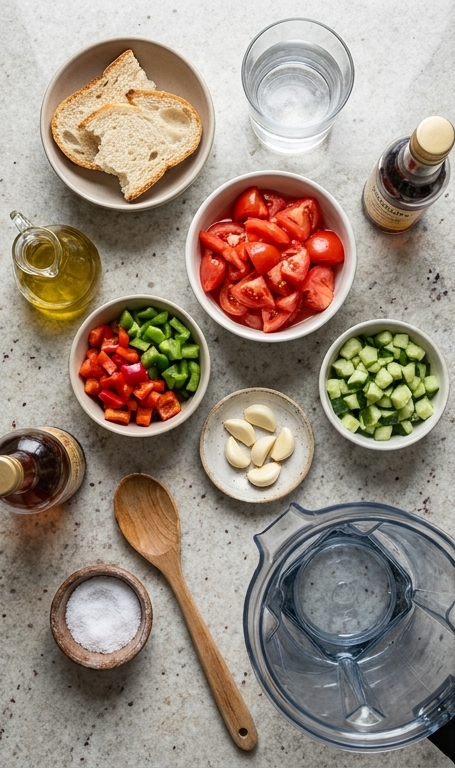
Primary Ingredients and What They Do
- Day-old Bread: Gives body and a creamy mouthfeel once soaked and blended; substitute with gluten-free bread if needed. Choose plain, stale sandwich bread without strong flavors.
- Tomatoes: The base and backbone of the flavor; use the ripest, juiciest ones you can find. Plum or vine tomatoes work well if you need a substitute.
- Bell Peppers (Red and Green): Add sweetness and color; red peppers are sweeter, green add a fresher bite. Roasted peppers can be used for a smoky twist.
- Cucumber: Brings cooling crunch and brightness; seed if you prefer a smoother texture.
- Garlic: Provides depth and aroma; adjust the amount to taste.
- Extra Virgin Olive Oil: Emulsifies the soup and gives a glossy finish; pick a fruity, high-quality oil.
- Sherry Vinegar: The acid that lifts everything; if unavailable, use sherry-style or a light red wine vinegar sparingly.
- Kosher Salt: Balances the flavors; taste and adjust at the end.
Essential Kitchen Tools
A few reliable tools make this Gazpacho Recipe effortless and help the flavors sing. A good blender or food processor is the heart of the process; it turns chunky produce and soaked bread into a silky base. If you do not have a powerful blender, a food processor will do the job in pulses.
- High-speed Blender or Food Processor: For an ultra-smooth texture; a standard blender works too if you blend in batches.
- Fine Sieve or Chinois: Strains out coarse pulp for a refined mouthfeel; skip it if you prefer a rustic texture.
- Sharp Chef’s Knife and Cutting Board: Precise chopping keeps textures consistent; a serrated knife helps with tomatoes.
- Small Bowls for Mise en Place: Keeps prepped veggies organized and speeds blending.
Step-by-Step Preparation Guide
Step 1: Tear and Soak the Bread
Tear the two slices of day-old bread into rough, bite-sized pieces and place them in a small ceramic bowl. Pour the ½ cup of cold water over the bread so every fragment is moistened, then let it sit for 10–15 minutes until the crumbs are soft and spongy. When the time is up, squeeze the soaked bread firmly with your hands over the bowl to expel all excess water until it feels compact and no longer dripping.
Step 2: Prepare the Vegetables and Aromatics
Roughly chop the tomatoes, deseed and roughly chop the red and green bell peppers, and coarsely chop the cucumber; set each in its own small bowl. Peel the garlic cloves and keep them whole. Arrange these prepped vegetables nearby so they are ready to go into the blender; this keeps the flavors bright and the textures clear for the next step.
Step 3: Blend into a Smooth Gazpacho Base
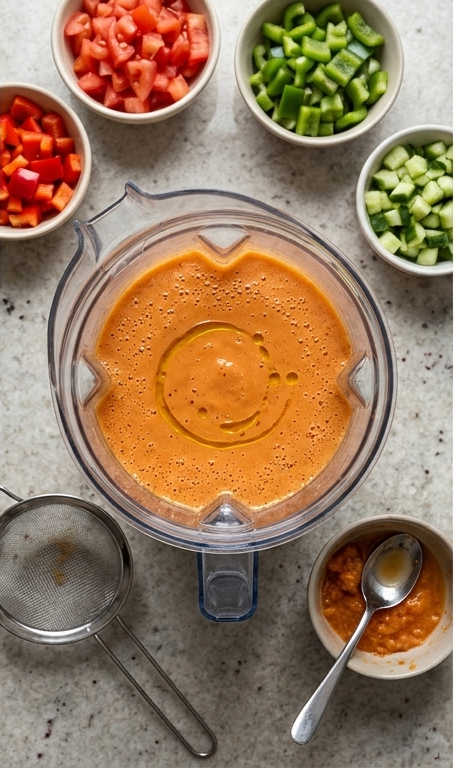
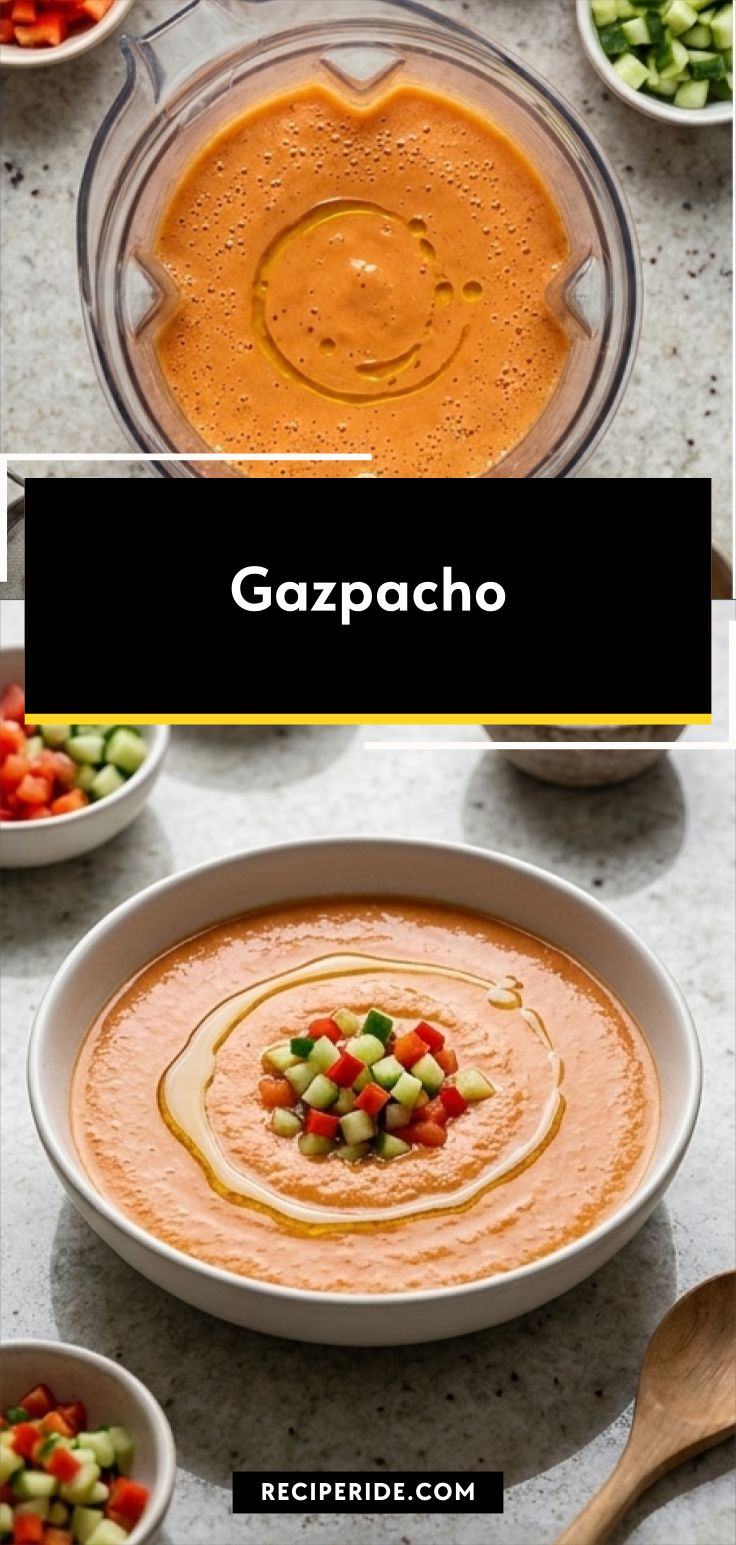
Add the squeezed bread pieces to the food processor or blender along with the chopped tomatoes, red and green peppers, cucumber, and the garlic cloves. Pulse and then blend steadily until the mixture becomes a smooth, thick orange liquid—silky with fine vegetal flecks. Pour in the ½ cup extra virgin olive oil, stir in the 2 tablespoons sherry vinegar and ½ teaspoon kosher salt, taste and adjust seasoning. This is the key visual transformation: an airy, emulsified, vividly orange gazpacho base with a glossy sheen from the oil.
Step 4: Strain and Chill the Soup
Pass the blended mixture through a fine sieve or chinois, pressing with the back of a spoon to extract as much bright, nectar-like liquid as possible; discard the coarse pulp. Transfer the strained soup into a serving bowl, cover tightly with plastic wrap, and refrigerate for at least two hours so the flavors settle and the texture cools to a silky, spoonable consistency.
Step 5: Serve Chilled with Fresh Garnish
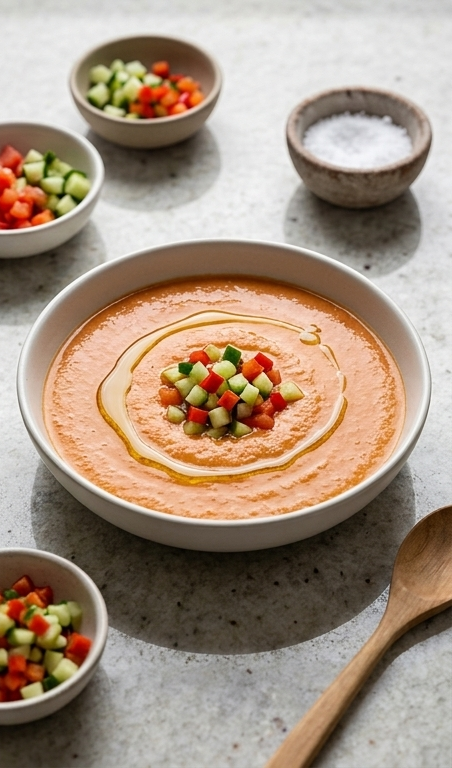
Spoon the chilled gazpacho into a shallow serving bowl, finish with a delicate drizzle of extra virgin olive oil that glistens on the surface, and scatter a small mound of finely diced tomatoes, red bell pepper, and cucumber at the center for a crunchy contrast. Add a pinch of salt in a tiny rustic bowl nearby for optional seasoning. The final plate should feel bright, smooth, and summery—creamy orange base, jewel-toned garnishes, and a soft shimmer of oil.
Making It Your Own
I like to tinker with the Gazpacho Recipe depending on what the garden offers. For a herbaceous lift I stir in chopped basil or cilantro just before serving; when late-season tomatoes are extra sweet I halve the vinegar and add a splash of lemon juice for brightness.
For a smoky, deeper flavor I add a roasted red pepper or a touch of smoked paprika, which creates a pleasing contrast to the cooling cucumber. If you need vegan or gluten-free options, swap the day-old bread for gluten-free bread or omit it and slightly increase the olive oil for body. For a heartier meal, top bowls with chopped hard-boiled egg, diced avocado, or a handful of crusty croutons.
How to Serve
Picture a casual summer dinner with friends: ladle chilled Gazpacho Recipe into shallow bowls and place small plates of garnishes down the table. Offer finely diced tomatoes, red and green peppers, cucumber, and extra olive oil so guests can customize each spoonful. If serving a crowd, multiply the base and strain in large batches; the soup holds well in the refrigerator and stays bright for a day or two.
To stretch the recipe for a buffet, serve in small glasses as a shooter appetizer topped with a tiny skewer of cucumber and pepper. For a more formal course, spoon the soup into wide, shallow bowls and finish with a precise drizzle of oil and a microherb garnish.
Storage and Reheating Tips
Gazpacho keeps best chilled in an airtight container for up to 3 days. Because it is served cold, reheating is not necessary, and doing so will lose the fresh quality that makes this Gazpacho Recipe special. Give the soup a good stir before serving because the olive oil can settle on top.
If the soup tastes slightly flat after sitting, a quick splash of sherry vinegar or a pinch of salt brightens it instantly. For longer storage, freeze small portions in airtight containers for up to one month; thaw overnight in the refrigerator and stir well before serving.
Common Mistakes and How to Avoid Them
One frequent misstep is using underripe tomatoes. That leads to a watery or dull flavor, so always pick fully ripe, fragrant fruit. Another is overblending low-quality ingredients; use fresh produce and a good olive oil to get a glossy, balanced finish.
Skipping the sieve gives a rustic texture, which is fine if that is your intent, but if you want the silky, restaurant-style mouthfeel, take the extra step to strain. Finally, underseasoning is easy to fix: taste and adjust with salt and vinegar just before chilling.
A Friendly Sendoff
This Gazpacho Recipe is one of those easy victories that tastes like summer in a bowl. I hope you make it when tomatoes are at their peak, and that it becomes a simple, reliable recipe in your warm-weather rotation. Enjoy the cool, vivid flavors and share it with friends.
Frequently Asked Questions.
- What is the best tomato for this Gazpacho Recipe? Use ripe vine or plum tomatoes for the best flavor; avoid mealy or underripe tomatoes.
- Can I make this Gazpacho Recipe ahead of time? Yes, make it up to 24 hours ahead and chill; stir and taste for a final seasoning before serving.
- Do I have to strain the soup? No, straining gives a silky texture, but leaving it unstrained makes a heartier, rustic version.
- Can I freeze Gazpacho Recipe? Yes, freeze in small portions for up to a month; thaw overnight in the fridge and stir before serving.
- Is there a substitute for sherry vinegar? Light red wine vinegar or a small splash of lemon can work, but sherry vinegar is preferred for its distinct flavor.
Gazpacho Recipe
Make Gazpacho Recipe tonight: chilled, bright tomato soup with olive oil and sherry vinegar, ready in minutes.
Ingredients
Instructions
Step 1: Tear and Soak the Bread
Tear the two slices of day-old bread into rough, bite-sized pieces and place them in a small ceramic bowl. Pour the ½ cup of cold water over the bread so every fragment is moistened, then let it sit for 10–15 minutes until the crumbs are soft and spongy. When the time is up, squeeze the soaked bread firmly with your hands over the bowl to expel all excess water until it feels compact and no longer dripping.
Step 2: Prepare the Vegetables and Aromatics
Roughly chop the tomatoes, deseed and roughly chop the red and green bell peppers, and coarsely chop the cucumber; set each in its own small bowl. Peel the garlic cloves and keep them whole. Arrange these prepped vegetables nearby so they are ready to go into the blender; this keeps the flavors bright and the textures clear for the next step.
Step 3: Blend into a Smooth Gazpacho Base
Add the squeezed bread pieces to the food processor or blender along with the chopped tomatoes, red and green peppers, cucumber, and the garlic cloves. Pulse and then blend steadily until the mixture becomes a smooth, thick orange liquid—silky with fine vegetal flecks. Pour in the ½ cup extra virgin olive oil, stir in the 2 tablespoons sherry vinegar and ½ teaspoon kosher salt, taste and adjust seasoning. This is the key visual transformation: an airy, emulsified, vividly orange gazpacho base with a glossy sheen from the oil.
Step 4: Strain and Chill the Soup
Pass the blended mixture through a fine sieve or chinois, pressing with the back of a spoon to extract as much bright, nectar-like liquid as possible; discard the coarse pulp. Transfer the strained soup into a serving bowl, cover tightly with plastic wrap, and refrigerate for at least two hours so the flavors settle and the texture cools to a silky, spoonable consistency.
Step 5: Serve Chilled with Fresh Garnish
Spoon the chilled gazpacho into a shallow serving bowl, finish with a delicate drizzle of extra virgin olive oil that glistens on the surface, and scatter a small mound of finely diced tomatoes, red bell pepper, and cucumber at the center for a crunchy contrast. Add a pinch of salt in a tiny rustic bowl nearby for optional seasoning. The final plate should feel bright, smooth, and summery—creamy orange base, jewel-toned garnishes, and a soft shimmer of oil.
Notes
- Use the ripest tomatoes you can find for the best flavor.
- Taste and adjust salt and sherry vinegar after chilling for a brighter finish.
- Strain for silky texture or skip straining for a rustic bowl.
- Substitute gluten-free bread if needed or omit bread and add a touch more olive oil.
- Chill at least two hours so flavors meld and the soup is nicely cold.