I make Glazed Old Fashioned Donuts whenever I want something comforting, slightly nostalgic, and perfectly glazed. These donuts have become my go-to weekend project because the dough is forgiving and the glaze is forgiving too. There is something magical about the warm contrast of a crisp exterior and a pillowy interior that keeps me coming back. If you love a classic, the Glazed Old Fashioned Donuts in this recipe hit that sweet spot between simple and special.
How This Recipe Became My Rainy-Day Favorite
I remember the first time I made these Glazed Old Fashioned Donuts on a gray Saturday that smelled like rain and sugar. The kitchen filled with a warm, yeasty perfume while the oil shimmered under the light, and I felt oddly proud as the first donut puffed and turned a honeyed brown. I sat at the counter, fingers dusted with flour, listening to the soft crackle of frying and tasting a sliver of warm glaze while steam rose in little clouds. It was comfort that felt earned, the kind you want to share, so I boxed a few for a neighbor and came back to a knock that made my day. That simple, shared pleasure is why this recipe stays on my menu whenever the weather turns moody.
The Ingredients That Make It Sing
Here are the main players and why they matter.
- Cake Flour: Keeps the crumb tender and delicate; substitute with all-purpose flour minus 2 tablespoons per cup for similar texture.
- Baking Powder: Provides lift and a light rise; make sure it is fresh for reliable puff.
- Sugar: Adds sweetness and helps browning; brown sugar would deepen the flavor.
- Butter and Shortening: Butter gives flavor, shortening adds a straighter fry and crisper edge; you can use all butter for richer taste but watch spreading.
- Egg Yolks: Add richness and stability; whole eggs could be used but change texture slightly.
- Sour Cream and Vinegar: Give tang and tender moisture; plain yogurt is a good substitute.
- Powdered Sugar, Milk, Corn Syrup, Vanilla: Make the glossy glaze; corn syrup keeps it shiny and smooth.

Essential Tools and Why They Matter
A few reliable tools make these Glazed Old Fashioned Donuts easy and consistent. The right equipment helps with texture, temperature control, and safe frying.
- Stand mixer or a sturdy bowl with a paddle/whisk: Speeds mixing and ensures even creaming; use a hand mixer if needed.
- Donut cutter or two round cutters: Creates uniform donuts that fry evenly; improvise with round biscuit cutters and a piping tip for holes.
- Candy or deep-fry thermometer: Critical to keep oil at the right temperature so donuts cook through without burning; do not guess.
- Heavy-bottomed pot or Dutch oven: Holds steady heat for a steady fry; a deep skillet can work for small batches.
- Wire cooling rack and tray: Lets excess oil drip away and glaze set properly; paper towels will work in a pinch.
Step-by-Step Preparation Guide
Step 1: Combine the dry ingredients
In a medium mixing bowl whisk together the cake flour, baking powder, salt and baking soda until evenly distributed. This is the base that gives the donuts their tender crumb—take a moment to fluff the flour with the whisk so you have a light, aerated mix ready to receive the wet ingredients.
Step 2: Cream sugar and fats, then add yolks
In the bowl of a stand mixer fitted with the paddle attachment, beat granulated sugar with the room‑temperature unsalted butter and vegetable shortening on medium‑high until smooth and slightly glossy. Add the three egg yolks and mix just until incorporated; you want a cohesive, satiny mixture without overworking it.
Step 3: Fold in sour cream and vinegar, then the flour mixture
Scrape down the bowl, add the sour cream and the splash of distilled white vinegar, and mix until homogenous. Add the flour mixture in two additions and mix on low until just combined—stop when there are no visible streaks of flour. The dough will be soft, slightly sticky, and heavy enough to hold shape when chilled.
Step 4: Chill the dough
Turn the dough into a lightly greased bowl, cover tightly with plastic wrap, and chill in the refrigerator for about 30 minutes. Cooling firms the dough so it’s easy to roll and cut without spreading in the oil.
Step 5: Roll and cut the donuts
On a well‑floured surface press the chilled dough out to roughly 3/4″ (about 2 cm) thickness. Use a donut cutter to stamp out rounds and holes, re‑shaping scraps and repeating until all the dough is used. Transfer the cut donuts onto a parchment‑lined tray and keep them chilled briefly if they’ve softened.
Step 6: Fry until golden and drain
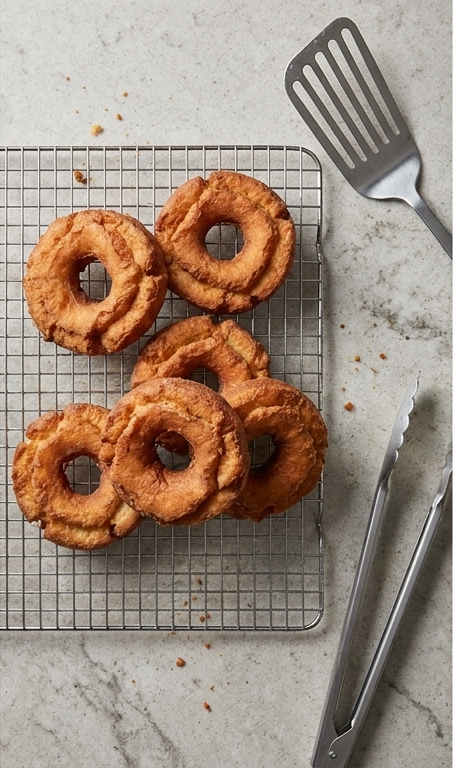
Carefully transfer 2–3 donuts at a time into hot oil (heated to 375°F but not shown here) and fry until deep golden brown, about 2 minutes per side, flipping once. Remove the fried donuts with a slotted tool and place them on a wire cooling rack to drain and cool slightly; they should have crisp, slightly irregular edges, a warm golden surface, and a faint sheen of oil.
Step 7: Make the glaze
In a large bowl whisk the sifted powdered sugar with milk, corn syrup, vanilla and a pinch of salt until silky and pourable. The glaze should be thick enough to coat yet loose enough to show glossy drips—adjust with tiny splashes of milk to reach that perfect, clingy consistency.
Step 8: Glaze and assemble the final plate
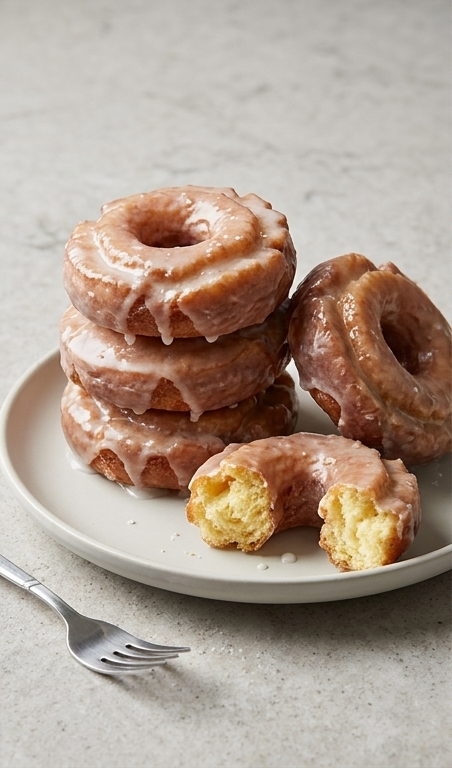
Dip each warm donut into the glaze, letting excess drip back into the bowl, then transfer to a wire rack to set briefly. Arrange a few glazed donuts stacked and some overlapping on a shallow matte white ceramic plate so the glossy, slightly drippy surface, tiny sugar flecks and pillowy interior are clearly visible. Serve while still slightly warm for the best contrast of crisp edge and tender crumb.
Making It Your Own
Try a few playful swaps to make Glazed Old Fashioned Donuts your own. For a dairy-free version, use a neutral oil instead of butter and coconut cream or coconut yogurt in place of sour cream; the texture shifts slightly but the charm stays. For a seasonal take, fold 1 teaspoon warm spice mix into the flour for autumn warmth, or add a tablespoon of finely grated lemon zest to the glaze for spring brightness.
If you want a glazed donut with regional flair, brush the warm donuts with espresso syrup and dust lightly with cocoa for a coffeehouse twist. For a lighter option, bake smaller rings on a parchment-lined tray at 375 F for about 8 to 10 minutes until just set; they won’t have the same crisp edge but will still be tender. Each tweak is an experiment, so taste and adjust as you go.
How to Serve
When hosting, think about texture contrasts and visual appeal. Stack three glazed Glazed Old Fashioned Donuts on a matte plate for dramatic height, and scatter a few with holes filled by mini berries for a pretty pop of color. Place a small bowl of extra glaze or flavored milk alongside for dipping, and include a stack of napkins because guests will want to dig in.
For a crowd, keep donuts warm in a single layer on a low oven rack at 200 F and refresh the glaze right before serving. If you want a dessert course, serve a couple of warm donuts with a scoop of vanilla ice cream and a drizzle of hot espresso for a decadent finish. For brunch, build a donut board with fresh fruit, coffee, and savory bites to balance the sweetness.
Storage and Reheating
Store glazed donuts in an airtight container at room temperature for up to 24 hours; beyond that they begin to lose their crisp edge and pillowy interior. If the glaze gets tacky, separate layers with parchment so they do not stick together.
To refresh, preheat your oven to 350 F and place the donuts on a baking sheet for 5 to 7 minutes to revive the edges and warm the center. For a quick single-serve fix, zap a donut for 8 to 10 seconds in a microwave on low power but expect a softer exterior.
Common Donut Missteps and Fixes
If donuts absorb too much oil, your oil temperature was too low; bring it back up and fry fewer at a time so the temperature does not drop dramatically. If the dough is tough, you likely overworked it; mix just until combined and chill before rolling.
A runny glaze means too much milk; add a little more sifted powdered sugar. If the glaze is too thick, thin with a teaspoon of milk at a time. Small adjustments keep the final result glossy and clingy.
Final Thoughts
I hope you give these Glazed Old Fashioned Donuts a try this weekend. They are forgiving enough for beginners and satisfying enough for seasoned bakers, and there is real joy in sharing a warm, glossy donut with someone you care about. Let the recipe guide you, then make it yours.
Frequently Asked Questions.
- How long do Glazed Old Fashioned Donuts stay fresh? They are best within 24 hours at room temperature; store in an airtight container and refresh in a 350 F oven for 5 to 7 minutes.
- Can I bake these instead of frying? Yes, you can bake smaller rings at 375 F for 8 to 10 minutes; they will be lighter and lack the crisp fried edge.
- What can I use instead of sour cream? Plain yogurt or a thin strained yogurt work well; for dairy-free use coconut yogurt.
- How do I keep the glaze shiny? Use a bit of corn syrup and dip the donuts while they are still slightly warm for the best gloss.
- Can I make the dough ahead? Yes, you can chill the dough overnight; let it sit briefly at room temperature before rolling so it is easy to work with.

Glazed Old Fashioned Donuts
Make Glazed Old Fashioned Donuts at home: crisp edges, pillowy centers, and glossy glaze for a perfect weekend treat.
Ingredients
Instructions
Step 1: Combine the dry ingredients
In a medium mixing bowl whisk together the cake flour, baking powder, salt and baking soda until evenly distributed. This is the base that gives the donuts their tender crumb—take a moment to fluff the flour with the whisk so you have a light, aerated mix ready to receive the wet ingredients.
Step 2: Cream sugar and fats, then add yolks
In the bowl of a stand mixer fitted with the paddle attachment, beat granulated sugar with the room‑temperature unsalted butter and vegetable shortening on medium‑high until smooth and slightly glossy. Add the three egg yolks and mix just until incorporated; you want a cohesive, satiny mixture without overworking it.
Step 3: Fold in sour cream and vinegar, then the flour mixture
Scrape down the bowl, add the sour cream and the splash of distilled white vinegar, and mix until homogenous. Add the flour mixture in two additions and mix on low until just combined—stop when there are no visible streaks of flour. The dough will be soft, slightly sticky, and heavy enough to hold shape when chilled.
Step 4: Chill the dough
Turn the dough into a lightly greased bowl, cover tightly with plastic wrap, and chill in the refrigerator for about 30 minutes. Cooling firms the dough so it’s easy to roll and cut without spreading in the oil.
Step 5: Roll and cut the donuts
On a well‑floured surface press the chilled dough out to roughly 3/4" (about 2 cm) thickness. Use a donut cutter to stamp out rounds and holes, re‑shaping scraps and repeating until all the dough is used. Transfer the cut donuts onto a parchment‑lined tray and keep them chilled briefly if they’ve softened.
Step 6: Fry until golden and drain
Carefully transfer 2–3 donuts at a time into hot oil (heated to 375°F but not shown here) and fry until deep golden brown, about 2 minutes per side, flipping once. Remove the fried donuts with a slotted tool and place them on a wire cooling rack to drain and cool slightly; they should have crisp, slightly irregular edges, a warm golden surface, and a faint sheen of oil.
Step 7: Make the glaze
In a large bowl whisk the sifted powdered sugar with milk, corn syrup, vanilla and a pinch of salt until silky and pourable. The glaze should be thick enough to coat yet loose enough to show glossy drips—adjust with tiny splashes of milk to reach that perfect, clingy consistency.
Step 8: Glaze and assemble the final plate
Dip each warm donut into the glaze, letting excess drip back into the bowl, then transfer to a wire rack to set briefly. Arrange a few glazed donuts stacked and some overlapping on a shallow matte white ceramic plate so the glossy, slightly drippy surface, tiny sugar flecks and pillowy interior are clearly visible. Serve while still slightly warm for the best contrast of crisp edge and tender crumb.
Notes
- Keep oil at 350-375 F for even frying and consistent color.
- Chill the dough at least 30 minutes to prevent spreading while frying.
- Do not overmix the dough to maintain a tender crumb.
- Adjust glaze thickness with milk a teaspoon at a time for the right cling.
- Reheat donuts in a 350 F oven for 5-7 minutes to revive crisp edges.