I have a soft spot for simple breakfasts that feel a little luxurious, and my Egg Bites (starbucks Style) Recipe does exactly that. I first tinkered with this technique on a slow Saturday morning and never looked back. Creamy, custardy centers, ribbons of melted cheese, and the salty crunch of bacon make these egg bites irresistible. They travel well, reheat beautifully, and somehow make weekday mornings feel like a treat.
How These Egg Bites Became My Morning Joy
I remember the first time I made the Egg Bites (starbucks Style) Recipe for friends who were staying over after a late movie night. The kitchen smelled like warm dairy and bacon while soft, golden tops puffed gently in the oven. Watching someone cut into a bite and see that glossy, custardy interior brought a small, grateful cheer around the table. There was laughter as people compared textures and suggested tiny tweaks. I loved how the gentle water bath turned ordinary eggs into something you would willingly queue for, and how the simple act of sharing them turned a rushed morning into a slow, communal moment. That memory keeps me coming back to this recipe whenever I want a breakfast that feels both homemade and a little celebratory.
The Ingredients That Make It Sing
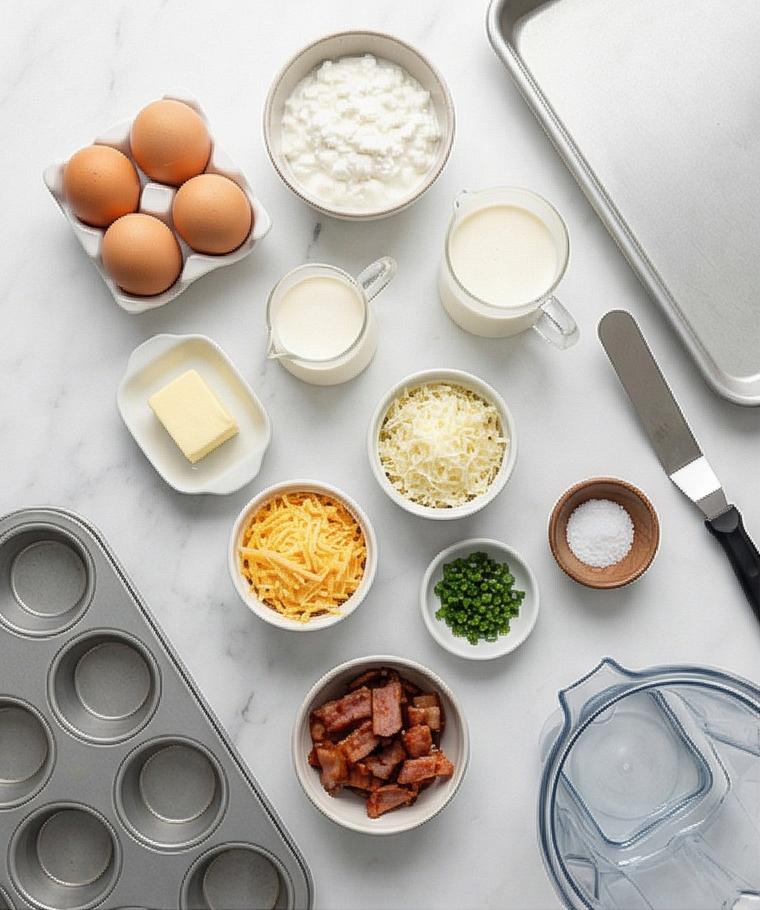
- Eggs: The base of everything; use room-temperature eggs for the smoothest custard. Substitute with pasteurized eggs if you prefer, and pick fresh, high-quality eggs for the best texture.
- Cottage Cheese: Adds creaminess and body; full-fat gives the richest result. For a lighter option, try ricotta or Greek yogurt, though texture will shift.
- Heavy Cream: Boosts silkiness and mouthfeel. You can use half-and-half, but the bites will be slightly less custardy.
- Bacon: Provides savory crunch and smoky depth. Use pancetta or smoked ham if you want a different salt profile.
- Gruyere and Monterey Jack: Give nutty and melty character. Swap for cheddar or fontina if needed; avoid very crumbly cheeses.
Essential Kitchen Tools
These tools make the process easy and consistent. A good blender is vital for a silky custard, but a food processor or immersion blender works too. A sturdy metal muffin tin spreads heat predictably; silicon can be used but may change browning. Using a larger roasting pan for the water bath is important so water comes halfway up the cups, which gives the custard its tender set.
- Blender: Creates the ultra-smooth custard; an immersion blender is a fine alternative.
- 12-cup metal muffin tin: Best for even heat; nonstick spray or butter helps release.
- Deep roasting pan: Holds the water bath securely; any ovenproof pan larger than the tin will do.
- Offset spatula and wire rack: For gentle unmolding and even cooling; a thin knife can substitute for the spatula.
Step-by-Step Preparation Guide
Step 1: Preheat and prep the equipment
Preheat the oven to 300°F (150°C) and set a rack in the middle position. Place a standard 12-cup metal muffin tin and a larger deep roasting pan (large enough to cradle the muffin tin for a water bath) on your premium white Carrara marble surface, ready and waiting. Keep a small dish of unsalted butter or a neutral cooking spray, a small offset spatula, a glass measuring jug, and a clear blender jar nearby on the same surface so tools remain visually consistent as you work.
Step 2: Cook the bacon and ready the muffin tin
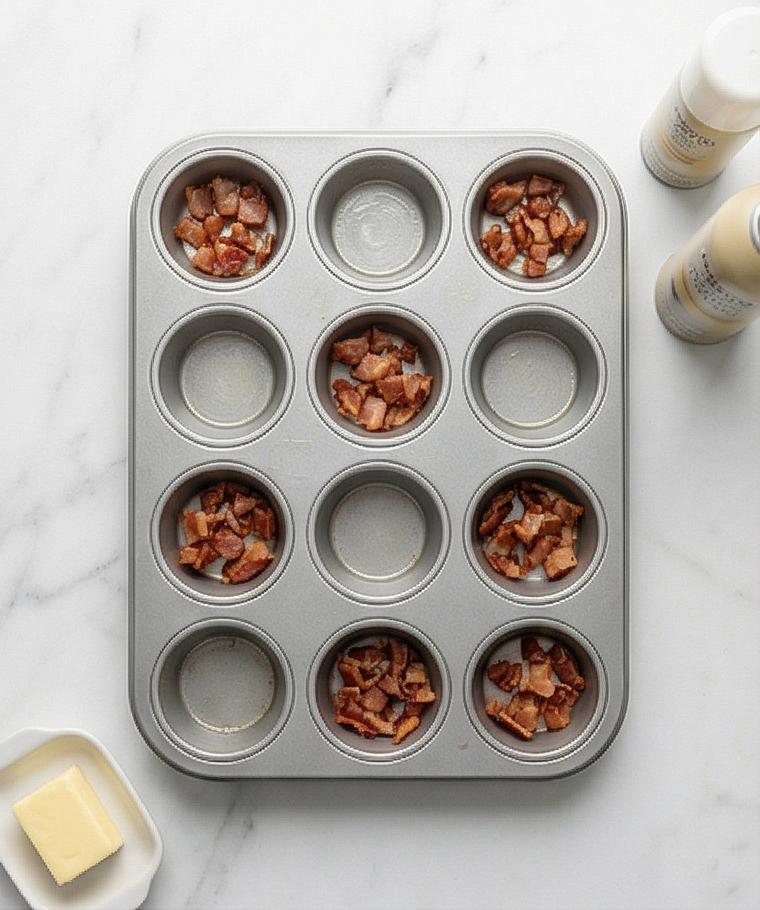
Cook two strips of thick-cut bacon until deeply golden and crisp, then drain and finely chop; the result should be glossy, deeply browned ribbons broken into crunchy, irregular bits. Lightly grease all 12 cups of the metal muffin tin with the butter or spray, then evenly divide the chopped bacon among eight of the cups, leaving four empty to improve heat circulation. The visual here is a cool, greased tin with eight cups cradling dark, crispy bacon bits and four empty, clean cups waiting to receive the custard.
Step 3: Blend the eggs and dairy into an ultra-smooth custard
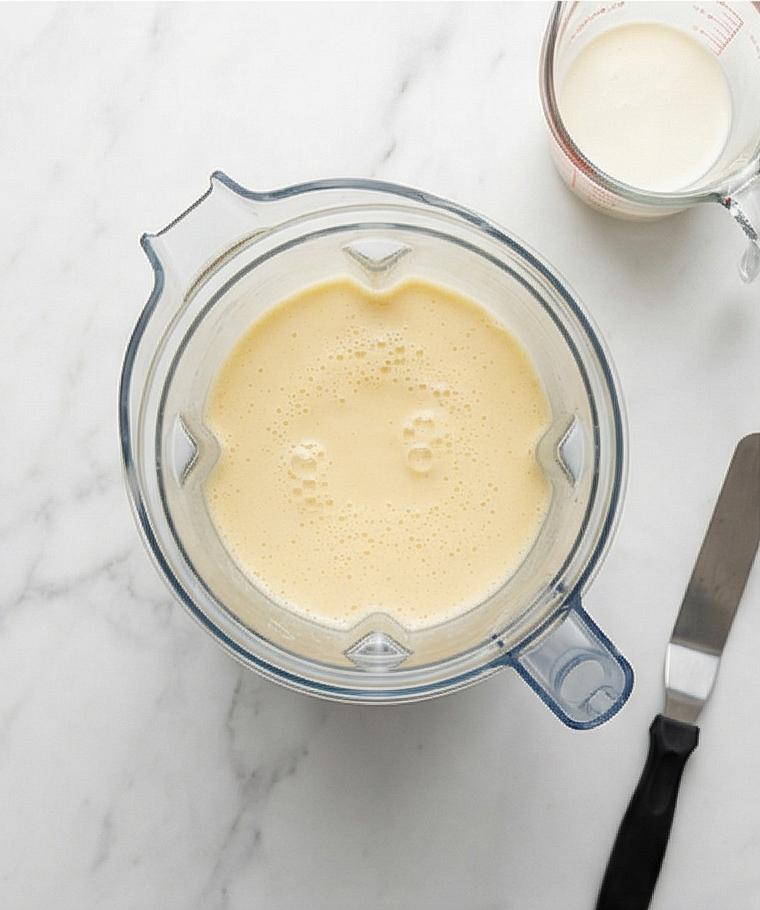
In a clear blender jar add the four large room-temperature eggs, half a cup of full-fat cottage cheese, and a quarter cup of heavy cream with the fine sea salt and freshly ground black pepper. Blend on high until the mixture is completely smooth, pale, and slightly frothy – no visible curds, just a silky custard with tiny airy bubbles on the surface. This jar should read as a glossy, homogeneous pale yellow liquid, the key to the Starbucks-like creaminess.
Step 4: Fold in cheeses and prepare to fill cups
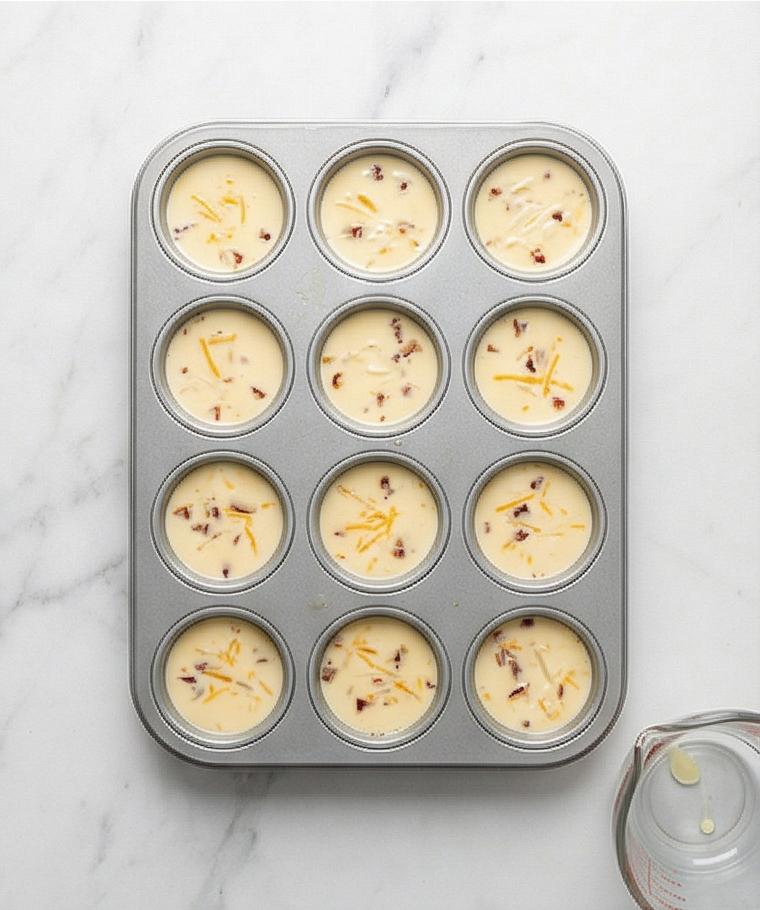
Add the shredded Gruyère and Monterey Jack to the blender and pulse only a few times so the cheeses are distributed in small soft ribbons and specks rather than fully puréed; the mixture should be velvety with little pockets of cheese visible. Set the glass measuring jug nearby and slowly pour the custard into each of the eight bacon-lined muffin cups, filling almost to the rim and leaving a thin 1/8-inch gap. If you reserved a pinch of bacon, sprinkle it gently on top of each filled cup; the cups should look glossy and cup-fill level should be consistent across the tin.
Step 5: Assemble the gentle water bath (bain-marie)
Place the filled muffin tin inside the larger roasting pan and carefully pour 3–4 cups of very hot water around the tin until the water level reaches about halfway up the sides of the muffin cups. Loosely tent the whole assembly with a sheet of aluminum foil to trap steam for a gentle, even cook – you will see a shallow mirrored strip of water around the tin and a soft foil dome above. This setup reads as a calm, contained soaking environment that suggests sous-vide like tenderness without any appliance in view.
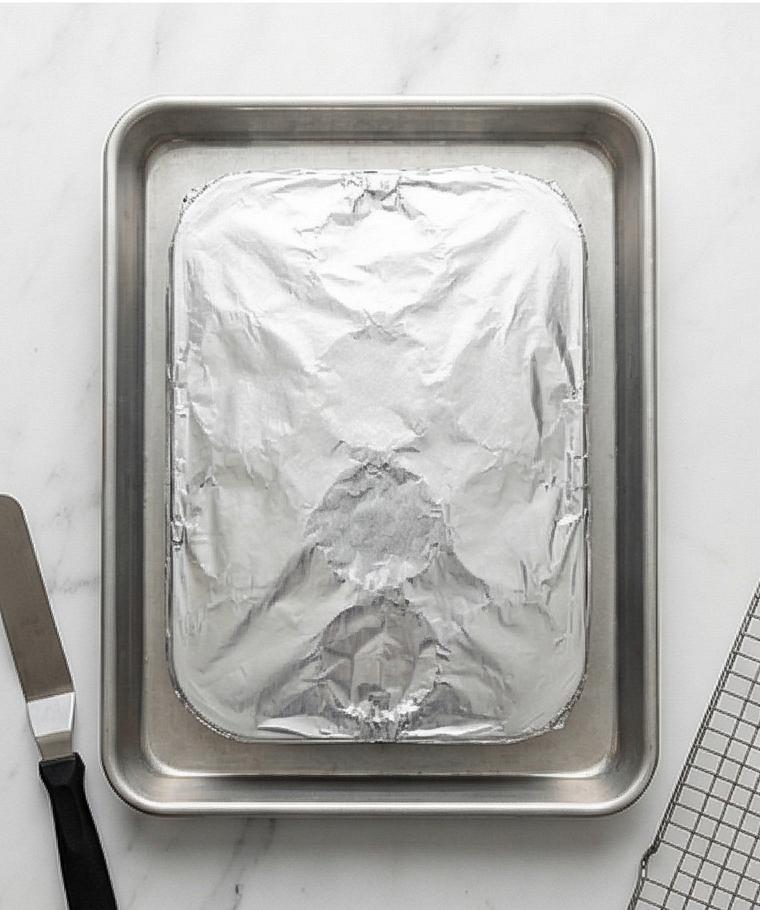
Step 6: Bake, cool slightly, and unmold
Bake the water-bath assembly in the preheated oven until the edges are set and the centers retain a slight, glossy wobble – glossy but not wet on top. Remove from the water bath, let the muffin tin rest on a wire rack for 5–8 minutes so the egg bites firm and release more easily, then run a thin offset spatula around each cup to gently lift the custards free. The unmolded bites should be pillowy, with satin-smooth sides and a light golden top; place the warm bites onto a clean serving plate on the marble surface.
Step 7: Plate and garnish for serving
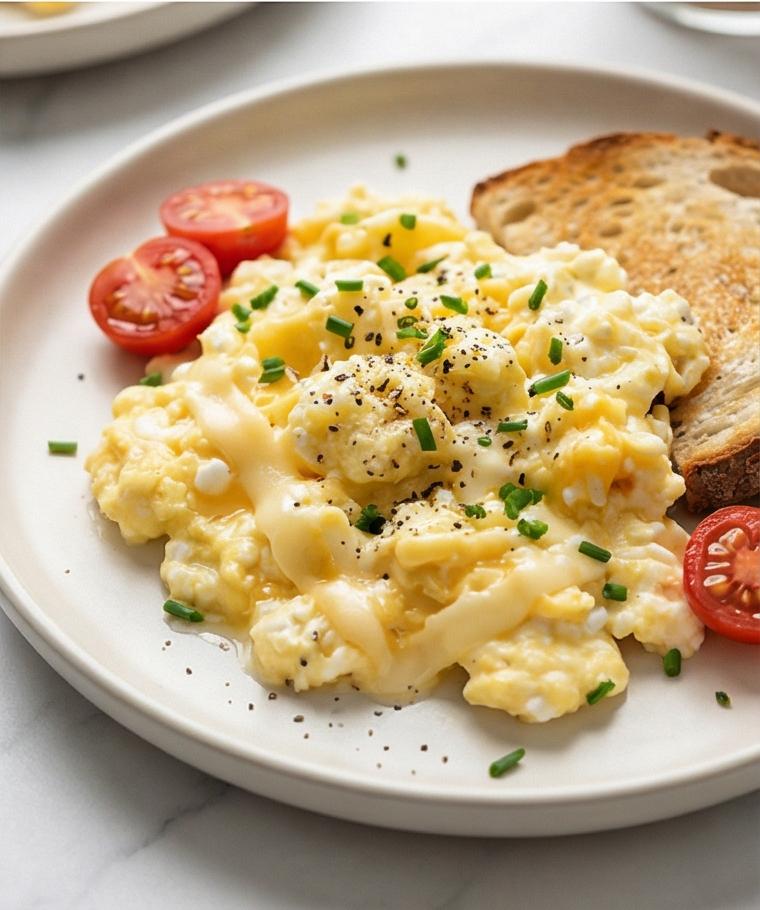
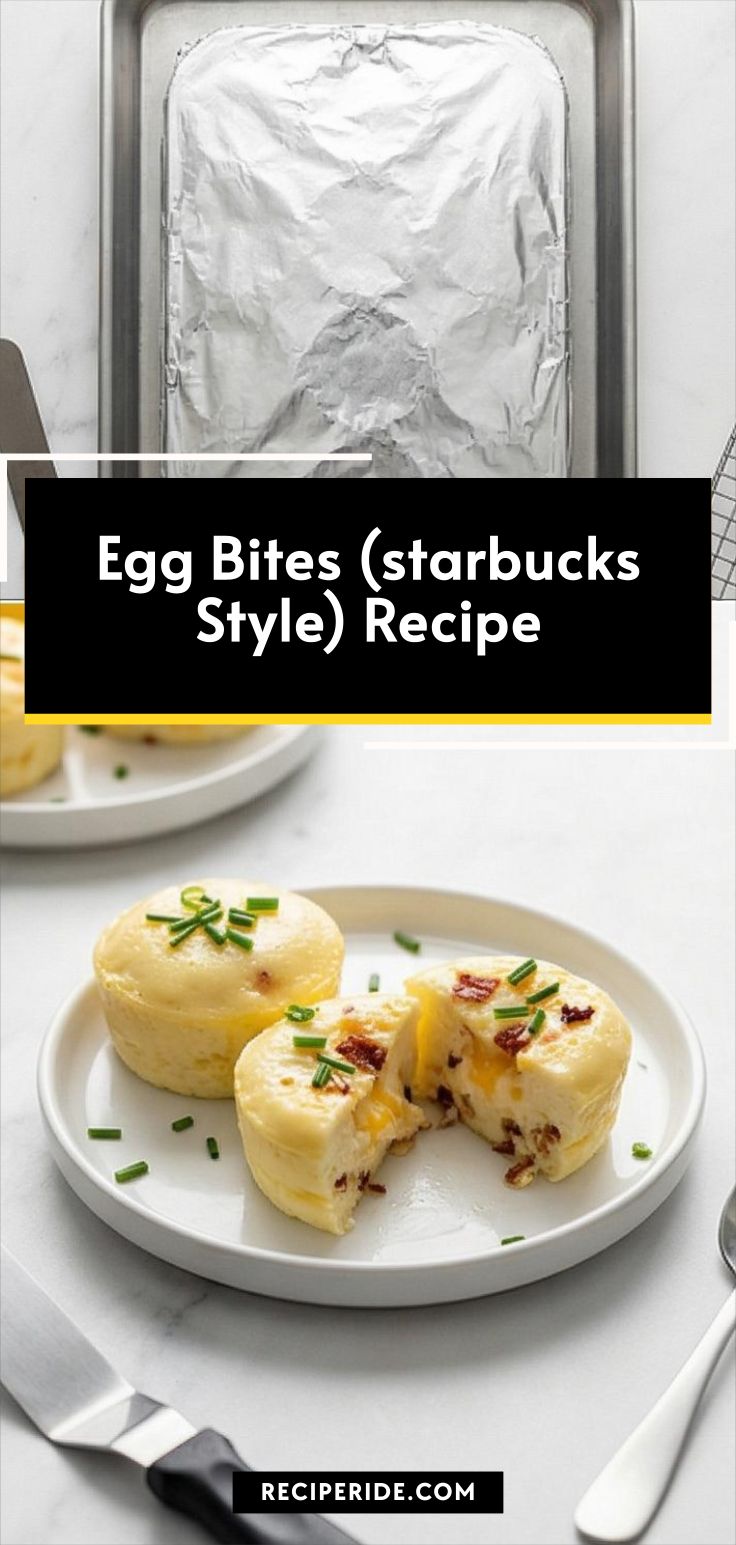
Arrange two or three egg bites on a small modern ceramic plate, reveal one with a gentle cut to show the custardy, ultra-creamy interior with melted cheese ribbons and flecks of bacon, then finish with a scattering of finely sliced fresh chives for a bright green contrast. Serve warm within 15–20 minutes for the creamiest texture; keep tools minimal on the surface – the same matte offset spatula and a small spoon for garnish remain nearby.

Making It Your Own
I like to swap the bacon for smoked salmon when I want a brunchier vibe. The salty smoke plays beautifully with Gruyère, and I thinly slice fresh dill over the top for a bright finish.
For a vegetarian version I omit the bacon and add sautéed mushrooms plus a pinch of smoked paprika to mimic the savory depth. It still gets that creamy texture from the cottage cheese and cream.
In colder months I stir in roasted winter squash cubes for a seasonal twist, or use fresh herbs in summer for a lively, brighter bite.
How to Serve
If I am hosting, I warm a batch and serve two or three bites per person on small plates with a side of mixed greens dressed lightly with lemon vinaigrette. For a buffet, I keep them warm in a low oven and set out small tongs so guests can help themselves.
To scale up, multiply ingredients by the number of tins you plan to bake and stagger batches so each plate is warm. For a simple family breakfast, pair two bites with buttered toast and fresh fruit.
Presentation matters: a cut bite reveals the custard interior and invites conversation, while a sprinkle of chives or microgreens adds color and contrast.
Storage and Reheating Tips
Leftover egg bites keep well refrigerated in an airtight container for up to 4 days. Let them cool completely before sealing to avoid sogginess. When I store extras I lay a sheet of parchment between layers to protect the tops.
For reheating, I find the oven or a toaster oven at 325°F for 8-10 minutes restores texture best. You can microwave a single bite for 25-30 seconds, but do it gently to keep it from turning rubbery.
Common Slip-Ups and Fixes
Overblending the custard can make the texture too thin – blend until smooth but stop when the mixture looks glossy and slightly frothy. If your egg bites come out curdled, reduce blending time and ensure ingredients are at room temperature.
Filling the cups too high can lead to spillover in the water bath. Leave that thin 1/8-inch gap and keep four empty cups in the tin to help even heat distribution.
Ready to Try
Give the Egg Bites (starbucks Style) Recipe a go this weekend and notice how a small technique like a water bath transforms everyday eggs. Once you taste that custardy center and melt of cheese, you will want to make them again and again.
Frequently Asked Questions.
- Can I make Egg Bites (starbucks Style) Recipe ahead of time? – Yes, you can make them a day ahead and reheat gently in the oven or microwave.
- Are these egg bites freezer friendly? – You can freeze them for up to 1 month; thaw overnight in the fridge before reheating.
- Can I skip the cottage cheese? – You can, but cottage cheese contributes to the custardy texture; ricotta is the closest substitute.
- How do I know when they are done baking? – The edges should be set and the centers should have a slight, glossy wobble.
- Can I make these without a blender? – A food processor or vigorous whisking can work, but a blender gives the smoothest result.
Egg Bites (starbucks Style) Recipe
Make Egg Bites (starbucks Style) Recipe: creamy, custardy bacon and Gruyere bites baked in a gentle water bath.
Ingredients
Instructions
Step 1: Preheat and prep the equipment
Preheat the oven to 300°F (150°C) and set a rack in the middle position. Place a standard 12-cup metal muffin tin and a larger deep roasting pan (large enough to cradle the muffin tin for a water bath) on your premium white Carrara marble surface, ready and waiting. Keep a small dish of unsalted butter or a neutral cooking spray, a small offset spatula, a glass measuring jug, and a clear blender jar nearby on the same surface so tools remain visually consistent as you work.
Step 2: Cook the bacon and ready the muffin tin
Cook two strips of thick-cut bacon until deeply golden and crisp, then drain and finely chop; the result should be glossy, deeply browned ribbons broken into crunchy, irregular bits. Lightly grease all 12 cups of the metal muffin tin with the butter or spray, then evenly divide the chopped bacon among eight of the cups, leaving four empty to improve heat circulation. The visual here is a cool, greased tin with eight cups cradling dark, crispy bacon bits and four empty, clean cups waiting to receive the custard.
Step 3: Blend the eggs and dairy into an ultra-smooth custard
In a clear blender jar add the four large room-temperature eggs, half a cup of full-fat cottage cheese, and a quarter cup of heavy cream with the fine sea salt and freshly ground black pepper. Blend on high until the mixture is completely smooth, pale, and slightly frothy — no visible curds, just a silky custard with tiny airy bubbles on the surface. This jar should read as a glossy, homogeneous pale yellow liquid, the key to the Starbucks-like creaminess.
Step 4: Fold in cheeses and prepare to fill cups
Add the shredded Gruyère and Monterey Jack to the blender and pulse only a few times so the cheeses are distributed in small soft ribbons and specks rather than fully puréed; the mixture should be velvety with little pockets of cheese visible. Set the glass measuring jug nearby and slowly pour the custard into each of the eight bacon-lined muffin cups, filling almost to the rim and leaving a thin 1/8-inch gap. If you reserved a pinch of bacon, sprinkle it gently on top of each filled cup; the cups should look glossy and cup-fill level should be consistent across the tin.
Step 5: Assemble the gentle water bath (bain-marie)
Place the filled muffin tin inside the larger roasting pan and carefully pour 3–4 cups of very hot water around the tin until the water level reaches about halfway up the sides of the muffin cups. Loosely tent the whole assembly with a sheet of aluminum foil to trap steam for a gentle, even cook — you’ll see a shallow mirrored strip of water around the tin and a soft foil dome above. This setup reads as a calm, contained soaking environment that suggests sous-vide–like tenderness without any appliance in view.
Step 6: Bake, cool slightly, and unmold
Bake the water-bath assembly in the preheated oven until the edges are set and the centers retain a slight, glossy wobble — glossy but not wet on top. Remove from the water bath, let the muffin tin rest on a wire rack for 5–8 minutes so the egg bites firm and release more easily, then run a thin offset spatula around each cup to gently lift the custards free. The unmolded bites should be pillowy, with satin-smooth sides and a light golden top; place the warm bites onto a clean serving plate on the marble surface.
Step 7: Plate and garnish for serving
Arrange two or three egg bites on a small modern ceramic plate, reveal one with a gentle cut to show the custardy, ultra-creamy interior with melted cheese ribbons and flecks of bacon, then finish with a scattering of finely sliced fresh chives for a bright green contrast. Serve warm within 15–20 minutes for the creamiest texture; keep tools minimal on the surface — the same matte offset spatula and a small spoon for garnish remain nearby.
Notes
- Use room-temperature eggs and dairy for a smoother custard.
- Reserve a few bacon bits to sprinkle on top for texture.
- Pulse cheeses only briefly to keep small ribbons rather than fully pureeing.
- Leave a small gap at the top of each cup to prevent spillover during the water bath.
- Reheat gently in an oven or toaster oven to preserve texture.