Shakshuka With Feta Recipe has been a go-to in my kitchen for lazy weekends and busy weeknights alike. I love how a handful of pantry staples turns into something soulful and bright, and this version with tangy feta always feels a little celebratory. You can make it in one skillet, which means fewer dishes and more time to talk while it simmers. If you like bold tomato flavors and runny egg yolks, you are in for a treat with this Shakshuka With Feta Recipe.
How This Recipe Became My Rainy-Day Favorite
The first time I made this Shakshuka With Feta Recipe, it was pouring outside and the city smelled like wet pavement and roasted coffee. I had a tired week behind me and a cast-iron skillet that needed a purpose. As the onion and pepper softened, the kitchen filled with a warm, spicy perfume that felt like a hug. When I cracked the eggs into the tomato bath and the whites set around glossy yolks, something about the sound and the colors calmed me down. I remember tearing bread and scooping through the sauce, the salty feta melting into creamy ribbons. It became shorthand for comfort: quick, forgiving, and endlessly shareable. Ever since, I make it when I want something honest and satisfying without fuss.
The Ingredients That Make It Sing
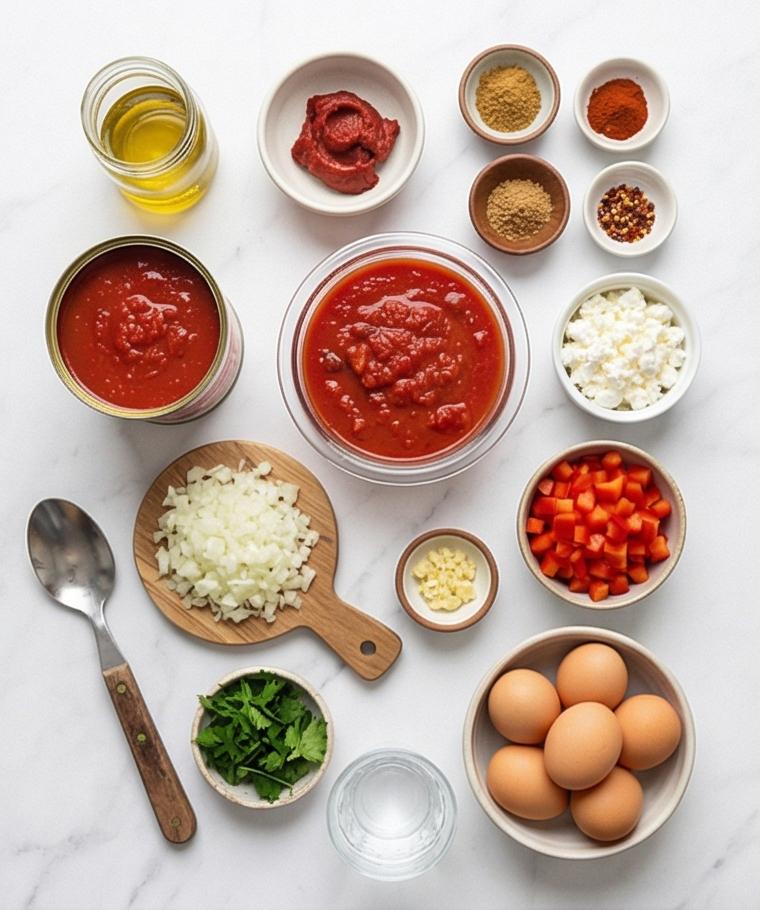
This Shakshuka With Feta Recipe is all about balance and contrast.
- Extra-virgin olive oil: The flavor base and sheen; use good but not ultra-expensive oil or substitute with avocado oil for a neutral note.
- Yellow onion: Adds sweetness and body; shallots work in a pinch for a gentler bite.
- Red bell pepper: Gives color and sweetness; roasted peppers are a smoky alternative.
- Garlic and tomato paste: Provide depth and umami; tomato paste intensifies tomato flavor.
- Spices (cumin, smoked paprika, coriander, red pepper flakes): Build the aromatic profile; adjust heat and try aleppo pepper for a milder fruitiness.
- Crushed tomatoes: The saucy heart; use fire-roasted for extra smokiness or whole peeled for a chunkier texture.
- Feta and eggs: Feta brings creamy saltiness, eggs add richness; goat cheese or ricotta can substitute the feta.
- Parsley and cilantro: Freshness and brightness; use one or the other if you prefer.
Essential Kitchen Tools
A few simple tools make the process easier and keep results reliable.
- Heavy skillet: A 10-12 inch cast-iron or stainless skillet distributes heat evenly; if you do not have one, use a wide sauté pan.
- Wooden spoon: For gentle stirring and scraping; a silicone spatula works too and is easier to clean.
- Lid or large plate: To cover the pan while eggs cook; a baking sheet can substitute.
- Can opener and measuring spoons: For precise seasoning and opening the tomatoes; kitchen shears can help with herbs.
- Small bowls: Crack eggs into bowls first to avoid shells and control placement; ramekins are ideal substitutes.
Step-by-Step Preparation Guide
Step 1: Sauté the aromatics and peppers
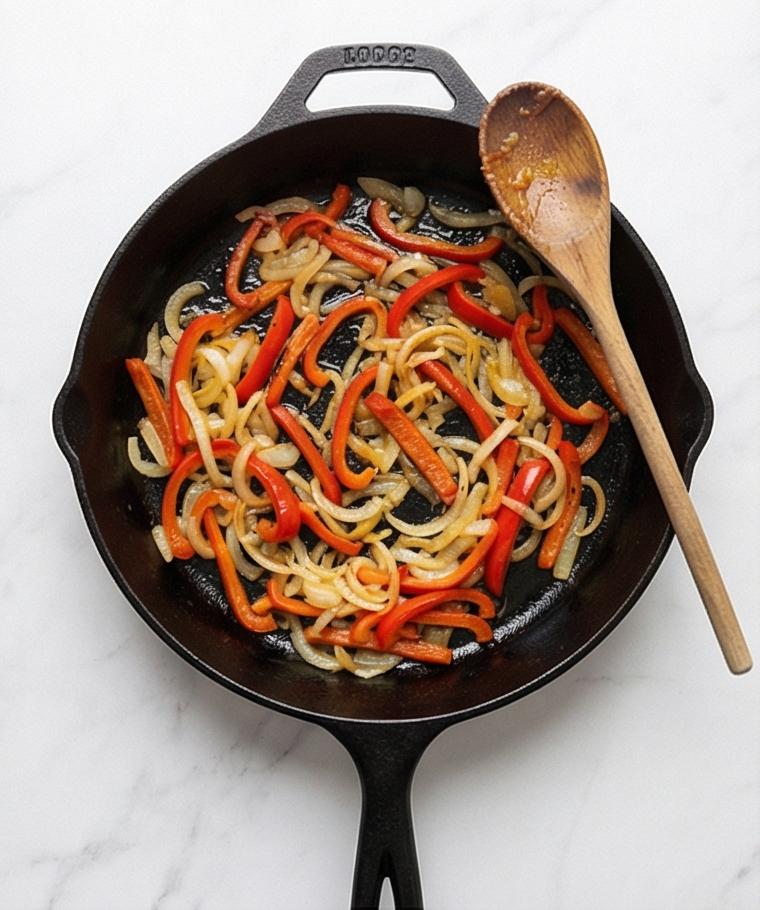
Warm a large, heavy skillet with a splash of extra-virgin olive oil until it shimmers, then add the finely chopped yellow onion and diced red bell pepper. Stir gently as they sweat and soften, coaxing the edges to just begin to golden – the vegetables should become translucent, tender and sticky with a little natural caramelization. Keep the heat moderate so nothing scorches; if the mixture looks like it might brown too quickly, lower the flame and sweep the pan occasionally with a wooden spoon. The goal here is soft, glossy vegetables that form the sweet backbone of the sauce.
Step 2: Bloom the garlic, tomato paste and spices
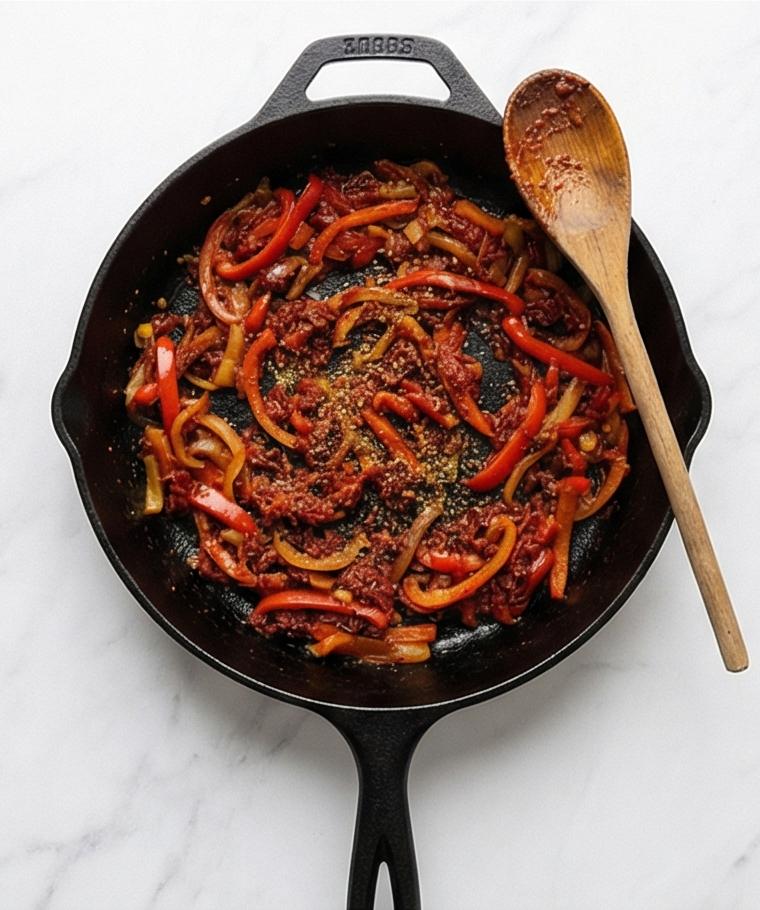
Push the softened vegetables into a shallow well and add the minced garlic; stir only until fragrant, then fold in thick tomato paste so every piece of pepper and onion is coated. Continue cooking until the paste darkens and smells caramelized, then sprinkle in ground cumin, smoked paprika, ground coriander and red pepper flakes and toast briefly to bloom their aromas. The mixture should look darker, richly red and slightly glossy, with the spices visibly clinging to the vegetables and a deepened, sweeter tomato tone.
Step 3: Build and simmer the tomato sauce to a thick, saucy base
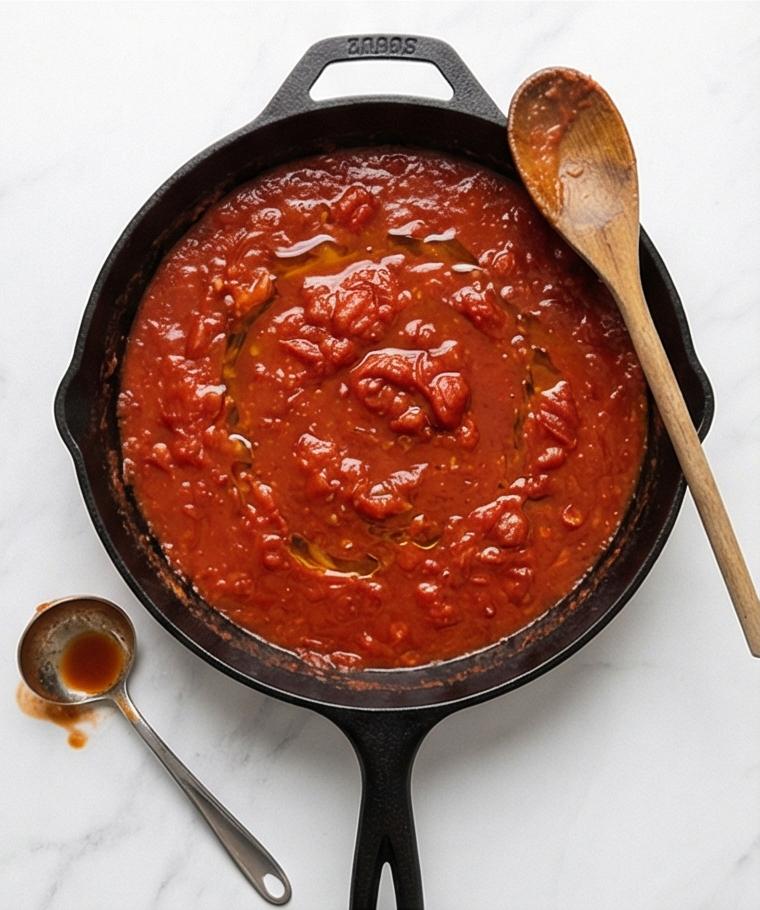
Pour in crushed tomatoes and a little water, scraping up any fond from the skillet so the sauce becomes cohesive. Stir in a pinch of sugar, salt and black pepper and bring the mixture to a gentle, steady simmer. Maintain a low bubbling motion and reduce until the sauce has lost its watery sheen and become velvety and slightly concentrated – you should see tiny pockets of oil and a textured surface dotted with softened tomato bits. Adjust seasoning to taste; the sauce should read robust, balanced, and spoonable.
Step 4: Add feta, create wells and nest the eggs
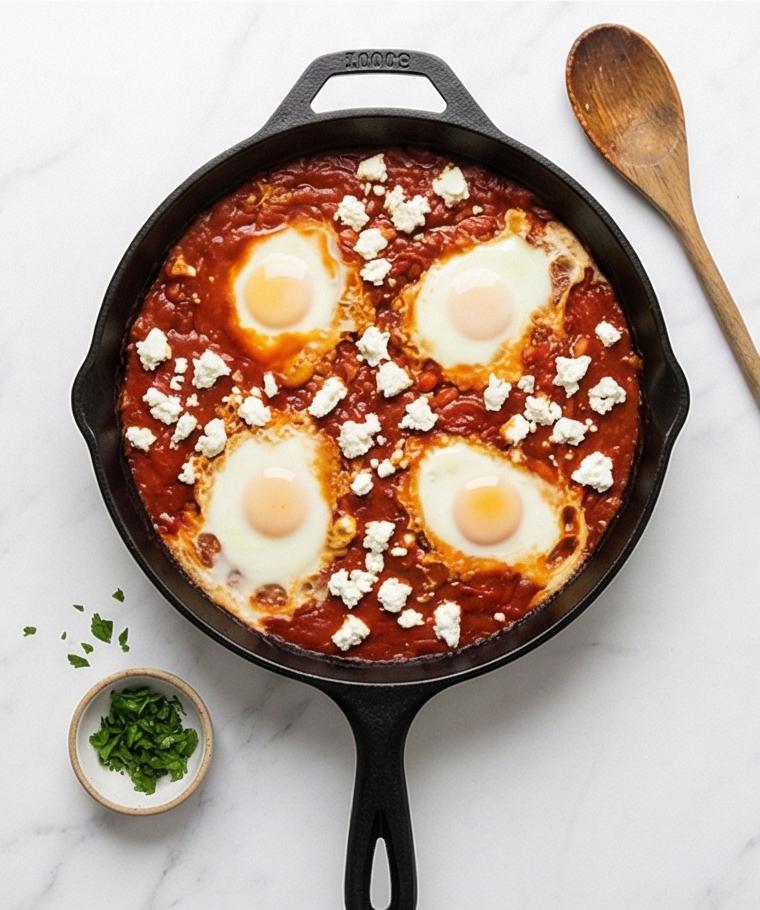
Scatter crumbled feta evenly over the simmering tomato base so the white cheese softens but still keeps shape, creating little creamy islands. Using the back of a spoon, form 4 6 shallow wells spaced across the pan, then crack each egg into a small bowl first and gently slide them into the wells so yolks remain centered. Lower the heat to a gentle simmer, cover the skillet and cook until the whites are set and yolks are at your preferred doneness; the finished surface should show opaque whites, glossy runny yolks (if desired), and dappled, warmed feta.
Step 5: Finish with herbs, oil and serving prep
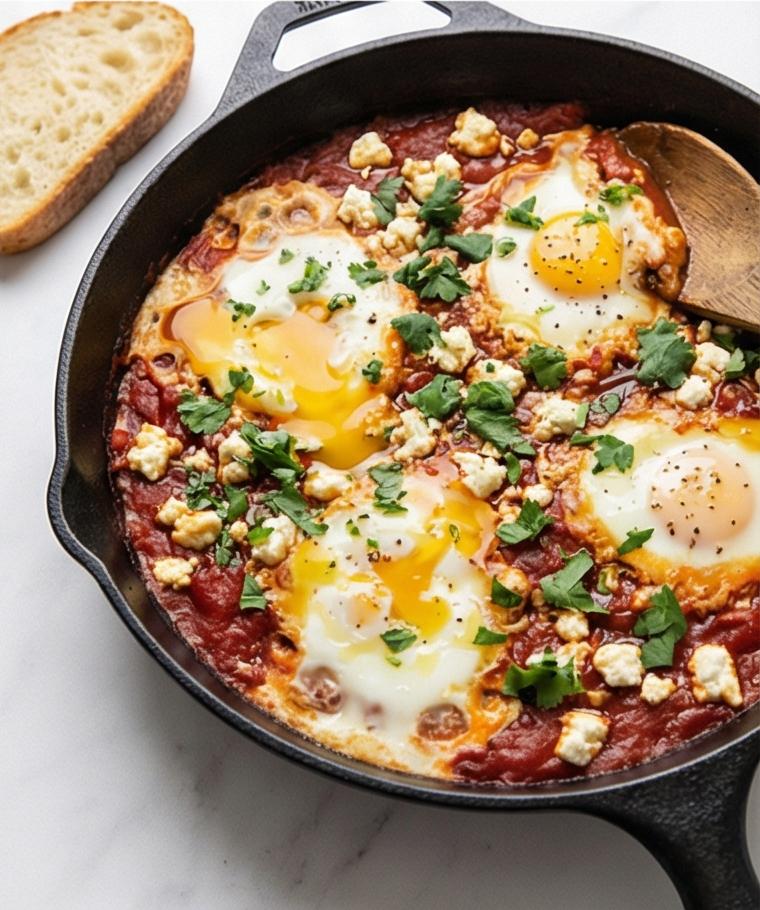
Turn off the heat and immediately scatter chopped fresh parsley and cilantro over the hot shakshuka, letting the residual heat wilt the herbs slightly. Drizzle a tablespoon of extra-virgin olive oil across the top for shine and richness, taste and adjust with a tiny pinch of salt or pepper if needed, then let the pan rest for a few minutes so the sauce tightens slightly. While it rests, warm crusty bread for dipping. Serve portions straight from the skillet so each bowl gets a spoonful of sauce, an egg, and crumbled feta.
Making It Your Own
I often experiment with simple swaps to keep this Shakshuka With Feta Recipe feeling new. For a vegetarian spin that still feels rich, I add browned crumbled halloumi or cubes of roasted eggplant in place of extra cheese. When I want a smoky note, I toss in chorizo or merguez and let the rendered fat meld into the sauce. In colder months, I stir in handfuls of wilted greens like spinach or kale toward the end. For a vegan version, I swap feta for silken tofu crumbled with a pinch of lemon juice and use chickpeas for extra heft.
How to Serve
If I am hosting, I heat the skillet just before guests arrive so the dish is warm and bubbling. Serve the Shakshuka With Feta Recipe family style right from the pan with plenty of warmed crusty bread, pita, or challah for dunking. For a brunch spread, add a simple green salad, olives, and sliced cured meats on the side so people can build plates. To scale up, use multiple skillets or a large ovenproof pan and create more wells for eggs; for a smaller portion, halve the recipe and use a smaller pan. Garnish each plate with extra herbs and an extra drizzle of olive oil.
Storage and Reheating Tips
Store leftover sauce and eggs in an airtight container in the refrigerator for up to 3 days. If you plan to keep the sauce longer, remove the eggs and refrigerate the tomato base separately for up to 4 days.
Reheat gently in a skillet over low heat with a splash of water to loosen the sauce, cover briefly to warm through, then add fresh eggs and cook to preference. For oven reheating, place in a 325 F oven covered until warmed through; add eggs and finish until set. Avoid high heat which will overcook the eggs and dry the sauce.
Common Mistakes and How to Avoid Them
Cooking tomatoes at too high a temperature can leave a raw edge and scorch the sugar in the paste. Keep the heat moderate and stir often to build flavor without burning.
Crowding the pan with too many eggs can make them unevenly cooked. Use the right size pan for the number of eggs and space the wells so heat circulates evenly.
Final Thoughts
Give this Shakshuka With Feta Recipe a try tonight or this weekend. It is forgiving, full of personality, and comes together in one pan so you can spend more time enjoying the meal than making it. I hope it becomes a comforting standby in your rotation.
Frequently Asked Questions
- Can I make this ahead of time and reheat it? Yes. Store the sauce separately and reheat gently, then add fresh eggs to finish cooking so they stay silky.
- How do I make it spicier without overpowering the dish? Increase the red pepper flakes a little at a time or add a pinch of cayenne. You can also use spicy smoked paprika.
- Is there a vegan substitute for feta? Yes. Crumbled firm tofu tossed with lemon juice, nutritional yeast, and salt mimics the tangy texture, or try vegan feta alternatives.
- What bread works best for serving? Crusty country bread, pita, or challah are all excellent. Toast slices briefly for extra texture.
- Can I bake this in the oven instead of stovetop? Yes. Simmer the sauce on the stove, transfer to an ovenproof pan, add eggs, and bake at 350 F until the whites are set and yolks are at your liking.
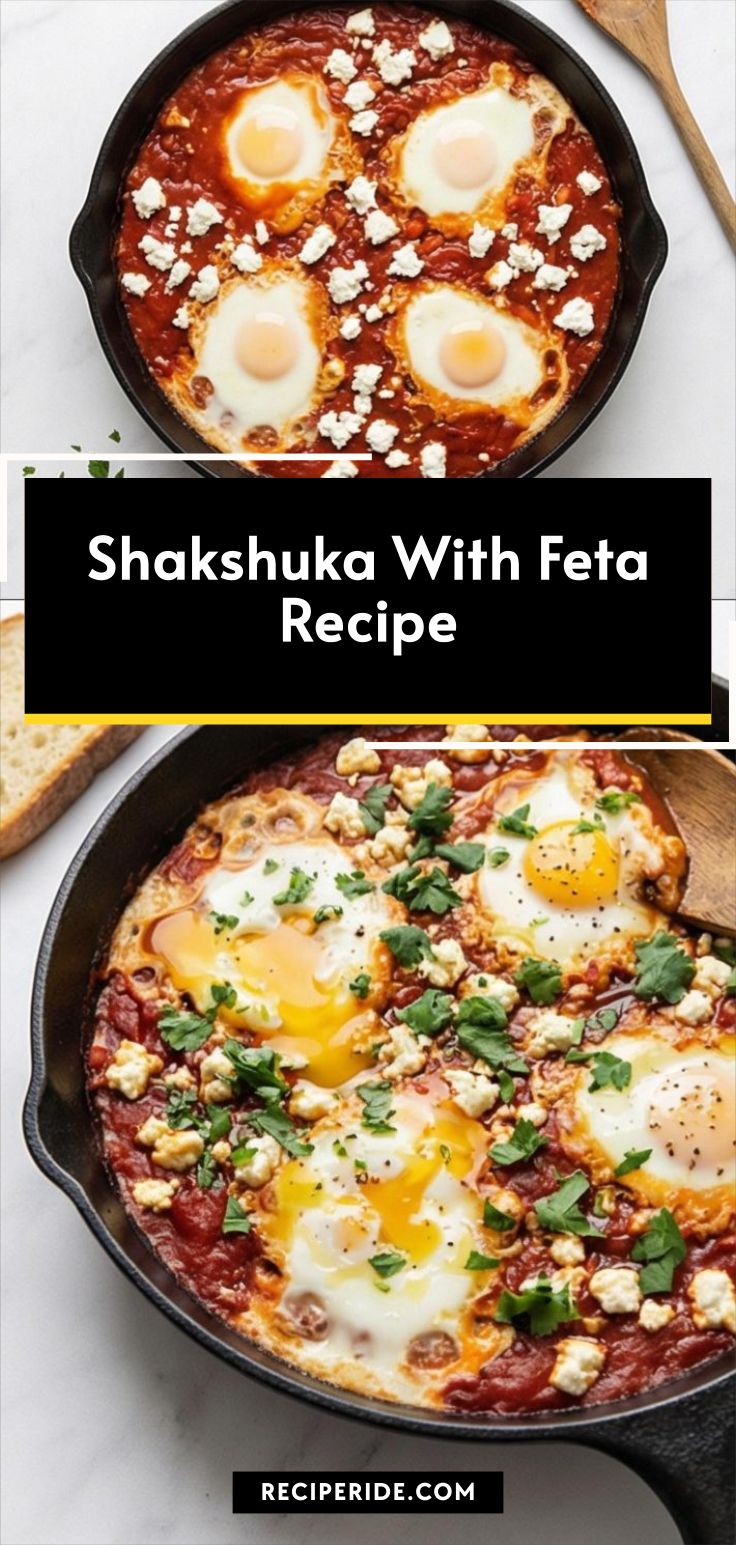
Shakshuka With Feta Recipe
Make Shakshuka With Feta Recipe in one skillet: bold tomato sauce, runny eggs, and salty feta, ready in about 35 minutes.
Ingredients
Instructions
Step 1: Sauté the aromatics and peppers
Warm a large, heavy skillet with a splash of extra-virgin olive oil until it shimmers, then add the finely chopped yellow onion and diced red bell pepper. Stir gently as they sweat and soften, coaxing the edges to just begin to golden — the vegetables should become translucent, tender and sticky with a little natural caramelization. Keep the heat moderate so nothing scorches; if the mixture looks like it might brown too quickly, lower the flame and sweep the pan occasionally with a wooden spoon. The goal here is soft, glossy vegetables that form the sweet backbone of the sauce.
Step 2: Bloom the garlic, tomato paste and spices
Push the softened vegetables into a shallow well and add the minced garlic; stir only until fragrant, then fold in thick tomato paste so every piece of pepper and onion is coated. Continue cooking until the paste darkens and smells caramelized, then sprinkle in ground cumin, smoked paprika, ground coriander and red pepper flakes and toast briefly to bloom their aromas. The mixture should look darker, richly red and slightly glossy, with the spices visibly clinging to the vegetables and a deepened, sweeter tomato tone.
Step 3: Build and simmer the tomato sauce to a thick, saucy base
Pour in crushed tomatoes and a little water, scraping up any fond from the skillet so the sauce becomes cohesive. Stir in a pinch of sugar, salt and black pepper and bring the mixture to a gentle, steady simmer. Maintain a low bubbling motion and reduce until the sauce has lost its watery sheen and become velvety and slightly concentrated — you should see tiny pockets of oil and a textured surface dotted with softened tomato bits. Adjust seasoning to taste; the sauce should read robust, balanced, and spoonable.
Step 4: Add feta, create wells and nest the eggs
Scatter crumbled feta evenly over the simmering tomato base so the white cheese softens but still keeps shape, creating little creamy islands. Using the back of a spoon, form 4–6 shallow wells spaced across the pan, then crack each egg into a small bowl first and gently slide them into the wells so yolks remain centered. Lower the heat to a gentle simmer, cover the skillet and cook until the whites are set and yolks are at your preferred doneness; the finished surface should show opaque whites, glossy runny yolks (if desired), and dappled, warmed feta.
Step 5: Finish with herbs, oil and serving prep
Turn off the heat and immediately scatter chopped fresh parsley and cilantro over the hot shakshuka, letting the residual heat wilt the herbs slightly. Drizzle a tablespoon of extra-virgin olive oil across the top for shine and richness, taste and adjust with a tiny pinch of salt or pepper if needed, then let the pan rest for a few minutes so the sauce tightens slightly. While it rests, warm crusty bread for dipping. Serve portions straight from the skillet so each bowl gets a spoonful of sauce, an egg, and crumbled feta.
Notes
- Crack eggs into small bowls first to avoid shells and control placement.
- Use fire-roasted tomatoes for a deeper flavor or whole peeled for chunkier texture.
- To make it vegan, substitute crumbled tofu for feta and add chickpeas for protein.
- Keep heat moderate while sautéing to avoid burning the tomato paste.
- Reheat sauce gently and add fresh eggs to maintain silky yolks.