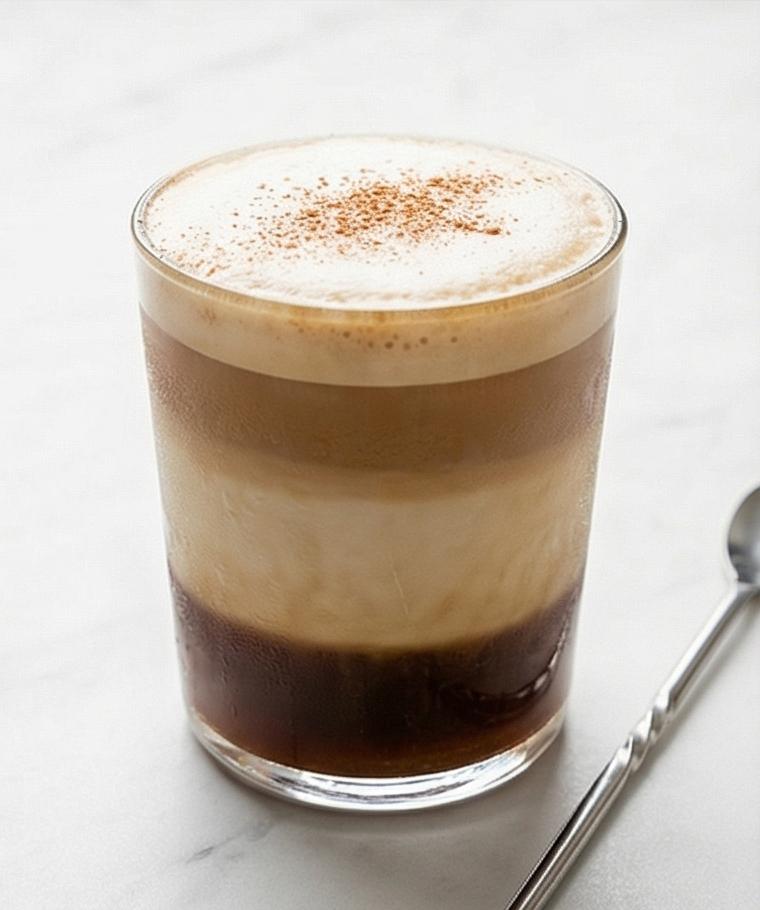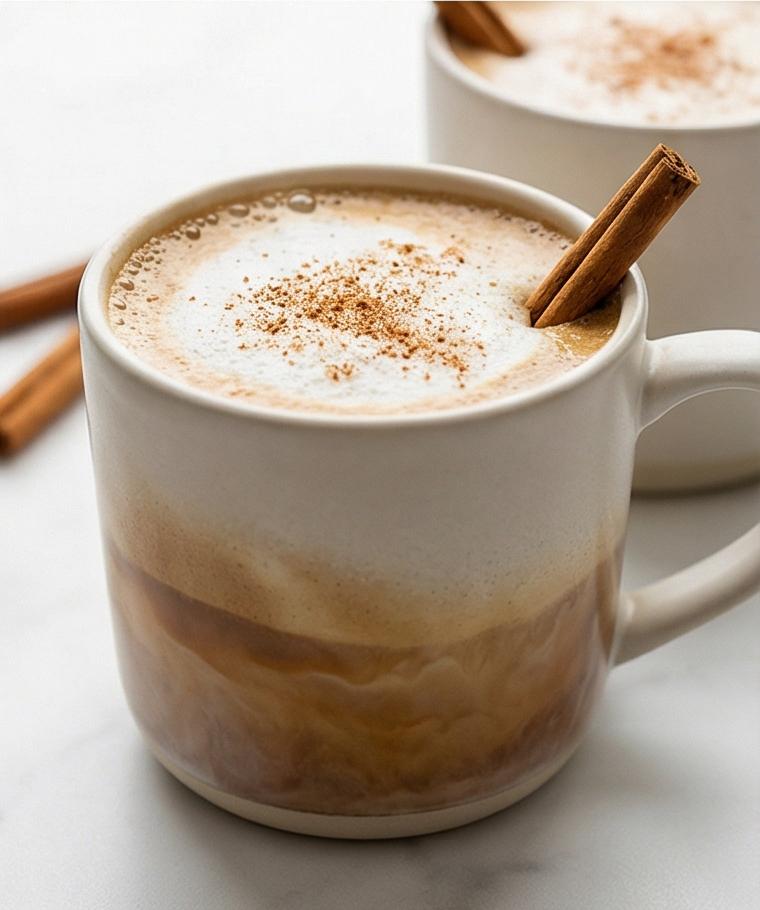
Ube Latte Recipe has become my go-to little indulgence for slow mornings and midafternoon pick-me-ups. I first learned to coax out its purple magic while experimenting with Filipino desserts in a cramped kitchen, and the jar of ube halaya on my counter now feels like a tiny treasure. I love how the creamy, vegetal sweetness of the ube plays with bright espresso and pillowy steamed milk, making every sip feel like a small celebration. If you like colorful drinks that taste like nostalgia with a modern twist, this Ube Latte Recipe is worth trying.
How This Ube Latte Became My Rainy-Day Favorite
I remember the first time I made this Ube Latte Recipe on a rain-soaked afternoon. The windows fogged as the kettle hissed, and the kitchen smelled faintly of coconut and coffee. I mashed the ube halaya until it was glossy and purple, and stirring in the very hot water felt almost meditative. When the espresso met the ube base, the color swirled into the most unexpected, comforting lavender. With each sip I felt a warm calm settle over me, like the drink was a small, delicious umbrella against the drizzle outside. It became ritual: a warm mug, soft jazz in the background, and the tiny, bright thrill of that first velvety mouthful.
The Ingredients That Make It Sing
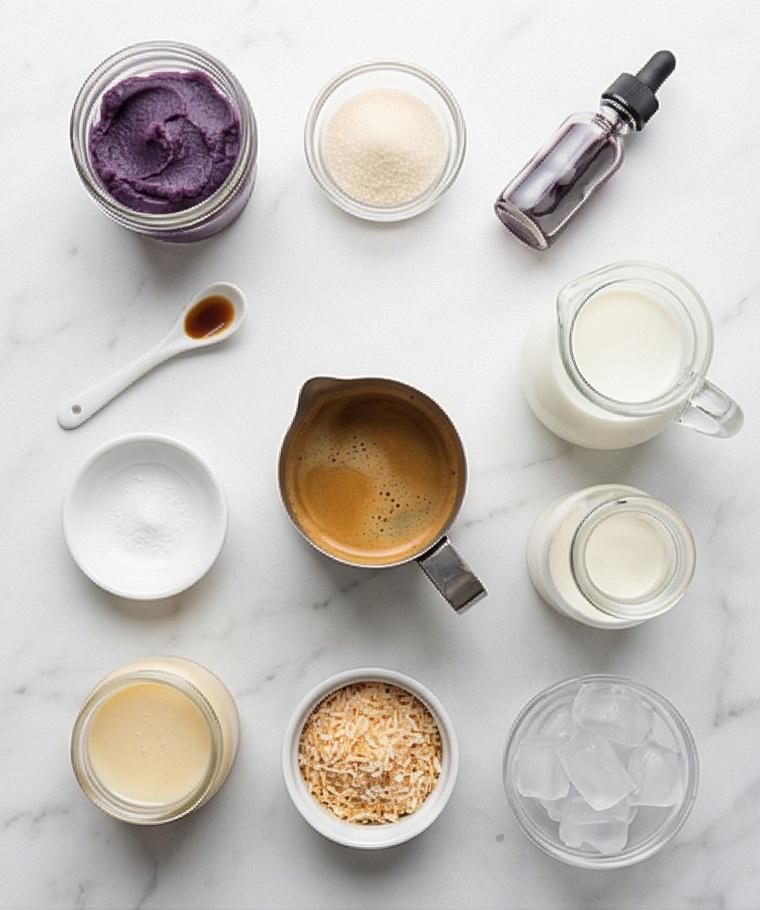
- Ube halaya: The heart of the drink. Choose smooth, fresh ube jam for vibrant color and true ube flavor. Substitute with store-bought ube paste if needed, but reduce added sugar if the paste is sweetened.
- Granulated sugar: Balances the earthiness of the ube. You can swap for coconut sugar or maple syrup for a deeper note, adjusting to taste.
- Ube extract: Amplifies the purple and floral notes. If unavailable, a touch more ube halaya works, though color may be softer.
- Espresso: Provides contrast and structure. Use a strong brewed coffee if you don’t have an espresso machine.
- Whole milk and heavy cream: Deliver silkiness and body. Use oat or almond milk for a dairy-free twist; add a splash of coconut cream for tropical depth.
Essential Tools for the Best Ube Latte
A few simple tools make this drink feel cafe-quality at home. A sturdy heatproof mug lets you mix the warm ube base right where you’ll serve it, which saves dishes and keeps the drink hot longer. A small pitcher or demitasse is perfect for collecting espresso and checking crema. For milk, a steam wand gives the silkiest texture, but a small whisk or a handheld frother works great on the stovetop. Finally, a small spoon or offset spatula helps with swirl details when you add the extra ube halaya on top.
- Heatproof mug: For mixing the ube base and serving.
- Espresso machine or Moka pot: For concentrated coffee.
- Steaming pitcher or small saucepan: To texture milk.
- Handheld frother or whisk: For stovetop microfoam.
- Small spoon or piping tool: For decorative swirls.
Step-by-Step Preparation Guide
Step 1: Prepare and flavor the ube base
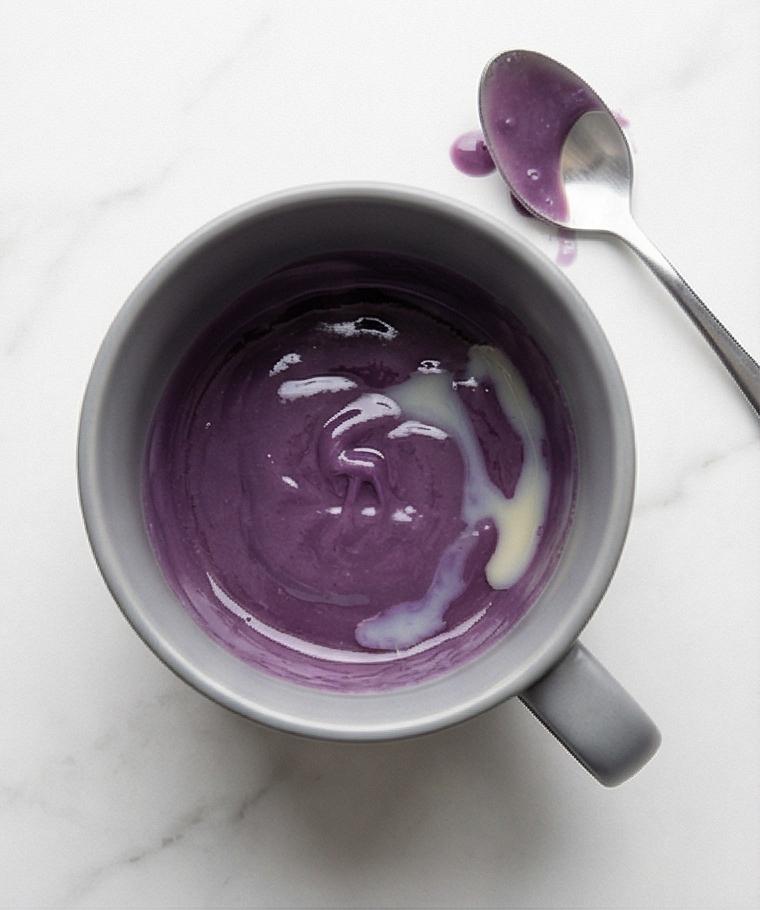
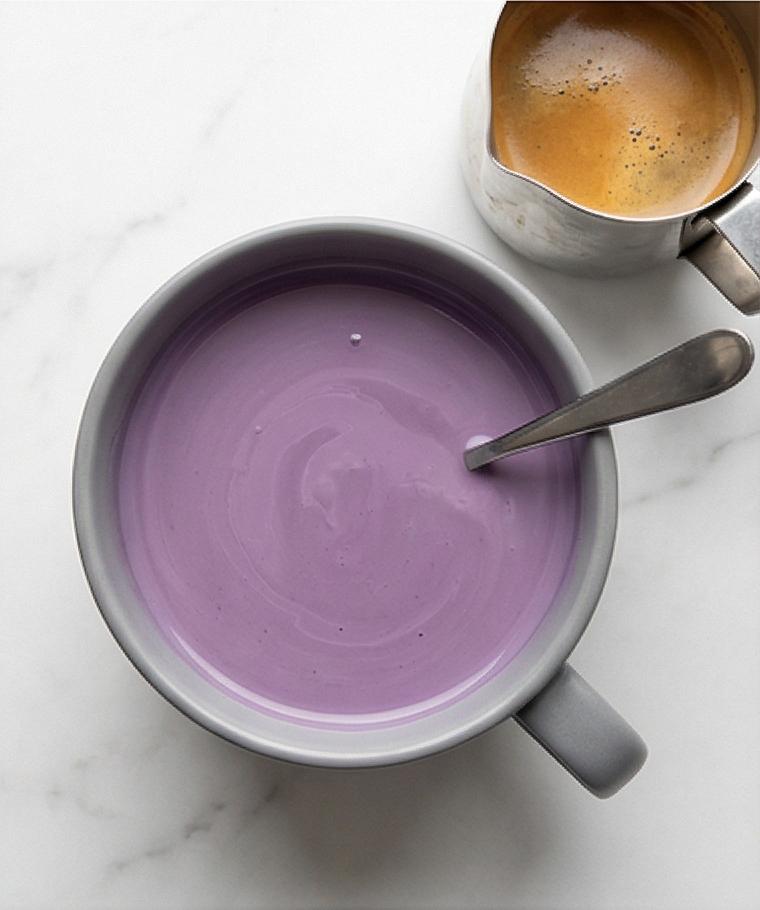
Warm your mood by combining the ube halaya and granulated sugar directly in the large heatproof mug called for in the recipe. Add the very hot water and stir vigorously until the jam loosens into a glossy, syrupy paste — no lumps, just a dense, even purple sheen. Fold in the ube extract, the optional splash of vanilla, and a tiny pinch of fine sea salt so the purple deepens and the flavor brightens; the texture should be satiny and pourable, like thick syrup clinging to the spoon.
Step 2: Brew the espresso
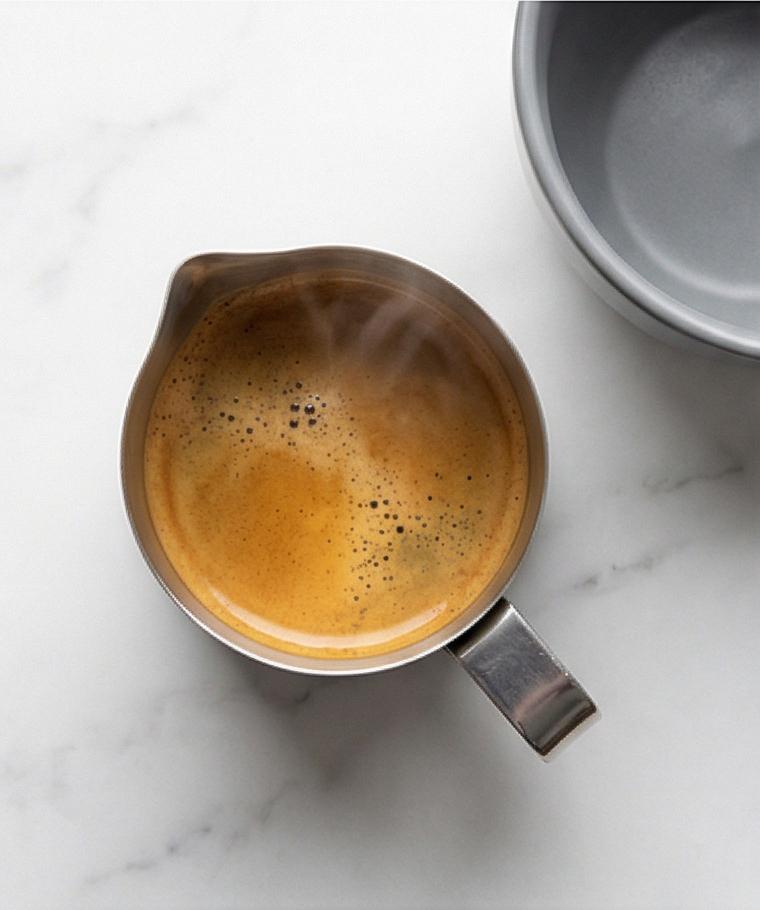
Brew two very hot shots of espresso (or a very strong hot coffee alternative) and collect them in a small heatproof pitcher or demitasse with visible crema. Keep the coffee hot and smelling intense so it will loosen the ube base on contact; the espresso’s dark, glossy pool and soft honey-colored crema provide a tactile contrast to the dense purple syrup.
Step 3: Combine espresso and ube
Immediately pour the hot espresso into the mug with the flavored ube base and stir briskly until the mixture is completely uniform — an even, velvet-lilac liquid with no streaks of brown or globs of jam. The result should be smooth, slightly glossy, and clearly homogenized: a single, vivid purple canvas ready to be warmed by milk.
Step 4: Prepare the milk (steam or stovetop)
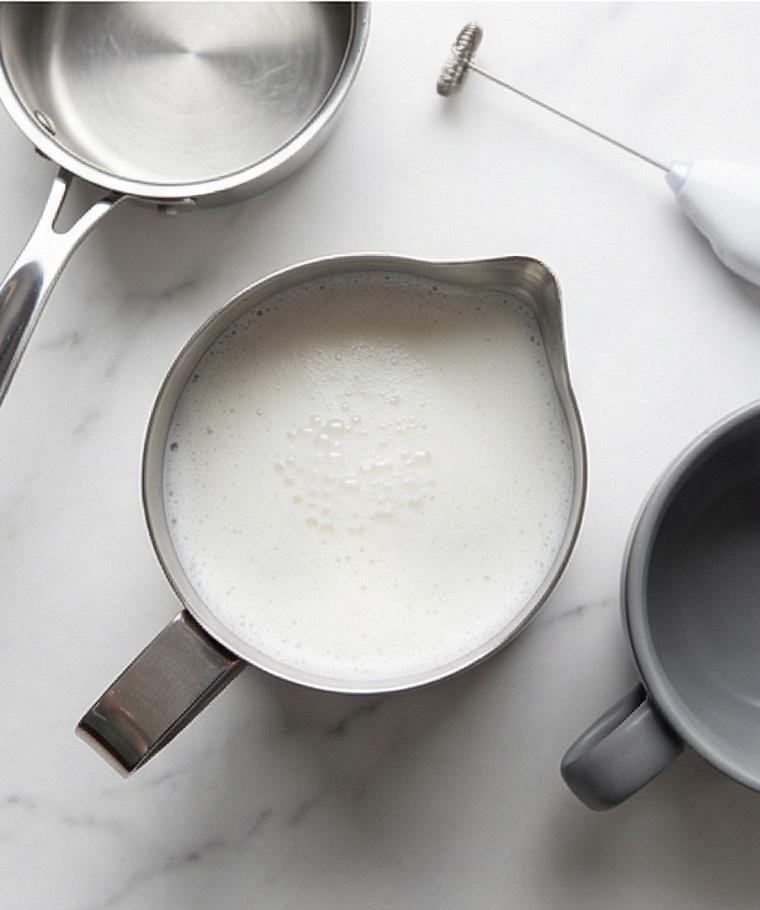
Prepare the milk according to your equipment: if steaming, texture the milk and optional heavy cream into a glossy, velvety microfoam in a stainless-steel steaming pitcher; if using the stovetop method, gently heat and then whisk until slightly aerated and silky. The milk should read pale and reflective, with very fine bubbles and a ribbon-like pour that will marry into the purple base. Keep the same steaming pitcher or whisk visible as an active tool to show continuity.
Step 5: Assemble the hot ube latte and garnish
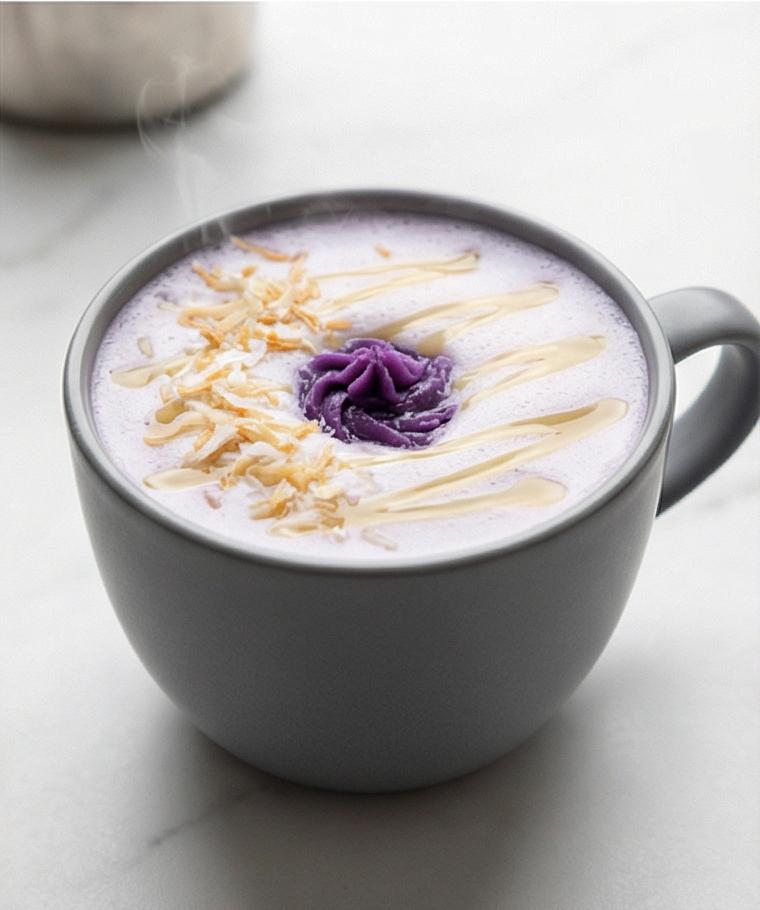
Give the ube-espresso a final stir, then slowly add the hot milk to the center, holding back foam until the liquid is mostly in; spoon the thin microfoam on top so the latte presents as a soft, pale lavender cup with a delicate foam cap. Finish with an optional thin drizzle of sweetened condensed milk, a small decorative swirl of extra ube halaya, and a light scatter of toasted shredded coconut so the surface becomes a study in glossy ribbons, dense purple swirls, and feathery coconut texture.
Step 6: Optional iced variation and final adjustments
For an iced version, cool the ube-espresso to warm or room temperature, then build the drink over a tall glass filled with ice and cold milk, stirring briefly until uniformly pale purple; top with the same garnishes and serve immediately. Taste and adjust sweetness with small increments of condensed milk or sugar, and enjoy the drink fresh for the best silky mouthfeel.
Making It Your Own
I like to experiment with the base—sometimes I add a spoonful of coconut cream for an island twist, and other days I pull back on sugar and let the ube’s natural sweetness lead. For a dairy-free version I swap whole milk for creamy oat milk and replace heavy cream with a splash of full-fat coconut milk; it keeps the mouthfeel rich but changes the aroma in a lovely way. If you prefer less coffee intensity, use a single shot of espresso and a bit more milk.
For seasonal versions, try a sprinkle of toasted macadamia nuts in winter or a dusting of lime zest in summer to brighten the flavor. When serving friends, I label the dairy-free glass so everyone knows which is which. Small swaps let the Ube Latte Recipe adapt to taste and occasion without losing that signature violet charm.
How to Serve
When I host, I make a small ube prep station: the warmed ube base in one pitcher, hot espresso ready to pour, and steamed milk in another. For a cozy brunch, serve each cup with a tiny spoon of extra ube halaya on the side and a bowl of toasted coconut for guests to sprinkle. If you are serving a crowd, scale the ube base in a small pot and keep it warm on the lowest heat, letting each guest have brewed coffee poured into individual mugs.
For a refined presentation, use clear glass cups so the pale purple layers show through. Offer condensed milk and extra ube halaya for guests who like sweeter drinks. For an afternoon gathering, pair the lattes with coconut shortbread or pandan cookies to echo the tropical notes.
Storage and Reheating
Leftover ube base stores well in an airtight container in the fridge for up to 5 days. Rewarm gently in a small saucepan over low heat or in the microwave in short bursts, stirring between each burst so it loosens back into a silky paste. If it thickens on cooling, add a splash of hot water while stirring to bring it back to pourable consistency.
If you have a prepared latte, it is best enjoyed fresh. Still, you can refrigerate the milk and ube-espresso separately for up to 24 hours and recombine after reheating the espresso and gently warming the milk. For iced versions, keep all elements chilled and build just before serving.
Oops-Proof Tips: Common Mistakes and How to Avoid Them
The most common slip is not loosening the ube sufficiently. If you skip the hot water or don’t stir long enough, you might get globs that won’t dissolve into the coffee. Make sure the ube halaya is smooth and the hot water is added gradually while you stir.
Another frequent error is overheating milk, which kills the sweetness and creates big bubbles instead of microfoam. Heat milk just until it is steaming and feels hot to the touch, then texture it gently. If you want a sweeter finish, add condensed milk sparingly and taste as you go.
Final Sip
Give the Ube Latte Recipe a try the next time you want a drink that is both comforting and a little adventurous. It is forgiving, customizable, and surprisingly easy to make at home. Pour a cup, take a breath, and enjoy that soft, purple-hued moment of calm.
Frequently Asked Questions.
- What is the best substitute for ube extract? You can use a bit more ube halaya or a tiny drop of vanilla if you do not have ube extract, though the color and floral note will be milder.
- Can I make this dairy free? Yes. Oat milk or full-fat coconut milk are great substitutes and keep the latte rich and smooth.
- How far ahead can I prepare the ube base? The ube base keeps in an airtight container in the fridge for up to 5 days; rewarm gently before assembling.
- Can I use instant coffee instead of espresso? Use a very strong brewed coffee if you do not have espresso; instant may be too weak unless you prepare it concentrated.
- How do I keep the color vibrant? Use good-quality ube halaya and a touch of ube extract; avoid boiling the ube base as prolonged heat can dull the hue.
Ube Latte Recipe
Make a creamy Ube Latte Recipe: vibrant ube halaya, hot espresso, and steamed milk for a silky purple latte.
Ingredients
Instructions
Step 1: Prepare and flavor the ube base
Warm your mood by combining the ube halaya and granulated sugar directly in the large heatproof mug called for in the recipe. Add the very hot water and stir vigorously until the jam loosens into a glossy, syrupy paste — no lumps, just a dense, even purple sheen. Fold in the ube extract, the optional splash of vanilla, and a tiny pinch of fine sea salt so the purple deepens and the flavor brightens; the texture should be satiny and pourable, like thick syrup clinging to the spoon.
Step 2: Brew the espresso
Brew two very hot shots of espresso (or a very strong hot coffee alternative) and collect them in a small heatproof pitcher or demitasse with visible crema. Keep the coffee hot and smelling intense so it will loosen the ube base on contact; the espresso’s dark, glossy pool and soft honey-colored crema provide a tactile contrast to the dense purple syrup.
Step 3: Combine espresso and ube
Immediately pour the hot espresso into the mug with the flavored ube base and stir briskly until the mixture is completely uniform — an even, velvet-lilac liquid with no streaks of brown or globs of jam. The result should be smooth, slightly glossy, and clearly homogenized: a single, vivid purple canvas ready to be warmed by milk.
Step 4: Prepare the milk (steam or stovetop)
Prepare the milk according to your equipment: if steaming, texture the milk and optional heavy cream into a glossy, velvety microfoam in a stainless-steel steaming pitcher; if using the stovetop method, gently heat and then whisk until slightly aerated and silky. The milk should read pale and reflective, with very fine bubbles and a ribbon-like pour that will marry into the purple base. Keep the same steaming pitcher or whisk visible as an active tool to show continuity.
Step 5: Assemble the hot ube latte and garnish
Give the ube-espresso a final stir, then slowly add the hot milk to the center, holding back foam until the liquid is mostly in; spoon the thin microfoam on top so the latte presents as a soft, pale lavender cup with a delicate foam cap. Finish with an optional thin drizzle of sweetened condensed milk, a small decorative swirl of extra ube halaya, and a light scatter of toasted shredded coconut so the surface becomes a study in glossy ribbons, dense purple swirls, and feathery coconut texture.
Step 6: Optional iced variation and final adjustments
For an iced version, cool the ube-espresso to warm or room temperature, then build the drink over a tall glass filled with ice and cold milk, stirring briefly until uniformly pale purple; top with the same garnishes and serve immediately. Taste and adjust sweetness with small increments of condensed milk or sugar, and enjoy the drink fresh for the best silky mouthfeel.
Notes
- Adjust sugar to taste; ube halaya can be quite sweet already
- Rewarm ube base gently and add hot water to loosen if thick
- For dairy-free versions, use oat or full-fat coconut milk
- Use fresh espresso for the best contrast and aroma
- Toast shredded coconut briefly for the best garnish