Cloud Bread Recipe has been a little game-changer in my kitchen for quick, low-carb sandwiches and light afternoon snacks. I first learned to make this version on a rainy weekend and it quickly became a go-to when I wanted something pillowy without the fuss. The Cloud Bread Recipe is forgiving, fast, and surprisingly versatile, whether you keep it plain or add herbs and cheese. I love how a few simple ingredients can create something that feels special and elevated in just half an hour.
How This Recipe Became My Cozy-Weekend Staple
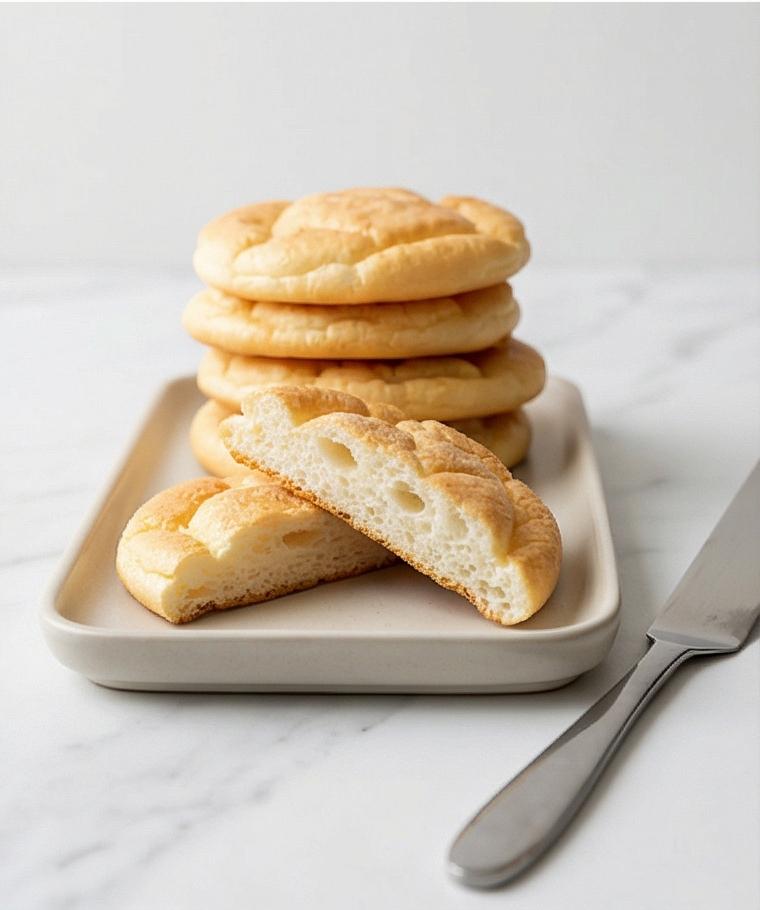
I remember the first time I baked the Cloud Bread Recipe: the house smelled faintly of warm eggs and Parmesan, and I felt oddly proud of something so simple. The whites whipped into glossy peaks that looked like little snowdrifts, and the airiness of each round felt like a tiny victory. Eating one fresh from the oven—still slightly warm, with a smear of butter—was comfort in a bite. The texture is soft but slightly springy, and when you break one open steam rises like a soft sigh. That weekend I invited a friend over, and we made sandwiches with roasted veggies and a smear of mustard; we both agreed it felt like cheating because it was that easy. The memory of that cozy chat and the scent of baking is why I keep returning to this recipe whenever I need something simple and satisfying.
Main Ingredients and What They Do
- 3 large eggs, separated: The backbone of the Cloud Bread Recipe. Whites create lift and structure while yolks add richness; use room temperature eggs for better volume.
- 1/4 teaspoon cream of tartar: Stabilizes the whipped whites; you can substitute 1/8 teaspoon lemon juice if needed.
- 3 tablespoons full-fat cream cheese: Adds creaminess and helps the batter bind; softened goat cheese works in a pinch.
- 1/8 teaspoon fine sea salt: Balances flavor; adjust to taste.
- 1/4 teaspoon garlic powder (optional): For savory depth; omit for a neutral loaf.
- 1/4 teaspoon dried Italian herb blend (optional): Gives aroma and Mediterranean notes; use dried oregano alone if preferred.
- 1 tablespoon finely grated Parmesan (optional): For a salty, crisp top; try Pecorino for a sharper bite.
- Nonstick cooking spray or neutral oil: Prevents sticking on the parchment; olive oil can add extra flavor.
Essential Kitchen Tools and Why They Matter
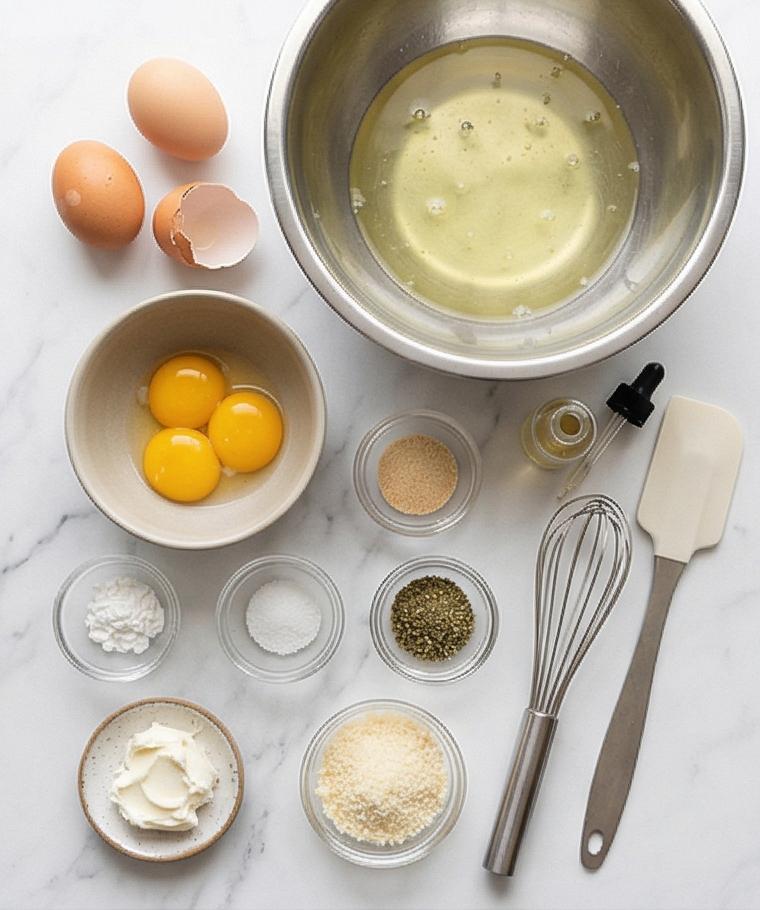
A few simple tools make the Cloud Bread Recipe a breeze. An electric mixer or stand mixer is a lifesaver for getting glossy, stable egg whites; you could whisk by hand but expect a workout and longer whipping time. A clean, dry stainless bowl helps the whites fluff properly; any trace of grease will stop them from reaching full volume. A rubber spatula is ideal for gentle folding to keep the batter airy, and a baking sheet lined with parchment ensures even baking and easy removal. If you like uniform rounds, a 1/4-cup measure or an ice-cream scoop helps portion consistently. Alternatives: hand whisk instead of an electric mixer, and silicone spatula instead of rubber if that is what you have on hand.
Step-by-Step Preparation Guide
Step 1: Prep and separate the eggs
Warm the oven to 300°F (150°C), line a large rectangular baking sheet with parchment and very lightly grease the parchment to prevent sticking. Carefully separate the 3 large eggs, placing the whites into a very clean, dry large stainless-steel mixing bowl and the yolks into a small matte ceramic bowl; keep every vessel tidy and free of grease so the whites will whip properly. Set out the cream cheese (softened on a tiny white saucer), cream of tartar, fine sea salt, garlic powder and dried herb blend each in small glass ramekins, and keep a small ramekin of finely grated Parmesan nearby if you plan to sprinkle it later.
Step 2: Whip the egg whites to glossy stiff peaks
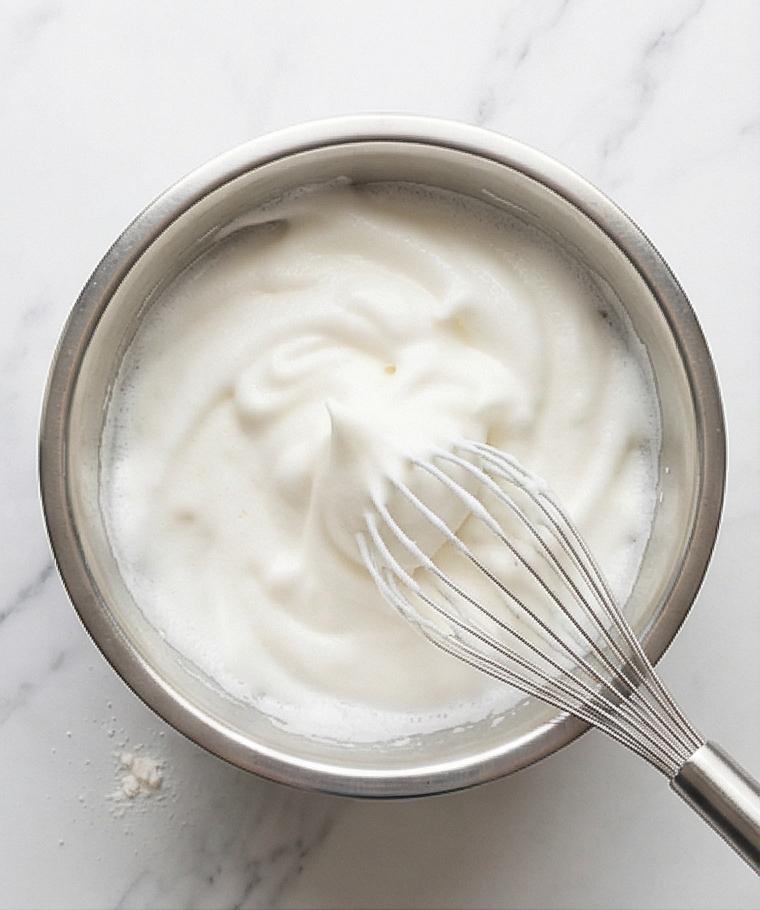
Sprinkle the cream of tartar over the chilled egg whites and, with an electric whisk or stand mixer, beat from foamy to glossy, stable, stiff peaks – the mixture should be shiny, dense with soft, billowy peaks that hold their shape without collapsing. Rest the whisk inside the same stainless bowl so it reads as the active tool; avoid overbeating so the peaks remain smooth and slightly elastic rather than dry.
Step 3: Make the yolk and cream cheese base, then fold to an airy batter
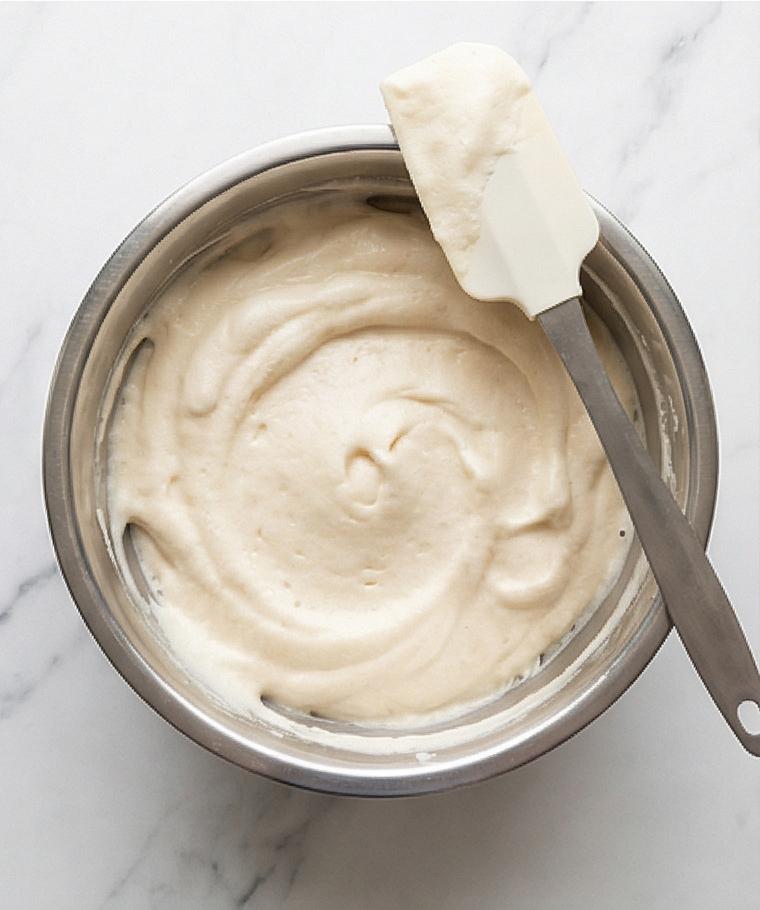
Beat the separated yolks with the softened cream cheese, salt, and any optional seasonings until completely smooth and lump-free in the small matte ceramic bowl; the mixture should be thick, satiny and homogenous. Using a large rubber spatula, fold about one-third of the whipped whites into the yolk mixture with gentle sweeping motions to lighten it, then fold in the remaining whites in two additions until the batter is uniform, airy and pale – no obvious streaks of white should remain, the texture should look cloud-like and billowy but cohesive.

Step 4: Portion and shape the cloud mounds on the prepared sheet
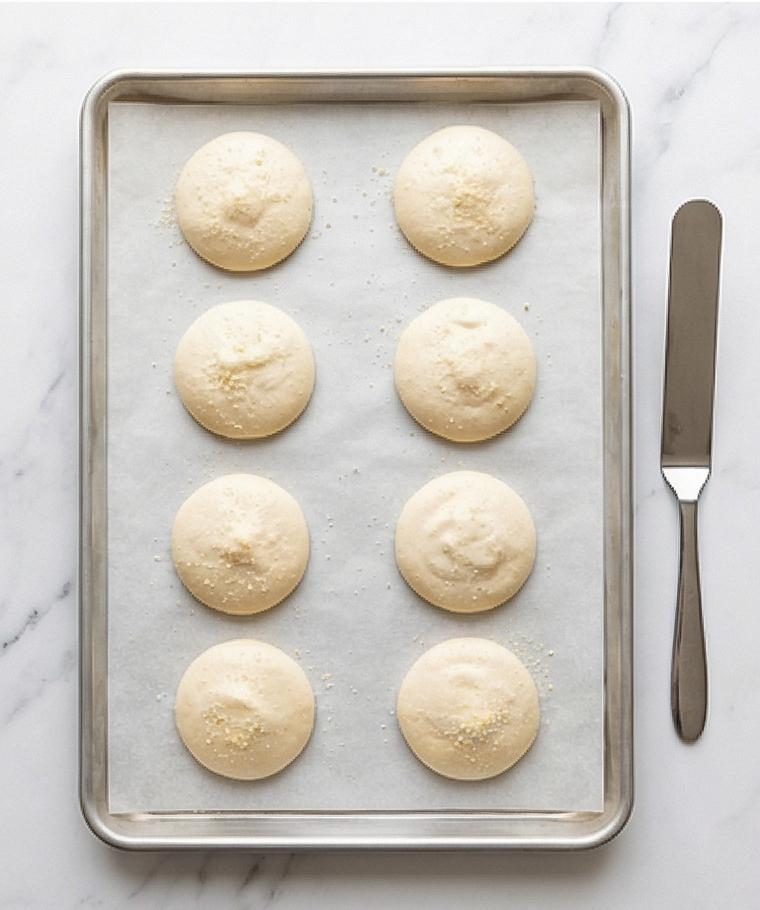
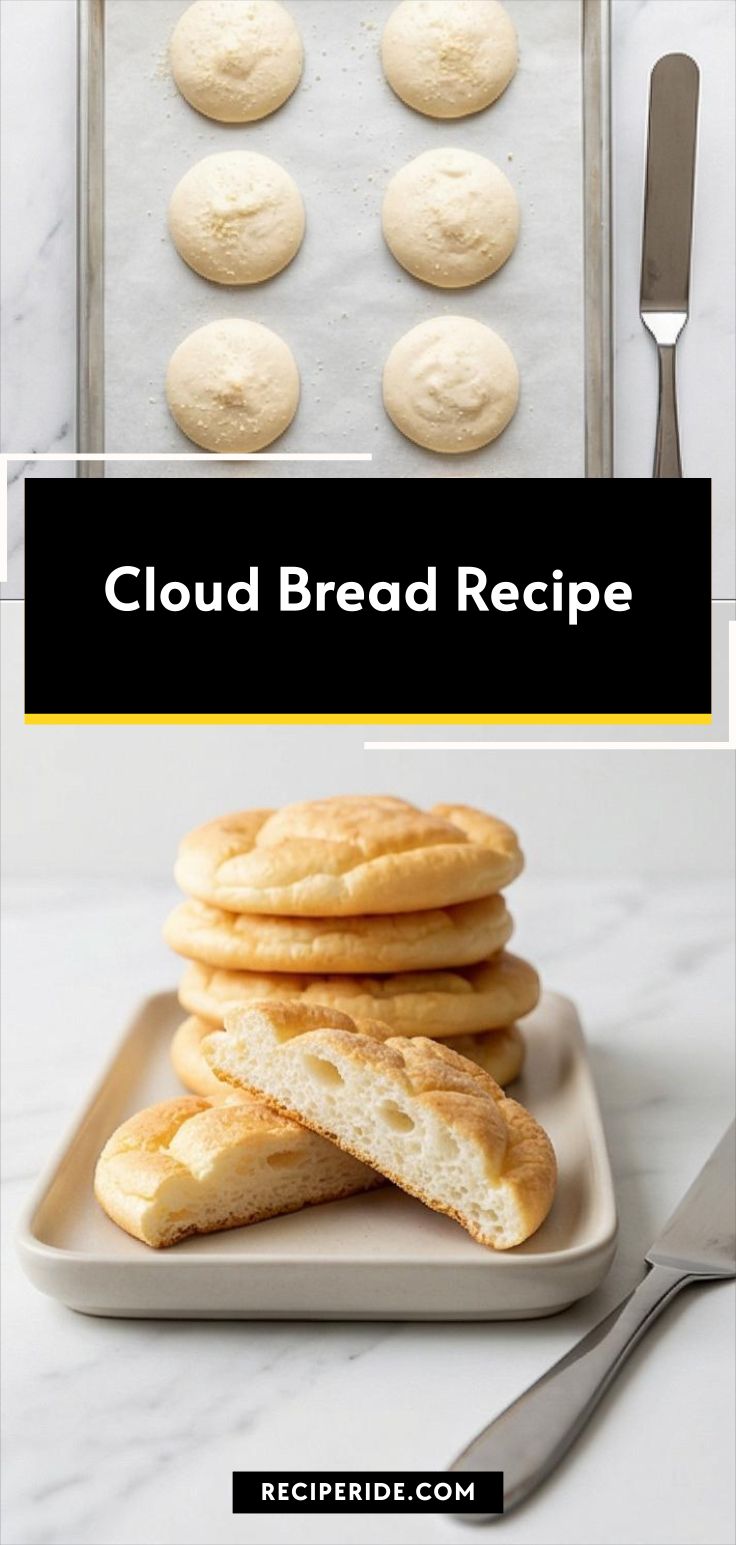
Scoop the light batter with a 1/4-cup measure or large spoon into eight equal mounds onto the prepared rectangular parchment, spacing them at least 2 inches apart. With the back of the spoon or a small offset spatula, gently round each mound into a 3–4-inch disc about 1/2–3/4 inch thick; keep the tops soft and airy. If using, lightly sprinkle the grated Parmesan over the tops without pressing. Leave the stainless bowl, spatula and a thin metal turner nearby as subtle, consistent props.
Step 5: Bake, rest, cool and serve
Bake the mounds on the rectangular baking sheet at 300°F (150°C) until puffed, set and pale golden at the edges (about 20–25 minutes). After baking, let the sheet sit with the oven door cracked briefly (simulated here as a short rest period) to reduce shock, then transfer the cloud breads to a wire rack with a thin spatula to cool completely – they will flatten slightly but remain soft, flexible and bread-like. Serve the finished cloud breads warm as low-carb buns or on a rectangular platter; for best texture, enjoy same day or store chilled.
Making It Your Own
I experimented a few ways to tailor the Cloud Bread Recipe to different moods. For a cheesy weekend brunch I stirred a tablespoon of shredded cheddar into the yolk base and sprinkled chives on top; the crumb stayed pillowy but gained savory depth. When I wanted a sweeter snack I omitted garlic and herbs, added a pinch of cinnamon, and served the rounds with fresh berries and a drizzle of honey. For a dairy-free version I swapped cream cheese for a thick cashew cream in my trials, though the texture was slightly softer. In colder months I added a pinch of smoked paprika and used rosemary for a warming aroma. Small swaps make a big difference, so try little experiments until you find the version you love.
How to Serve
Imagine a relaxed weekend brunch: arrange warm Cloud Bread Recipe rounds on a long platter with small bowls of toppings. For a build-your-own sandwich station, slice open a few and set out roasted vegetables, thinly sliced turkey, soft cheeses, and pickles. To scale for a dinner party, double the batch and keep extras on a baking sheet in a low oven until guests arrive. For an elegant appetizer, halve the rounds and top each with smoked salmon, a dollop of crème fraiche, and a sprinkle of dill. If hosting a casual lunch, serve them as slider buns with mashed avocado and lemony slaw.
Storage and Reheating Tips
Store cooled cloud breads in an airtight container in the refrigerator for up to 3 days. To prevent sogginess, layer parchment between rounds and avoid heavy, wet toppings before storing.
For reheating, warm briefly in a toaster oven or regular oven at 300°F (150°C) for 3 to 5 minutes, or heat a single round in a dry skillet over medium-low for about a minute per side. Avoid long reheats which dry them out; quick, gentle heat restores softness and a just-warmed aroma.
Oops-Proof Tips: Common Mistakes and Fixes
One common misstep is underwhipping or overwhipping the egg whites. If they are underwhipped the batter will not hold its shape; if they are overwhipped the texture can be dry and crumbly. Stop when peaks are glossy and slightly elastic.
Another slip is folding too vigorously. Use gentle, wide folds to preserve air; if you get impatient the cloud texture will deflate. Also, ensure bowls and beaters are perfectly clean and free of grease so the whites reach full volume.
Final Thoughts and an Invite
If you like light, adaptable breads with minimal ingredients, the Cloud Bread Recipe is a delightful thing to add to your rotation. It rewards small experiments, comes together quickly, and brings a playful texture to sandwiches and snacks. Give it a try this week and see which variation becomes your favorite.
Frequently Asked Questions
- Q: Can I make the Cloud Bread Recipe gluten free? A: Yes, it is naturally gluten free since it uses eggs and cream cheese instead of flour.
- Q: Can I use low-fat cream cheese? A: You can, but full-fat gives better structure and richness; low-fat may yield a softer texture.
- Q: How can I make it sweet instead of savory? A: Omit garlic and herbs, add a touch of cinnamon or vanilla to the yolk mixture, and serve with fruit or honey.
- Q: Will these keep at room temperature? A: I store them chilled in an airtight container; at room temperature they can become soft and should be eaten within a few hours.
- Q: Can I freeze Cloud Bread Recipe rounds? A: I have not found freezing ideal; they lose some fluffiness. If you freeze them, wrap tightly and thaw gently in a low oven.
Cloud Bread Recipe
Make Cloud Bread Recipe now for pillowy low-carb buns in about 40 minutes.
Ingredients
Instructions
Step 1: Prep and separate the eggs
Warm the oven to 300°F (150°C), line a large rectangular baking sheet with parchment and very lightly grease the parchment to prevent sticking. Carefully separate the 3 large eggs, placing the whites into a very clean, dry large stainless-steel mixing bowl and the yolks into a small matte ceramic bowl; keep every vessel tidy and free of grease so the whites will whip properly. Set out the cream cheese (softened on a tiny white saucer), cream of tartar, fine sea salt, garlic powder and dried herb blend each in small glass ramekins, and keep a small ramekin of finely grated Parmesan nearby if you plan to sprinkle it later.
Step 2: Whip the egg whites to glossy stiff peaks
Sprinkle the cream of tartar over the chilled egg whites and, with an electric whisk or stand mixer, beat from foamy to glossy, stable, stiff peaks — the mixture should be shiny, dense with soft, billowy peaks that hold their shape without collapsing. Rest the whisk inside the same stainless bowl so it reads as the active tool; avoid overbeating so the peaks remain smooth and slightly elastic rather than dry.
Step 3: Make the yolk and cream cheese base, then fold to an airy batter
Beat the separated yolks with the softened cream cheese, salt, and any optional seasonings until completely smooth and lump-free in the small matte ceramic bowl; the mixture should be thick, satiny and homogenous. Using a large rubber spatula, fold about one-third of the whipped whites into the yolk mixture with gentle sweeping motions to lighten it, then fold in the remaining whites in two additions until the batter is uniform, airy and pale — no obvious streaks of white should remain, the texture should look cloud-like and billowy but cohesive.
Step 4: Portion and shape the cloud mounds on the prepared sheet
Scoop the light batter with a 1/4-cup measure or large spoon into eight equal mounds onto the prepared rectangular parchment, spacing them at least 2 inches apart. With the back of the spoon or a small offset spatula, gently round each mound into a 3–4-inch disc about 1/2–3/4 inch thick; keep the tops soft and airy. If using, lightly sprinkle the grated Parmesan over the tops without pressing. Leave the stainless bowl, spatula and a thin metal turner nearby as subtle, consistent props.
Step 5: Bake, rest, cool and serve
Bake the mounds on the rectangular baking sheet at 300°F (150°C) until puffed, set and pale golden at the edges (about 20–25 minutes). After baking, let the sheet sit with the oven door cracked briefly (simulated here as a short rest period) to reduce shock, then transfer the cloud breads to a wire rack with a thin spatula to cool completely — they will flatten slightly but remain soft, flexible and bread-like. Serve the finished cloud breads warm as low-carb buns or on a rectangular platter; for best texture, enjoy same day or store chilled.
Notes
- Use room temperature eggs for better volume when whipping the whites
- Do not overbeat the egg whites; stop at glossy, stable peaks
- Fold gently to preserve air and a light texture
- Store cooled cloud breads in an airtight container with parchment between layers
- Reheat briefly in a low oven or dry skillet to restore softness