I still remember the first time I pulled a warm, herb-flecked Feta Stuffed Flatbread Recipe from the pan and watched the cheese melt into little pockets. It felt like a small, delicious miracle—simple ingredients transforming into something that made everyone at the table lean in. This Feta Stuffed Flatbread Recipe is exactly that kind of recipe: approachable dough, a salty creamy filling, and a few minutes of pan-frying for golden, blistered color. I make it when friends drop by or when I want something comforting but impressive without hours in the kitchen. You’ll find it forgiving, flexible, and fast once you get the hang of the shaping.
How This Recipe Became My Rainy-Day Favorite
A rainy afternoon years ago found me standing at my marble counter, the kitchen glowing with warm light and the house smelling faintly of olive oil and baked bread. I was testing the Feta Stuffed Flatbread Recipe after a long week and invited my neighbor over for tea. We ate the flatbreads wedges straight from the plate, steam still rising, fingers picking at flaky spots and spreading salty feta across crusty bites of bread. The rain made the windows blur, the herbs smelled brighter, and every small imperfection in the dough felt like proof that this was home cooking. That evening I learned that the recipe is not just about feeding people, it’s about slowing down enough to notice the little pleasures: the crackle of crust, the cool tang of yogurt or tzatziki alongside warm cheese, and the conversation that fills the pauses between bites.
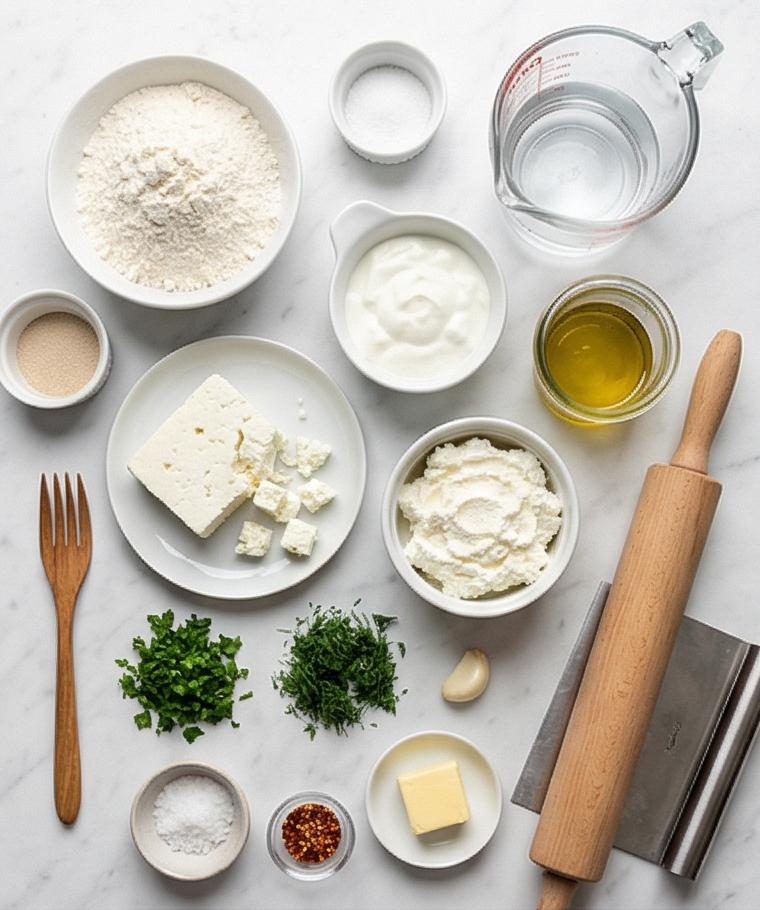
Key Ingredients and How They Work
- All-purpose flour: Forms the structure of the dough; use unbleached for a bit more flavor. Substitute half with bread flour for a chewier texture. Choose flour from a recent mill date.
- Instant yeast: Gives rise and tenderness. If you only have active dry yeast, proof in the warm water first and allow a few extra minutes.
- Greek yogurt: Adds richness and a tender crumb; full-fat gives the best mouthfeel. Dairy-free yogurt can work in a pinch.
- Feta cheese: The salty, tangy star of the filling; drain it well and crumble for even distribution. For lower salt, rinse briefly and pat dry.
- Ricotta or extra yogurt: Balances the feta and makes the filling spreadable; swap for mascarpone for a richer result.
- Herbs and garlic: Fresh parsley and dill or mint brighten the cheese; dried herbs are a fallback but use less.
Essential Kitchen Tools and Why They Matter
A few reliable tools make this Feta Stuffed Flatbread Recipe effortless. Start with basics and add substitutes if needed.
- Mixing bowl: A large bowl gives the dough space to rise; glass or ceramic holds warmth. If you lack a large bowl, use two smaller ones.
- Bench scraper: Helpful for dividing and handling dough without tearing; a dull knife can substitute in a pinch.
- Rolling pin: For thin, even flatbreads. A wine bottle wrapped in a towel works as an alternative.
- Heavy skillet or griddle: Cast iron or carbon steel gives the best blistering and browning; a nonstick skillet can be used for a gentler finish.
- Pastry brush: For brushing butter and oil; use a spoon if you do not have one.
These tools help you shape, cook, and finish the flatbreads with minimal fuss.
Step-by-Step Preparation Guide
Step 1: Make and proof the dough
In a large matte-grey ceramic mixing bowl set on the Carrara marble, whisk the dry flour, salt and sugar briefly, then combine the warm water and instant yeast, stir in the room-temperature Greek yogurt and olive oil, and add the flour until a shaggy mass forms. Turn the shaggy dough onto the floured surface and knead by hand until it becomes smooth, elastic and only slightly tacky – soft, with a satiny surface and faint stretch marks where the gluten has developed. Lightly oil the same mixing bowl, place the dough inside, turn it once so the bowl shows a thin film of oil, cover and leave in a warm spot until the ball has visibly doubled and the surface is domed and slightly dimpled when poked. The bowl should read as a pillowy, taut dome with a soft sheen of oil on the sides, tiny flour dusting at the rim, and a clear difference between the earlier shaggy mass and this smooth, taut risen dough.

Step 2: Prepare the feta–ricotta filling
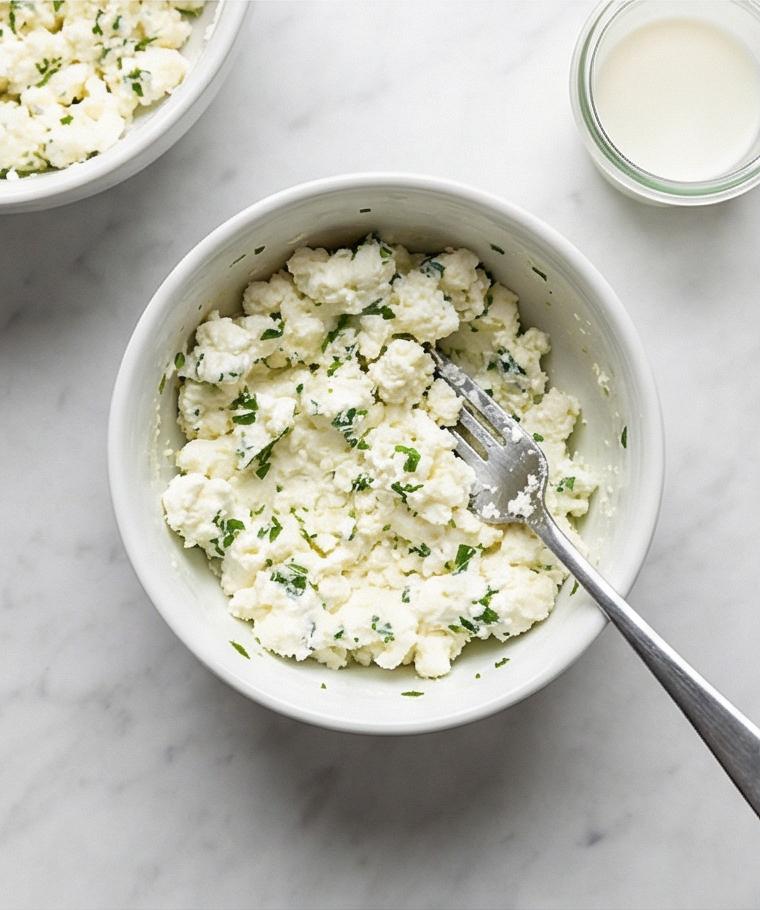
In a smaller matching white ceramic bowl on the same marble, crumble the brined feta and gently mash it with a fork until large chunks break down to coarse granules. Fold in the whole-milk ricotta (or yogurt), finely chopped parsley and dill (or mint), a whisper of minced garlic if using, and freshly ground black pepper. The result should read as a creamy, slightly chunky spread – white and ivory curds with flecks of bright green herbs, a faint sheen from the dairy, and a fork resting in the bowl dusted with a few crumbs. If the mixture feels tight, add a teaspoon of milk at a time until it spreads but holds texture; keep the bowl uncovered at room temperature so it reads soft and immediately spreadable.
Step 3: Divide, rest, and shape into filled pouches
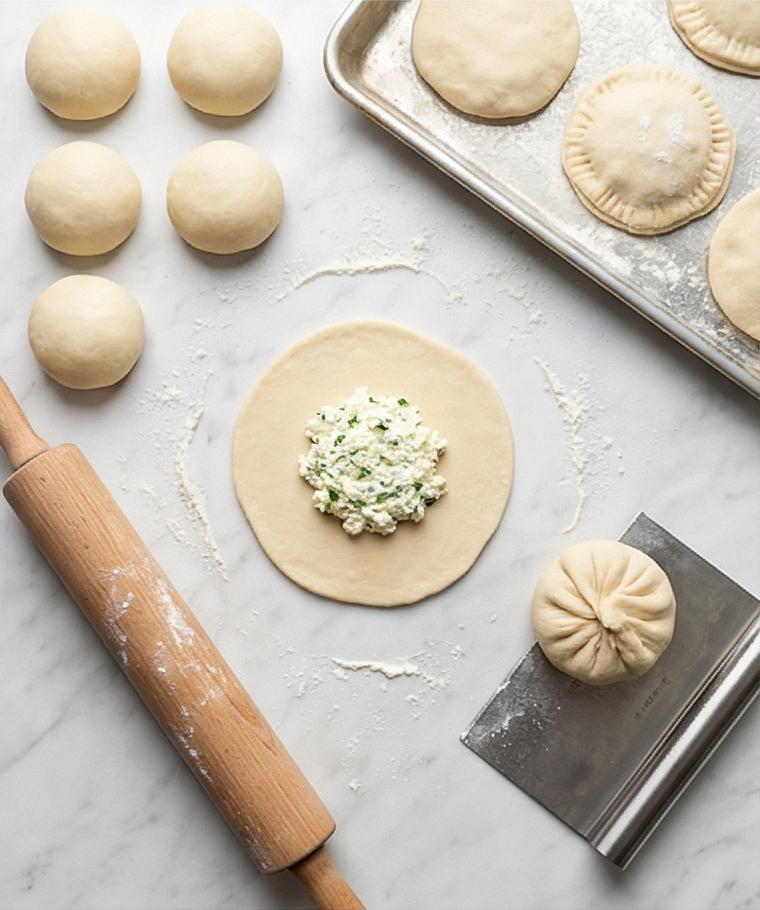
Turn the risen dough onto a lightly floured patch of marble, gently deflate and form a smooth ball, then use a bench scraper to divide it into eight equal pieces. Shape each piece into a tight ball by tucking seams under and rolling under your palm; place the balls on the marble, cover loosely, and let them relax so the surface smooths out and the dough is easy to roll. Working one at a time, roll a dough ball into a 5–6″ thin circle (dusty underside with flour), spoon about two heaping tablespoons of the feta filling into the center, leave a narrow border, then pleat and pinch the edges together into a sealed pouch. Turn each pouch seam-side down, gently press into a thick disk and let it rest briefly until relaxed and smooth. These sealed pouches should read as compact, slightly lumpy pillows with distinct pleated seams, a dusting of flour at the edges, and a rolling pin and bench scraper nearby as the active tools.
Step 4: Roll thin and finish the flatbreads
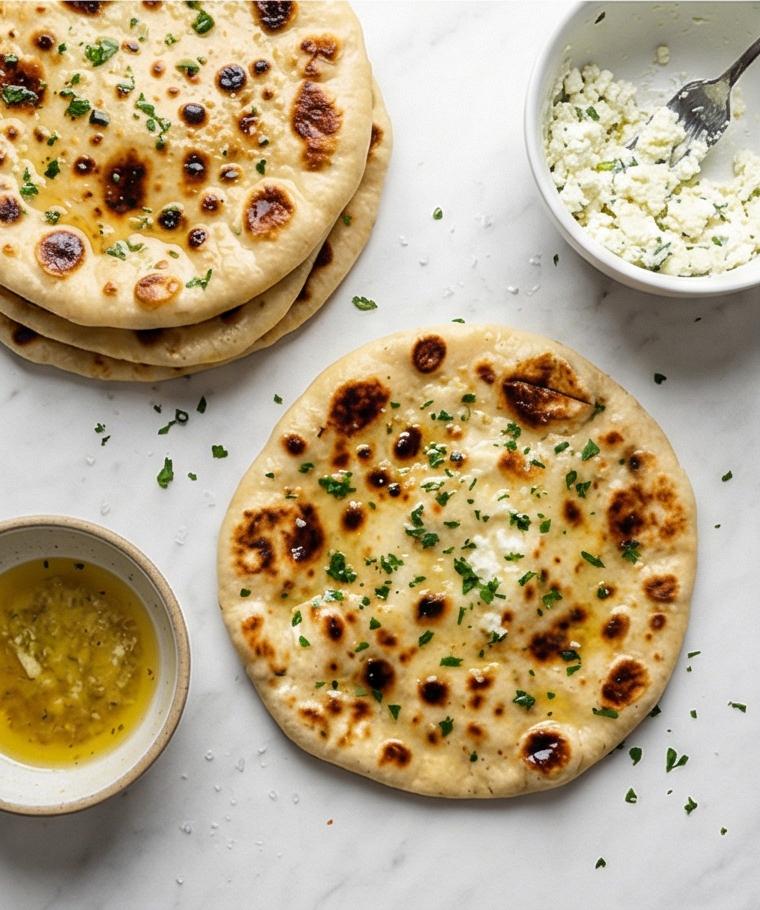
On the floured marble, carefully roll each filled disk into a 6–7″ thin flatbread, turning frequently so the filling spreads without tearing – minor pinches reseal any tiny tears. Arrange the rolled, filled flatbreads on a lightly floured tray, covered with a towel to stay supple. After cooking (see note below), transfer the warm breads back to the marble: each one should present with puffed blisters and deep golden-brown spots, an amber-to-gold mosaic across a thin, pliable surface. In a small ceramic bowl whisk together warm melted butter and olive oil and, as each bread comes off heat, brush lightly to create a soft glossy sheen; finish directly on the marble by sprinkling finely chopped herbs, flaky sea salt and optional red pepper flakes so the surface reads glossy, herb-flecked and slightly crinkled at the edges.
Step 5: Plate and serve the finished feta stuffed flatbreads
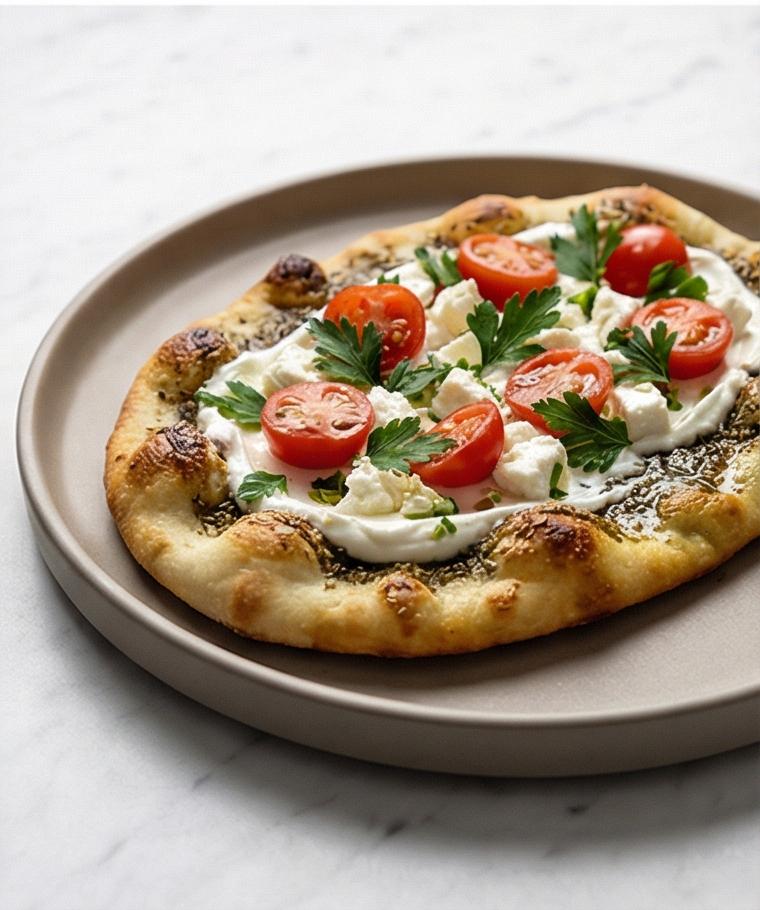
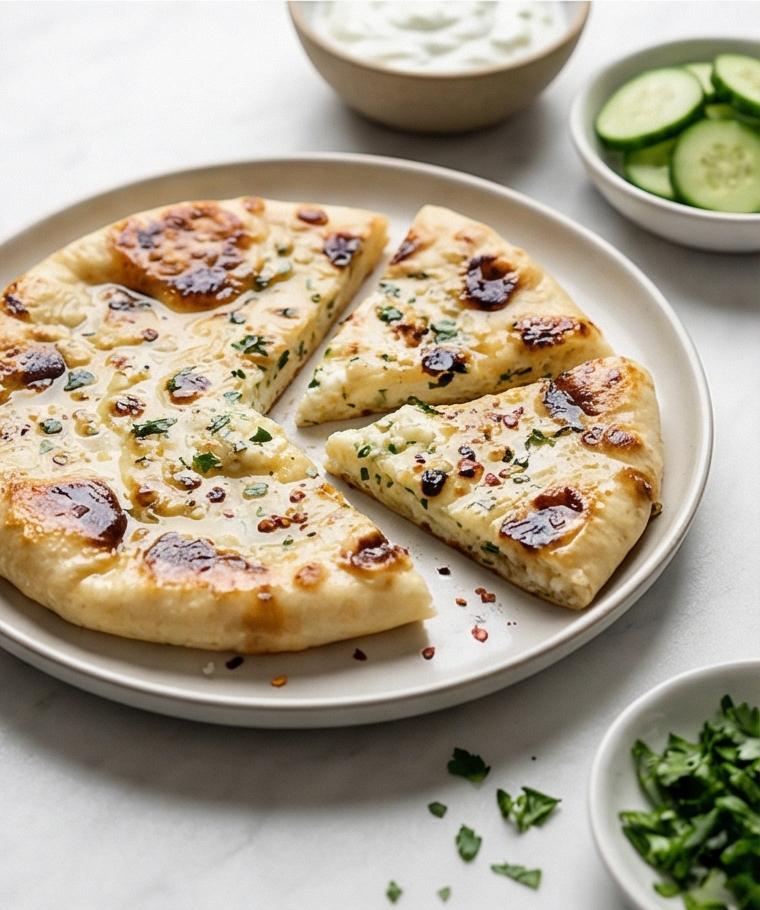
Arrange the warm flatbreads on a low, shallow matte ceramic serving plate on the same Carrara marble — one whole and one cut into wedges so the pillowy interior and melted pockets of feta are visible. Accompany them with small matching bowls of plain yogurt or tzatziki, sliced cucumbers, olives and wedges of tomato; scatter a little extra chopped herb and flaky salt across the bread. The final composition should be intimate and tactile: crispy-golden spots, tender layered interior with creamy white filling and green herb specks, a glossy butter–olive film, and tiny flakes of sea salt catching the light.
Making It Your Own
Try swapping herbs and fillings as small experiments. Fold in chopped sun-dried tomatoes and basil for a Mediterranean twist. Use spinach and feta with a pinch of nutmeg for a heartier, greens-forward version.
For a vegetarian but dairy-free option, substitute crumbled firm tofu blended with lemon and nutritional yeast in place of feta and ricotta; press the tofu first to reduce moisture. Try zaatar and olive oil in place of herbs for a bright, regional twist that pairs wonderfully with yogurt on the side.
If you want a spicier version, mix in finely chopped roasted peppers or a small pinch of chili flakes into the filling before sealing.
How to Serve
When I host, I lay out the flatbreads on a large wooden board, alternating whole rounds with wedges so guests can help themselves. Serve bowls of plain yogurt or tzatziki, sliced cucumbers, olives, and tomato wedges so people can build plates.
For larger gatherings, keep cooked flatbreads warm in a low oven (200 F) on a rack set over a baking sheet, covered lightly with foil. For an intimate meal, pair the Feta Stuffed Flatbread Recipe with a bright salad and a simple lentil soup to round out the meal.
If you want to turn this into a mezze spread, add hummus, roasted vegetables, and pickles for variety and color.
Storage and Reheating Tips
Store cooled flatbreads wrapped tightly in plastic wrap or in an airtight container in the refrigerator for up to 3 days. If you plan to freeze, flash-freeze flatbreads on a tray, then transfer to a freezer bag for up to 2 months.
Reheat gently in a skillet over medium-low heat until warmed through and the exterior crisps slightly, or pop them under a hot broiler for a minute to revive blisters and color. Avoid microwaving unless you want a softer, less crisp result.
Common Mistakes and How to Avoid Them
One frequent issue is overfilling the pockets – the dough can tear when rolling. Use modest spoonfuls of filling and seal the edges firmly, then roll gently to distribute the filling.
Another mistake is cooking at too low a temperature, which prevents those desirable blisters and deep browning. Use a hot cast iron or heavy skillet and watch carefully; the breads cook quickly, so stay attentive.
Final Thoughts
I hope you give this Feta Stuffed Flatbread Recipe a try and make it your own. It rewards a little patience and invites creativity with fillings and herbs, and it always brings people together around the table.
Frequently Asked Questions
- Can I make the dough ahead of time? Yes, you can refrigerate the dough overnight after the first knead; bring it to room temperature before dividing and shaping.
- Can I use frozen feta or ricotta? It’s best to use fresh, thawed, and well-drained cheeses; frozen options often change texture and add excess moisture.
- How do I prevent the filling from leaking? Don’t overfill, pleat and pinch edges tightly, and roll gently so seams stay sealed.
- Can I bake these instead of pan-frying? Yes, bake on a hot sheet at 475 F until blistered and golden, though pan-frying gives a slightly crisper finish.
- Are these suitable for meal prep? Absolutely; they keep well and reheat nicely in a skillet, making them a great make-ahead option.

Feta Stuffed Flatbread Recipe
Make Feta Stuffed Flatbread Recipe: warm, herb-flecked flatbreads filled with creamy feta—perfect for sharing.
Ingredients
Instructions
Step 1: Make and proof the dough
In a large matte-grey ceramic mixing bowl set on the Carrara marble, whisk the dry flour, salt and sugar briefly, then combine the warm water and instant yeast, stir in the room-temperature Greek yogurt and olive oil, and add the flour until a shaggy mass forms. Turn the shaggy dough onto the floured surface and knead by hand until it becomes smooth, elastic and only slightly tacky — soft, with a satiny surface and faint stretch marks where the gluten has developed. Lightly oil the same mixing bowl, place the dough inside, turn it once so the bowl shows a thin film of oil, cover and leave in a warm spot until the ball has visibly doubled and the surface is domed and slightly dimpled when poked. The bowl should read as a pillowy, taut dome with a soft sheen of oil on the sides, tiny flour dusting at the rim, and a clear difference between the earlier shaggy mass and this smooth, taut risen dough.
Step 2: Prepare the feta–ricotta filling
In a smaller matching white ceramic bowl on the same marble, crumble the brined feta and gently mash it with a fork until large chunks break down to coarse granules. Fold in the whole-milk ricotta (or yogurt), finely chopped parsley and dill (or mint), a whisper of minced garlic if using, and freshly ground black pepper. The result should read as a creamy, slightly chunky spread — white and ivory curds with flecks of bright green herbs, a faint sheen from the dairy, and a fork resting in the bowl dusted with a few crumbs. If the mixture feels tight, add a teaspoon of milk at a time until it spreads but holds texture; keep the bowl uncovered at room temperature so it reads soft and immediately spreadable.
Step 3: Divide, rest, and shape into filled pouches
Turn the risen dough onto a lightly floured patch of marble, gently deflate and form a smooth ball, then use a bench scraper to divide it into eight equal pieces. Shape each piece into a tight ball by tucking seams under and rolling under your palm; place the balls on the marble, cover loosely, and let them relax so the surface smooths out and the dough is easy to roll. Working one at a time, roll a dough ball into a 5–6" thin circle (dusty underside with flour), spoon about two heaping tablespoons of the feta filling into the center, leave a narrow border, then pleat and pinch the edges together into a sealed pouch. Turn each pouch seam-side down, gently press into a thick disk and let it rest briefly until relaxed and smooth. These sealed pouches should read as compact, slightly lumpy pillows with distinct pleated seams, a dusting of flour at the edges, and a rolling pin and bench scraper nearby as the active tools.
Step 4: Roll thin and finish the flatbreads
On the floured marble, carefully roll each filled disk into a 6–7" thin flatbread, turning frequently so the filling spreads without tearing — minor pinches reseal any tiny tears. Arrange the rolled, filled flatbreads on a lightly floured tray, covered with a towel to stay supple. After cooking (see note below), transfer the warm breads back to the marble: each one should present with puffed blisters and deep golden-brown spots, an amber-to-gold mosaic across a thin, pliable surface. In a small ceramic bowl whisk together warm melted butter and olive oil and, as each bread comes off heat, brush lightly to create a soft glossy sheen; finish directly on the marble by sprinkling finely chopped herbs, flaky sea salt and optional red pepper flakes so the surface reads glossy, herb-flecked and slightly crinkled at the edges.
Step 5: Plate and serve the finished feta stuffed flatbreads
Arrange the warm flatbreads on a low, shallow matte ceramic serving plate on the same Carrara marble — one whole and one cut into wedges so the pillowy interior and melted pockets of feta are visible. Accompany them with small matching bowls of plain yogurt or tzatziki, sliced cucumbers, olives and wedges of tomato; scatter a little extra chopped herb and flaky salt across the bread. The final composition should be intimate and tactile: crispy-golden spots, tender layered interior with creamy white filling and green herb specks, a glossy butter–olive film, and tiny flakes of sea salt catching the light.
Notes
- Drain the feta well to prevent soggy filling.
- If dough is sticky, dust with a little flour but avoid adding too much to keep breads tender.
- Keep cooked flatbreads warm in a low oven if serving to a crowd.