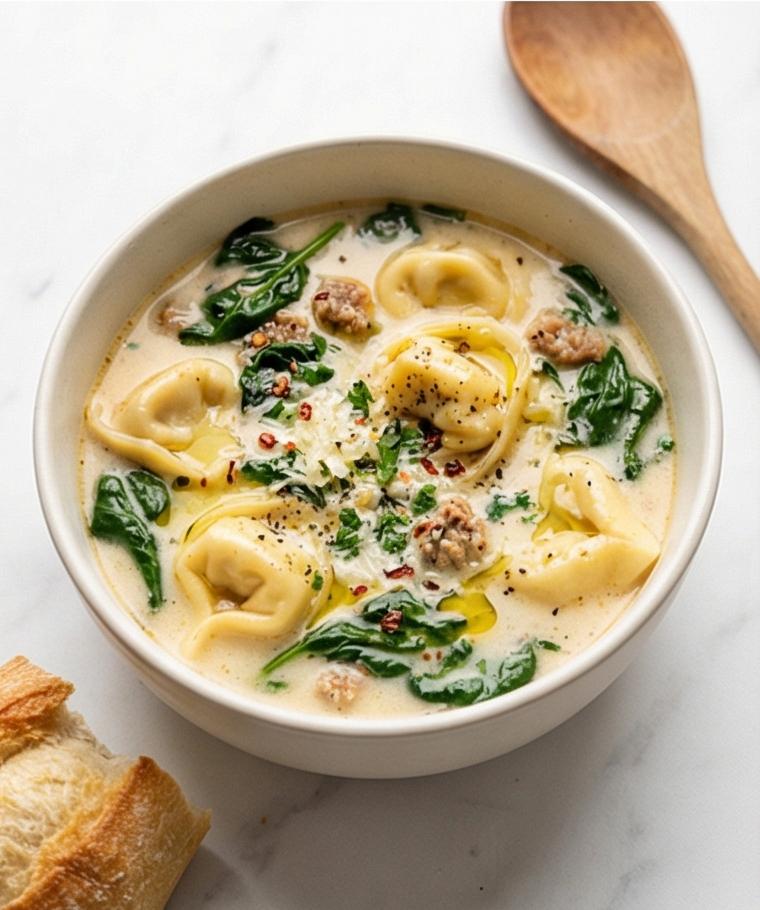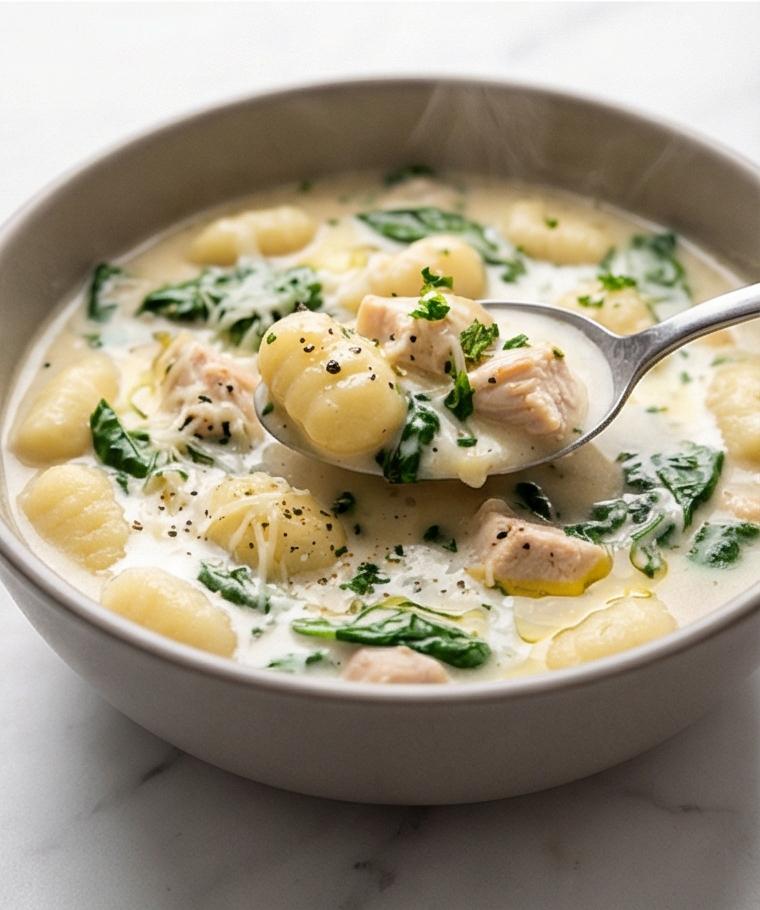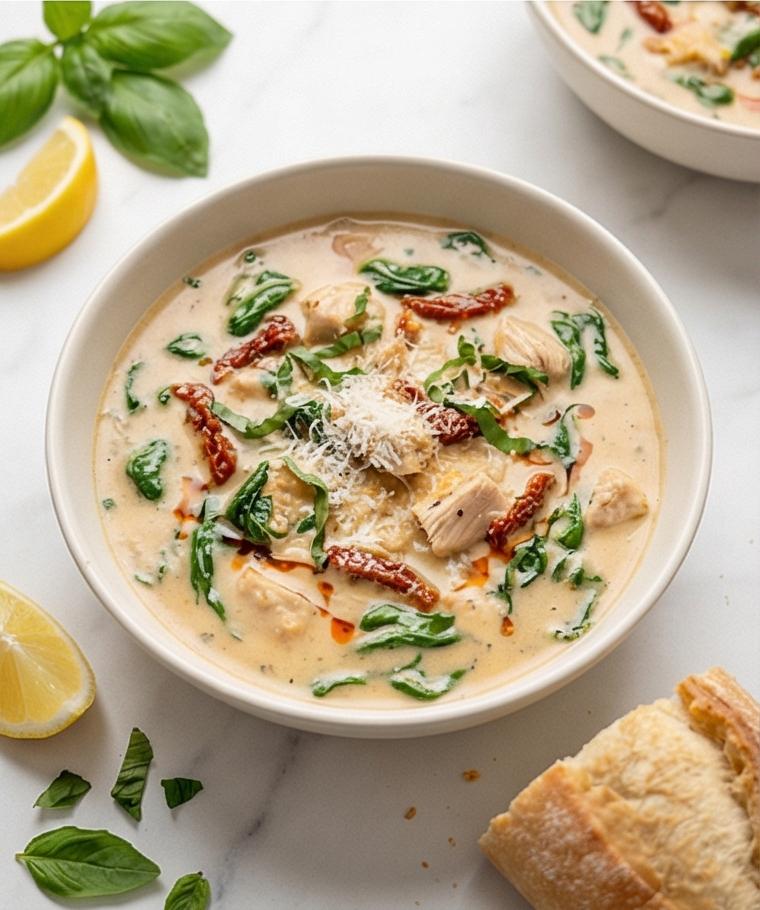
Creamy Wild Rice Soup Recipe is the kind of bowl I turn to when I want comfort without fuss. It balances rustic wild rice texture with a silky, creamy base and bright lemon notes, and it warms the kitchen as much as the soul. I remember the first time I tried this soup, I was surprised by how the wild rice stayed toothsome while the broth felt indulgent. If you like bowls that are both hearty and refined, this Creamy Wild Rice Soup Recipe will likely become a staple in your weeknight rotation.
How This Recipe Became My Rainy-Day Favorite
I first made this Creamy Wild Rice Soup Recipe on a rainy afternoon when a slow, savory pot felt more like therapy than cooking. The smell of onion and butter sizzling filled the apartment, and the tiny hiss of simmering broth kept time with the rain. I shredded leftover roast chicken and sprinkled in fresh parsley, and by the time the rice had split and plumped, the house felt like a memory of slow Sundays. Spoonfuls were warm and grounding, with cremini mushrooms adding an earthy note and lemon brightening each bite. It is the kind of dish that comforts without being heavy, and every time I make it I remember that slow, cozy day.
Primary Ingredients and What They Bring to the Pot
- Unsalted Butter and Olive Oil: They build the flavorful fat base for sweating aromatics, giving a toasty, rounded start. Substitute with all olive oil for a dairy-free option, though butter adds depth. Choose fresh butter and a fruity extra-virgin olive oil.
- Yellow Onion, Carrots, Celery: The classic mirepoix supplies sweetness and structure. If you need a shortcut, use frozen diced mirepoix in a pinch. Pick firm, brightly colored vegetables.
- Cremini Mushrooms and Garlic: Mushrooms add umami and meatiness; garlic brings a warm pungency. Use white mushrooms if cremini are unavailable, and avoid washing mushrooms heavily; wipe or rinse quickly.
- 100% Wild Rice: The star grain for chewy, nutty texture. Do not use blends if you want the signature split-grain look. Rinse well and select fresh, labeled 100% wild rice.
- Broth, Milk, and Heavy Cream: Broth forms the soup body, while warm milk and cream finish it silky. Use low-sodium broth to control salt, and warm dairy to prevent a split.
Essential Kitchen Tools and Why They Matter
Start with a quick note: the right tools make this creamy wild rice soup much easier and more reliable. A large, heavy-bottomed pot helps distribute heat so the wild rice cooks evenly, preventing scorch points. A fine-mesh strainer is essential to rinse the rice and remove grit. A wooden spoon keeps you from scratching enameled pots while giving good control when stirring.
- Large heavy-bottomed pot: Ensures even simmering and room for stirring; Dutch oven is ideal.
- Fine-mesh strainer: For rinsing wild rice and draining quickly.
- Wooden spoon: Gentle on cookware and perfect for scraping fond.
- Small saucepan: Needed for making the pale roux and warming dairy.
- Whisk: Helps create a lump-free roux and smooth cream sauce.
- Chef’s knife and cutting board: For uniform vegetable cuts; a sharp knife speeds prep.
- Ladle and bowls: For serving; warm bowls keep the soup spoonable longer.
If you lack a whisk, vigorously use a fork. No Dutch oven, use a wide saucepan with a heavy base.
Step-by-Step Preparation Guide.
Step 1: Prep the vegetables and rice
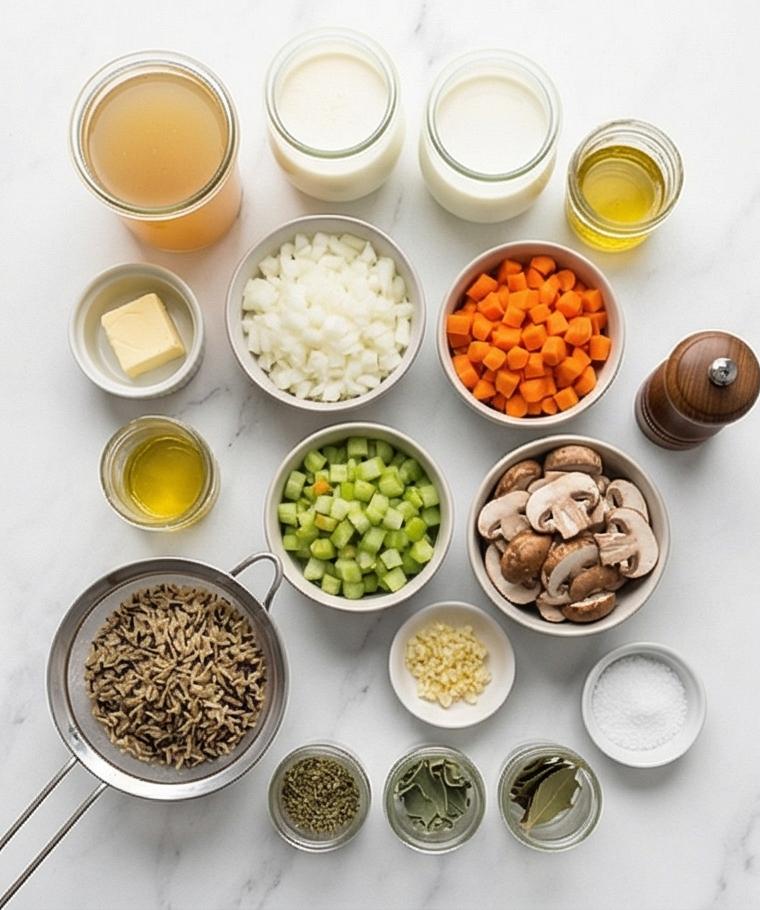
Start by finely chopping the yellow onion, peeling and dicing the carrots into small cubes, and dicing the celery until all pieces are uniformly small so they cook evenly. Clean and slice the cremini mushrooms into even-thickness slices, mince the garlic, and rinse the 100% wild rice under cold running water in a fine-mesh strainer for 30–60 seconds, then drain thoroughly. Lay everything out neatly on the marble so you can visually confirm uniform cuts and fully drained rice before proceeding; this makes the cooking textures consistent and predictable.
Step 2: Sweat the aromatics until translucent and glossy
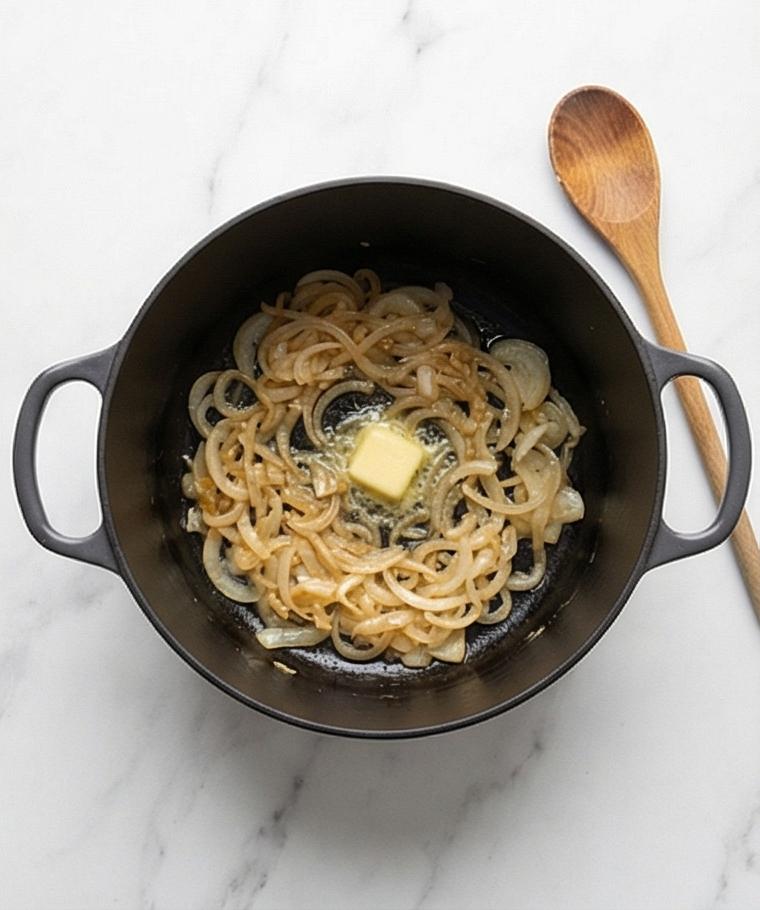
Melt a measured mix of unsalted butter and extra-virgin olive oil in the large cooking vessel until foamy but not browned, then add the chopped onion and cook just until softened and translucent. The goal here is soft, slightly glossy onion ribbons that still hold shape – not browned. This stage creates the fragrant, soft bed that will cling to subsequent ingredients. Keep the utensil (a wooden spoon) nearby, resting on the rim of the cooking vessel so it reads as the same tool across the next frames.
Step 3: Build the vegetable base with carrots and celery
Add the diced carrots and celery to the softened onion and cook briefly until the pieces begin to lose their raw edge and their surfaces take on a faint sheen. The small, slightly translucent carrot and celery cubes should look hydrated and glistening at the edges, providing an immediate color pop against the pale marble when seen top-down. Stir occasionally so everything remains visibly separate and texturally distinct rather than collapsing into one mushy mass.
Step 4: Brown the mushrooms and bloom the aromatics
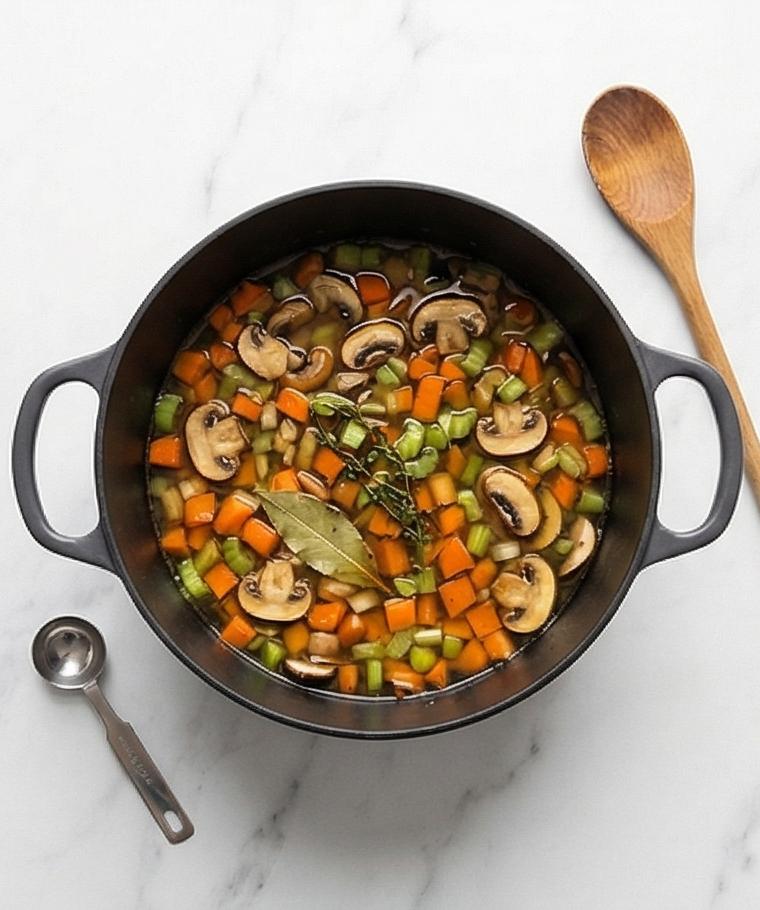
Add the sliced mushrooms and continue cooking until they release their liquid and then begin to dry and turn lightly golden – individual mushroom slices should show seared edges and a concentrated, caramelized surface while the overall pile looks drier and more textured. Stir in the minced garlic, dried thyme and sage, bay leaves, kosher salt and black pepper briefly until fragrant; the herbs and garlic should look evenly distributed and clinging to the vegetables, not burned. This is a clear visual shift: from glossy raw veg to a richly scented, slightly golden sautéed medley.
Step 5: Integrate wild rice and simmer to tender, split grains
Stir the rinsed wild rice into the aromatic vegetables so every grain is glossy and coated, then add the low-sodium broth and water, scraping the vessel’s bottom to lift any fond. Bring briefly to a boil, then reduce to a gentle simmer, partially covered, and cook until many grains have split open and the rice is tender but still toothsome – the cooked wild rice should read as a plump, slightly opened grain with a dark, woodsy core and lighter, puffed exterior suspended in a slightly brothy base. If the liquid drops too low during cooking, add small amounts of hot water so the texture stays brothy rather than dry.
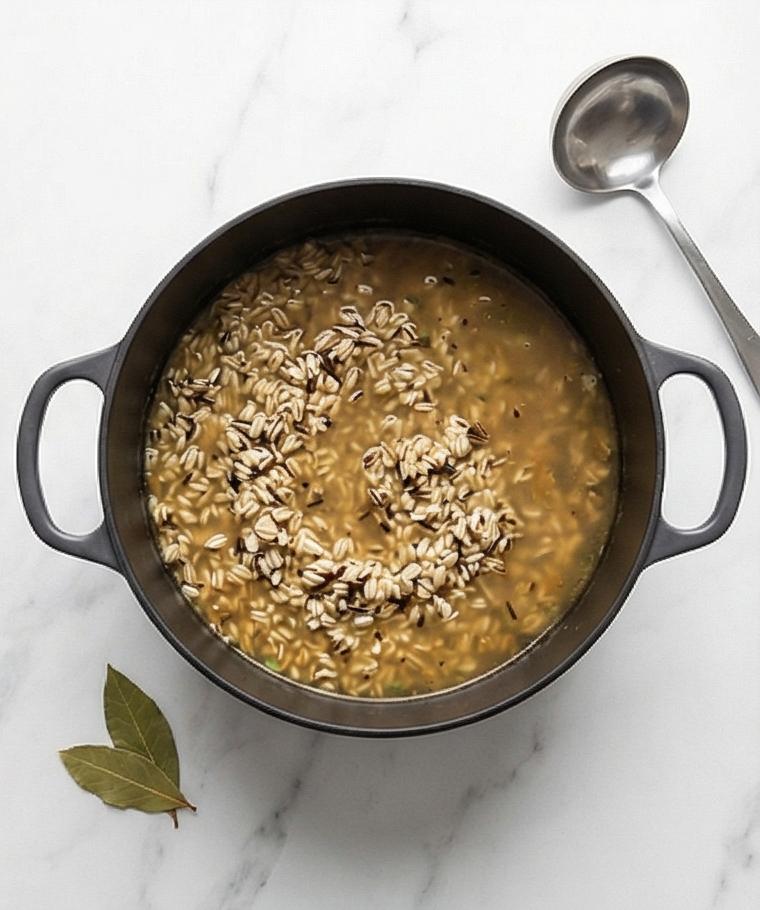
Step 6: Make the pale roux, whisk in warmed dairy, then finish the soup
In a separate small saucepan, melt butter and whisk in the flour to form a pale golden, smooth roux that no longer smells of raw flour. Slowly whisk warmed whole milk and heavy cream into the roux until it thickens to a velvety, heavy-cream consistency with a glossy sheen and tiny, gentle bubbles. Pour this warm cream mixture into the cooking vessel with the tender wild rice (and shredded cooked chicken if using), stir to a uniform creamy texture, then bring to a bare simmer until the soup gently thickens and the flavors meld. Finish by stirring in fresh lemon juice and chopped parsley, seasoning to taste; the finished pot should read as a glossy, creamy, grain-studded soup where individual rice grains and shredded chicken strands are visible against the pale cream.
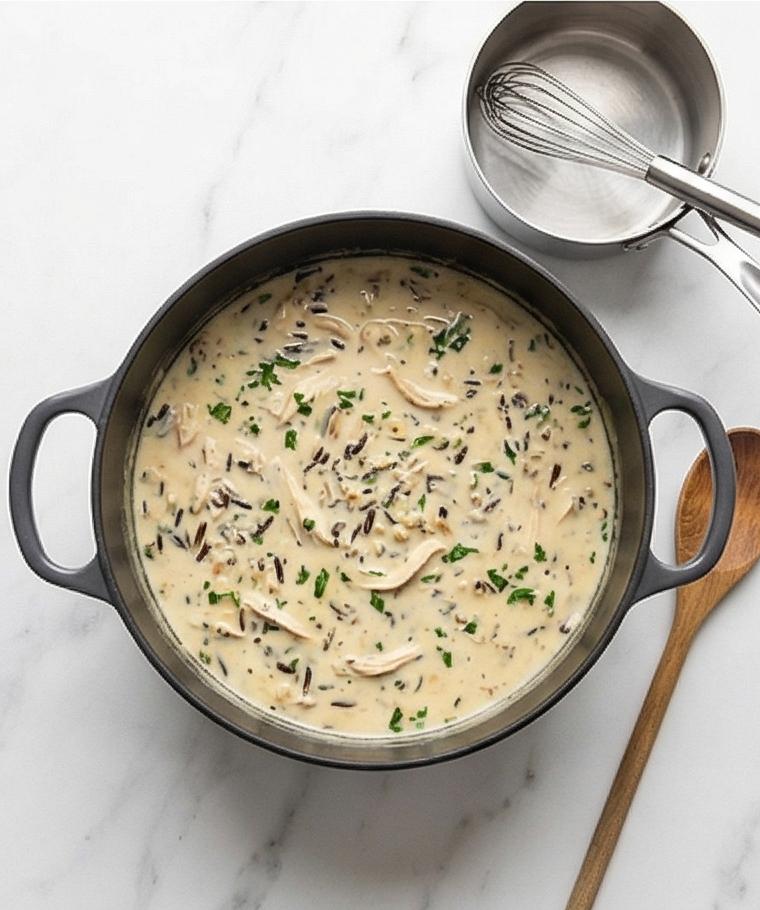
Step 7: Serve warm with fresh herbs and crusty bread
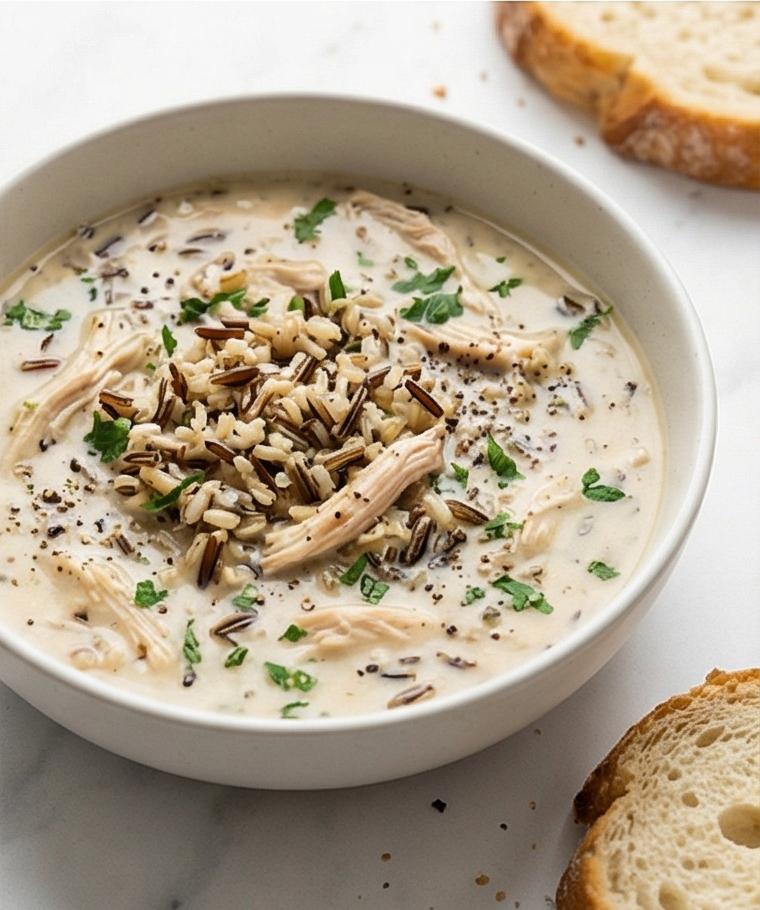
Turn off the heat and let the soup rest briefly so the rice swells slightly and the flavors settle. Ladle the hot, creamy wild rice soup into warm shallow bowls, garnish with additional chopped parsley and a few thyme leaves, grind black pepper over the surface, and serve immediately with crusty bread for dipping. The plated bowl should be rich and spoonable with visible split wild rice, flecks of herbs, and tender shredded chicken if included – a close, eye-level finish that captures steam, surface gloss, and inviting texture.
Making It Your Own
I like to tinker with this Creamy Wild Rice Soup Recipe depending on the season. In autumn I add roasted butternut cubes folded in near the end for sweetness and color. If I am trimming calories, I swap half the cream for more milk and add extra mushrooms to keep the mouthfeel hearty. For a vegetarian version, I use rich mushroom broth and omit the chicken, doubling the mushrooms for savory depth. In a lemon-forward summer twist I stir in an extra teaspoon of lemon zest and finish with a drizzle of good olive oil.
How to Serve
When hosting, serve this Creamy Wild Rice Soup Recipe in warmed shallow bowls so the first spoonfuls are comforting and hot. Offer a basket of crusty bread and herbed butter on the side for dipping. For a buffet, keep the soup in a slow cooker on low and add the cream just before serving to keep the texture silky.
If you want to stretch the pot for a larger crowd, add an extra cup of broth and a cup of milk, then adjust seasoning; the rice will absorb more liquid so serve a ladleful and replenish with warm broth as needed. Garnish with chopped parsley, cracked black pepper, and a lime wedge if you prefer a sharper citrus finish.
Storage and Reheating Tips
Cool the soup quickly and transfer to airtight containers. Refrigerate for up to 3 days. The wild rice absorbs liquid as it sits, so the soup will thicken when chilled.
To reheat, warm gently on the stove over low heat, adding hot broth or water to loosen the consistency until it reaches the desired spoonable texture. If reheating in the microwave, heat in short bursts and stir between intervals to prevent curdling. Avoid boiling after adding cream to keep the texture smooth.
Common Mistakes and How to Avoid Them
Undercooking the wild rice or rushing the simmer will leave hard cores. Be patient and keep a gentle simmer; add a splash of hot water if the pot goes dry. Over-browning the onion or garlic will introduce bitter notes, so aim for translucent aromatics first.
Another trap is adding cold dairy straight into the roux, which can cause lumps or a grainy texture. Warm the milk and cream slightly and whisk continuously when combining. Taste and adjust salt at the end after the rice has absorbed flavors, because the soup concentrates as it cooks.
Final Thoughts and Invitation
If you are looking for a soup that feels both homey and a little special, give this Creamy Wild Rice Soup Recipe a try. It rewards patience with texture and warmth, and it adapts well to what you have on hand. I hope a steaming bowl finds its way to your table soon.
Frequently Asked Questions
- What is the best rice to use for this soup and why? Use 100% wild rice for the chewy texture and signature split grain; blends will not give the same bite.
- Can I make this soup vegetarian? Yes, swap the chicken broth for a rich vegetable or mushroom broth and omit the chicken; add more mushrooms or roasted squash for body.
- How long does wild rice take to cook in this soup? Expect the wild rice to take around 40 to 50 minutes until many grains split and feel tender but still slightly toothsome.
- Can I freeze Creamy Wild Rice Soup Recipe? You can freeze it, but dairy can separate when thawed; cool fully and freeze without garnish, then gently reheat and whisk in a splash of fresh cream if needed.
- How do I prevent the soup from becoming too thick after chilling? Stir in hot broth or water while reheating until you reach the desired consistency, then adjust seasoning.
Creamy Wild Rice Soup Recipe
Make Creamy Wild Rice Soup Recipe for a cozy, creamy bowl ready in about 80 minutes.
Ingredients
Instructions
Step 1: Prep the vegetables and rice
Start by finely chopping the yellow onion, peeling and dicing the carrots into small cubes, and dicing the celery until all pieces are uniformly small so they cook evenly. Clean and slice the cremini mushrooms into even-thickness slices, mince the garlic, and rinse the 100% wild rice under cold running water in a fine-mesh strainer for 30–60 seconds, then drain thoroughly. Lay everything out neatly on the marble so you can visually confirm uniform cuts and fully drained rice before proceeding; this makes the cooking textures consistent and predictable.
Step 2: Sweat the aromatics until translucent and glossy
Melt a measured mix of unsalted butter and extra-virgin olive oil in the large cooking vessel until foamy but not browned, then add the chopped onion and cook just until softened and translucent. The goal here is soft, slightly glossy onion ribbons that still hold shape — not browned. This stage creates the fragrant, soft bed that will cling to subsequent ingredients. Keep the utensil (a wooden spoon) nearby, resting on the rim of the cooking vessel so it reads as the same tool across the next frames.
Step 3: Build the vegetable base with carrots and celery
Add the diced carrots and celery to the softened onion and cook briefly until the pieces begin to lose their raw edge and their surfaces take on a faint sheen. The small, slightly translucent carrot and celery cubes should look hydrated and glistening at the edges, providing an immediate color pop against the pale marble when seen top-down. Stir occasionally so everything remains visibly separate and texturally distinct rather than collapsing into one mushy mass.
Step 4: Brown the mushrooms and bloom the aromatics
Add the sliced mushrooms and continue cooking until they release their liquid and then begin to dry and turn lightly golden — individual mushroom slices should show seared edges and a concentrated, caramelized surface while the overall pile looks drier and more textured. Stir in the minced garlic, dried thyme and sage, bay leaves, kosher salt and black pepper briefly until fragrant; the herbs and garlic should look evenly distributed and clinging to the vegetables, not burned. This is a clear visual shift: from glossy raw veg to a richly scented, slightly golden sautéed medley.
Step 5: Integrate wild rice and simmer to tender, split grains
Stir the rinsed wild rice into the aromatic vegetables so every grain is glossy and coated, then add the low-sodium broth and water, scraping the vessel’s bottom to lift any fond. Bring briefly to a boil, then reduce to a gentle simmer, partially covered, and cook until many grains have split open and the rice is tender but still toothsome — the cooked wild rice should read as a plump, slightly opened grain with a dark, woodsy core and lighter, puffed exterior suspended in a slightly brothy base. If the liquid drops too low during cooking, add small amounts of hot water so the texture stays brothy rather than dry.
Step 6: Make the pale roux, whisk in warmed dairy, then finish the soup
In a separate small saucepan, melt butter and whisk in the flour to form a pale golden, smooth roux that no longer smells of raw flour. Slowly whisk warmed whole milk and heavy cream into the roux until it thickens to a velvety, heavy-cream consistency with a glossy sheen and tiny, gentle bubbles. Pour this warm cream mixture into the cooking vessel with the tender wild rice (and shredded cooked chicken if using), stir to a uniform creamy texture, then bring to a bare simmer until the soup gently thickens and the flavors meld. Finish by stirring in fresh lemon juice and chopped parsley, seasoning to taste; the finished pot should read as a glossy, creamy, grain-studded soup where individual rice grains and shredded chicken strands are visible against the pale cream.
Step 7: Serve warm with fresh herbs and crusty bread
Turn off the heat and let the soup rest briefly so the rice swells slightly and the flavors settle. Ladle the hot, creamy wild rice soup into warm shallow bowls, garnish with additional chopped parsley and a few thyme leaves, grind black pepper over the surface, and serve immediately with crusty bread for dipping. The plated bowl should be rich and spoonable with visible split wild rice, flecks of herbs, and tender shredded chicken if included — a close, eye-level finish that captures steam, surface gloss, and inviting texture.
Notes
- Use low-sodium broth so you can control salt levels.
- Warm the milk and cream before whisking into the roux to prevent curdling.
- Rinse 100% wild rice thoroughly to remove any dust or debris.
- If the soup thickens too much after chilling, loosen with hot broth or water when reheating.
- For a vegetarian version, use mushroom or vegetable broth and omit the chicken.