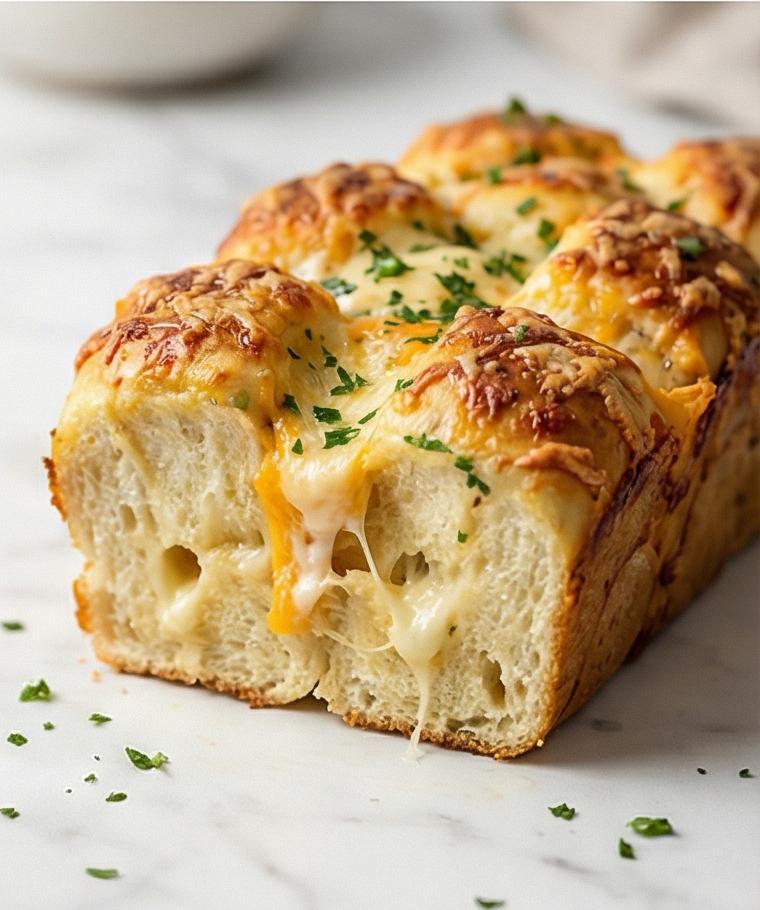
I still remember the first time I tasted the Red Lobster Cheddar Biscuits Recipe straight from a sheet pan warm out of the oven. The sharp cheddar and garlicky butter hit that perfect spot between comfort and a little bit fancy, and I kept going back for another, then another. Over the years I’ve tweaked the rhythm of the steps so the texture is reliably flaky and the pockets of melted cheese feel indulgent without being greasy. If you love a savory biscuit that dresses up a weeknight meal or steals the show at a weekend brunch, this version is worth bookmarking.
There’s something magnetic about these Red Lobster Cheddar Biscuits Recipe that makes people gather around the oven. They’re quick, forgiving, and they play well with a bright salad or a bowl of soup. I’ll show you how to nail the flaky crumb and the garlic-parsley butter so they come out golden and irresistible every time.
How This Recipe Became My Rainy-Day Favorite
My first batch of the Red Lobster Cheddar Biscuits Recipe came on a rain-soaked Sunday when the power flickered and the idea of leaving the kitchen felt wrong. I pulled out the sharp cheddar I’d been saving and chopped the butter so small my fingers barely felt it. As they baked the house filled with the warm scent of cheese and garlic, and I remember pressing my face to the oven door like a kid. The first bite was steamy with melted cheddar, the outside slightly crisp, the inside tender and layered. I sat at the table with a mug of tea and felt oddly proud that something so simple could feel so comforting. Ever since, the recipe has been my go-to for turning gray days into something cozy and celebratory.
Ingredients That Make These Biscuits Sing
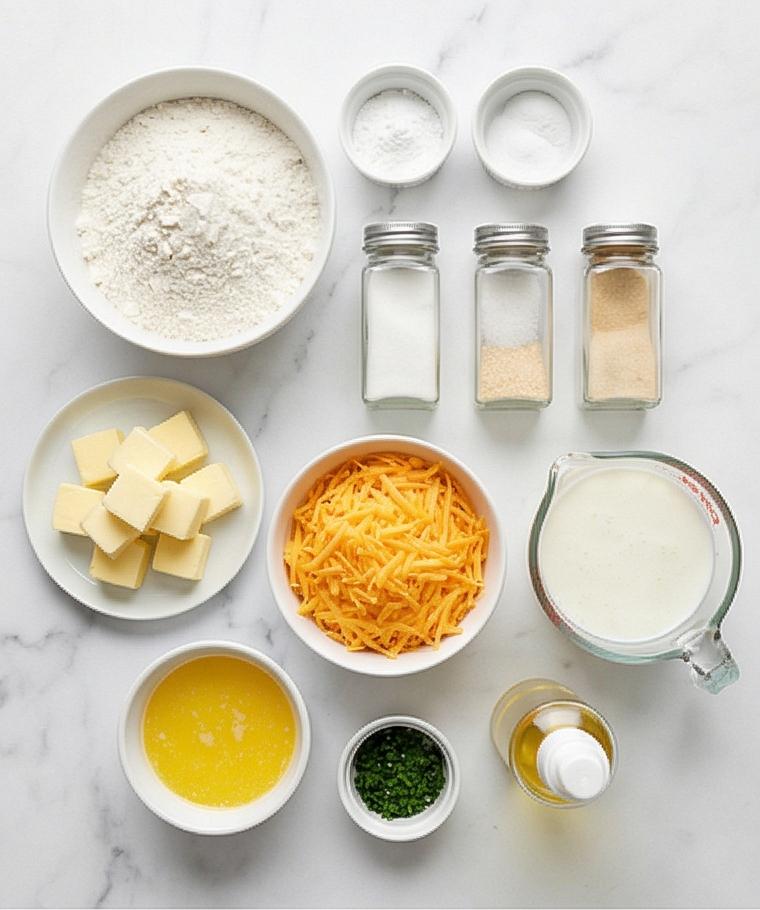
- All-Purpose Flour: The structure builder; pick fresh, unbleached flour for a clean flavor. Substitute up to half with whole wheat pastry flour for nuttiness but expect a denser crumb.
- Baking Powder & Baking Soda: The lift team; check freshness by dropping a pinch in warm water to see bubbles. Use the stated amounts for the intended rise.
- Granulated Sugar: Balances savory flavors; you can omit if you prefer strictly savory biscuits.
- Fine Sea Salt & Garlic Powder: Seasoning backbone; adjust the salt to taste and use garlic powder for even distribution.
- Cold Unsalted Butter: Key for flakiness; keep it very cold and cut into pea-size chunks. Use frozen butter grated if you want an easier thaw and still flaky layers.
- Sharp Cheddar: The star cheese; choose a well-aged sharp cheddar for bite. Mild cheddar will make them creamier but less assertive.
- Buttermilk: Adds tang and tenderness; swap with equal yogurt thinned with milk if needed.
- Melted Butter & Parsley: Finishing touch that adds gloss and herb brightness; dried parsley works in a pinch.
Essential Kitchen Tools and Why They Matter
Start with a short list of tools that keep the process tidy and efficient. Each tool plays a role in texture and timing, and I suggest alternatives if you’re working with a smaller kit.
- Large Mixing Bowl: Allows roomy motion when whisking and folding; a stainless bowl chills faster if you want to keep the butter cool.
- Pastry Cutter or Two Knives: For cutting cold butter into flour; if you don’t have one, pulse briefly in a food processor but watch the texture.
- Rubber Spatula: Gentle folding preserves butter pockets; a wooden spoon is okay but a spatula is easier to scrape.
- Measuring Cups and Spoons: Precise amounts matter for biscuits; use a kitchen scale if possible for best consistency.
- 1/4-Cup Scoop or Two Spoons: For rustic mounds that bake evenly; a cookie scoop makes uniform sizes.
- Rectangular Baking Sheet and Parchment: Promotes even browning and easy cleanup; use a silicone mat if you prefer.
Step-by-Step Preparation Guide
Step 1: Preheat and prepare the sheet
Preheat the oven to 450°F (232°C) and prepare a large rectangular baking sheet by lining it with parchment or brushing it with a thin film of neutral oil. Place the empty sheet on the premium white Carrara marble surface while you assemble ingredients and tools so everything stays organized and within reach.
Step 2: Whisk the dry ingredients until fully uniform
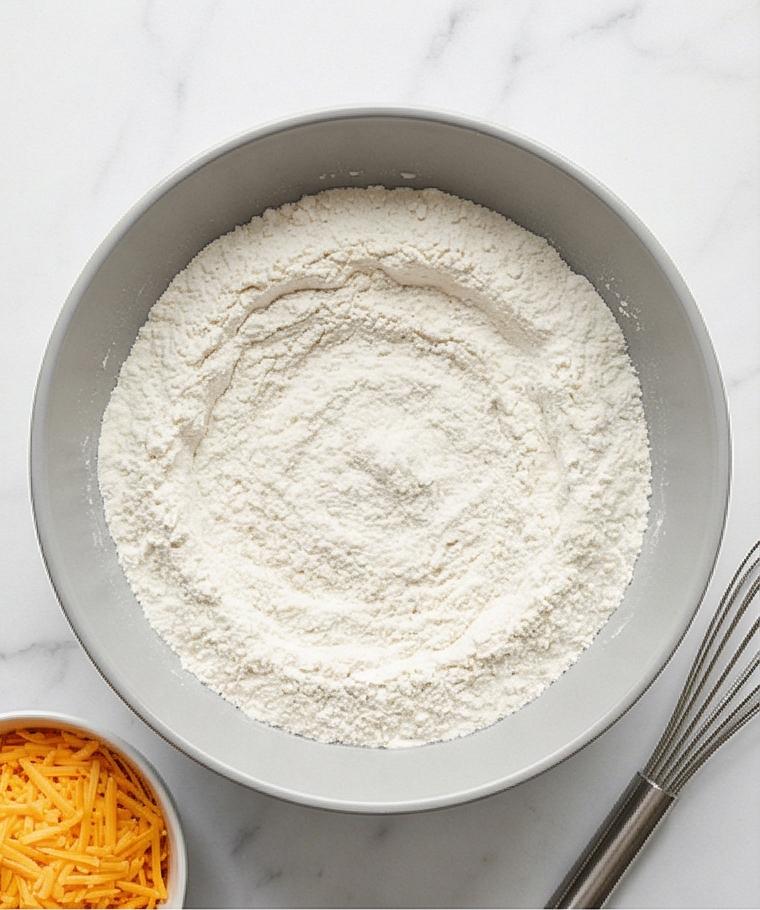
In a large matte grey ceramic mixing bowl, whisk together the all-purpose flour, baking powder, baking soda, granulated sugar, fine sea salt, garlic powder, and optional onion powder until the mixture is smooth, aerated, and free of streaks—this is a fine, powdery bed that will leaven the biscuits. The bowl sits top-down on the marble with a stainless whisk resting on the rim, showing an even, pale texture and soft flour ridges.
Step 3: Cut the very cold butter into coarse, pea-sized crumbs
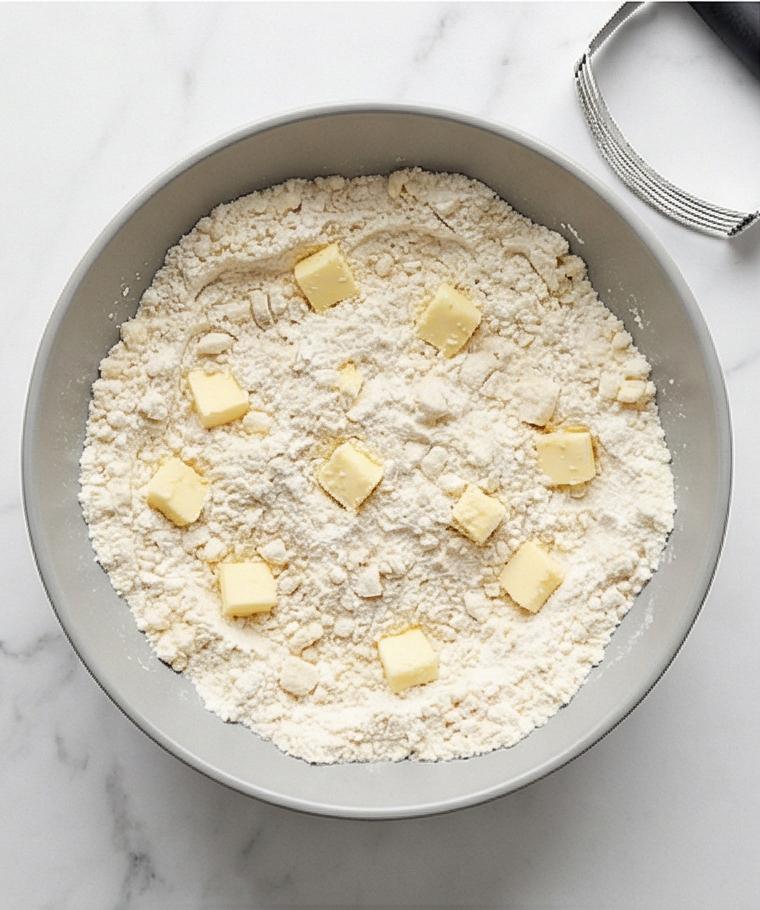
Add the very cold, cubed unsalted butter to the same matte grey bowl and work quickly with a pastry cutter or two knives until the mixture resembles coarse, crumbly meal with visible pea-sized butter pieces. The texture should read as cold, slightly glossy butter flecks in a dry matrix—each little chunk promises flakiness. A short-handled pastry cutter rests across the bowl rim as evidence of the action.
Step 4: Fold in the shredded sharp cheddar and form the sticky dough
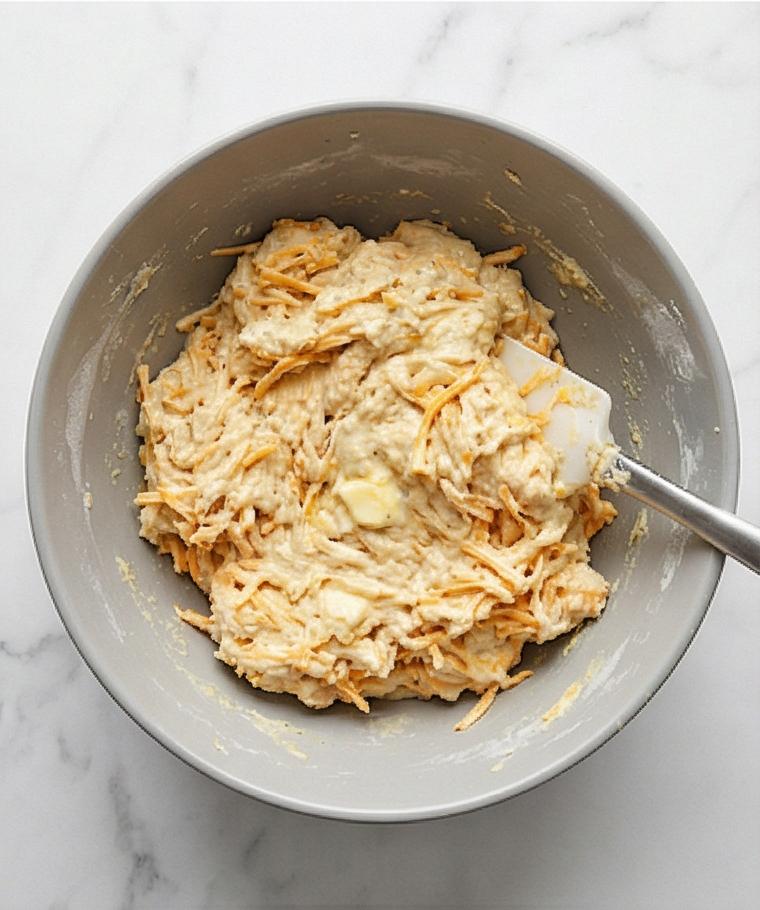
Toss the shredded sharp cheddar into the bowl so each strand is lightly coated in the flour-butter crumbs, then pour the cold buttermilk and fold gently with a spatula until a thick, sticky dough forms with no dry pockets. The mixture clings to the spatula, showing strings of cheddar and pockets where the butter remains chilled; stop as soon as it’s cohesive to preserve tenderness. Let the bowl rest for 3–5 minutes on the marble to hydrate.
Step 5: Scoop rough, craggy mounds onto the prepared rectangular sheet
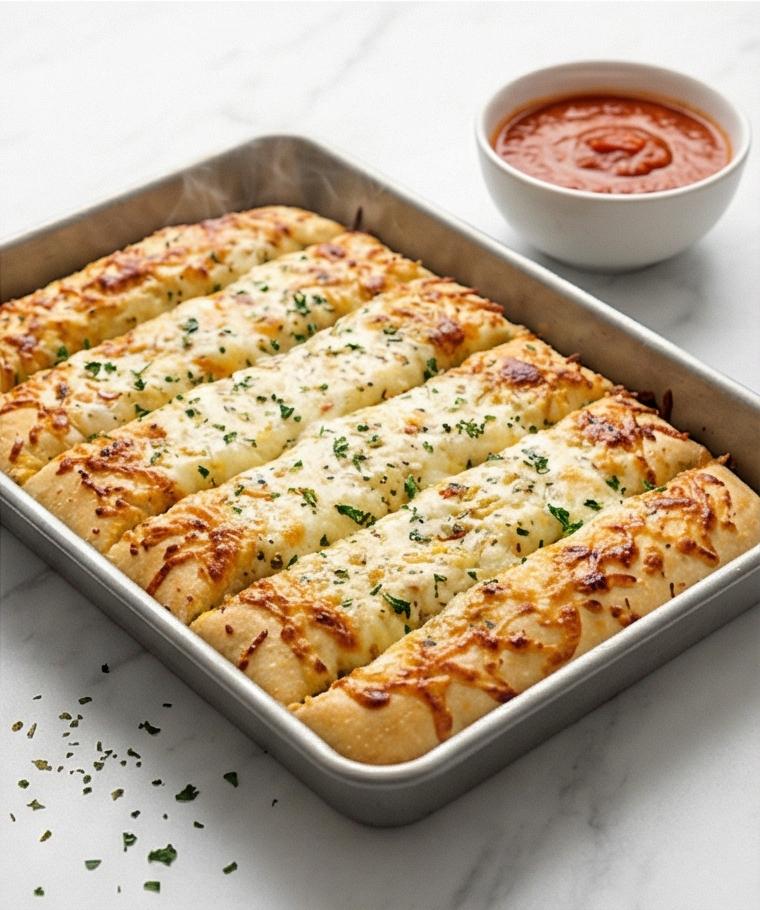
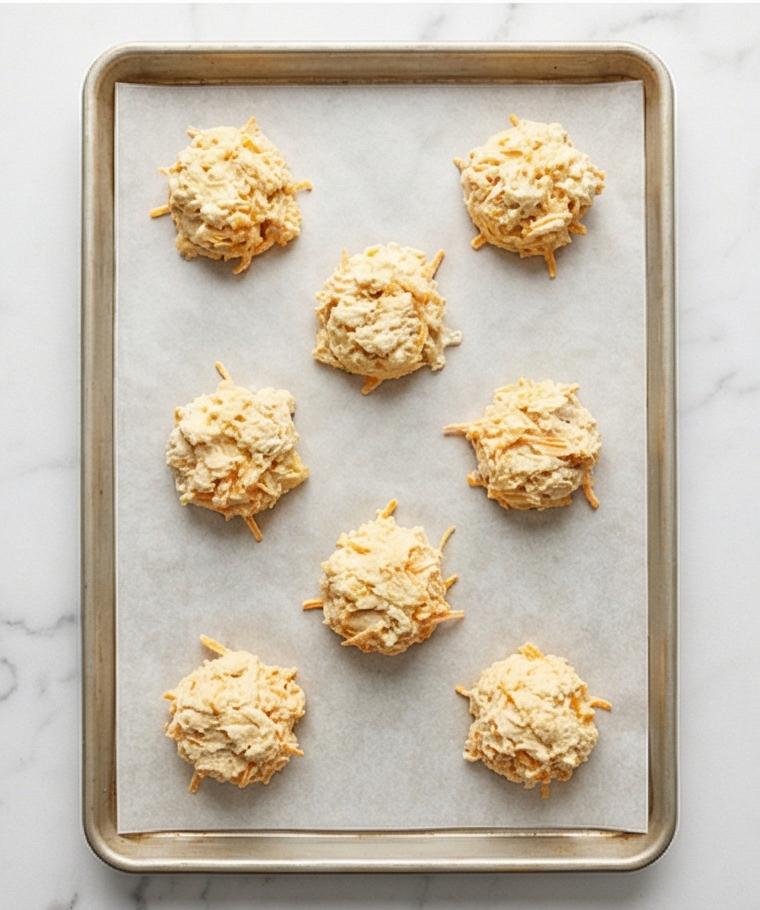
Using a 1/4-cup scoop or two spoons, drop uneven, craggy mounds of the dough onto the prepared parchment-lined rectangular baking sheet, spacing them about 2 inches (5 cm) apart. The raw mounds should look rustic and peaked—textural ridges and visible cheese strands—so they puff in the oven. The same rectangular baking sheet becomes the staging surface that will carry through to the final presentation.
Step 6: Bake until puffed and golden, and make the garlic-parsley butter
Place the sheet on the marble (visual only—no oven in frame) and bake until biscuits are puffed and tops are light golden with slightly deeper edges, rotating if needed. While they bake, whisk together melted unsalted butter with garlic powder, fine sea salt, and minced parsley in a small heatproof bowl until smooth and glossy; the butter should glisten and suspend the seasonings evenly.
Step 7: Brush hot biscuits, let rest briefly, serve warm, and store
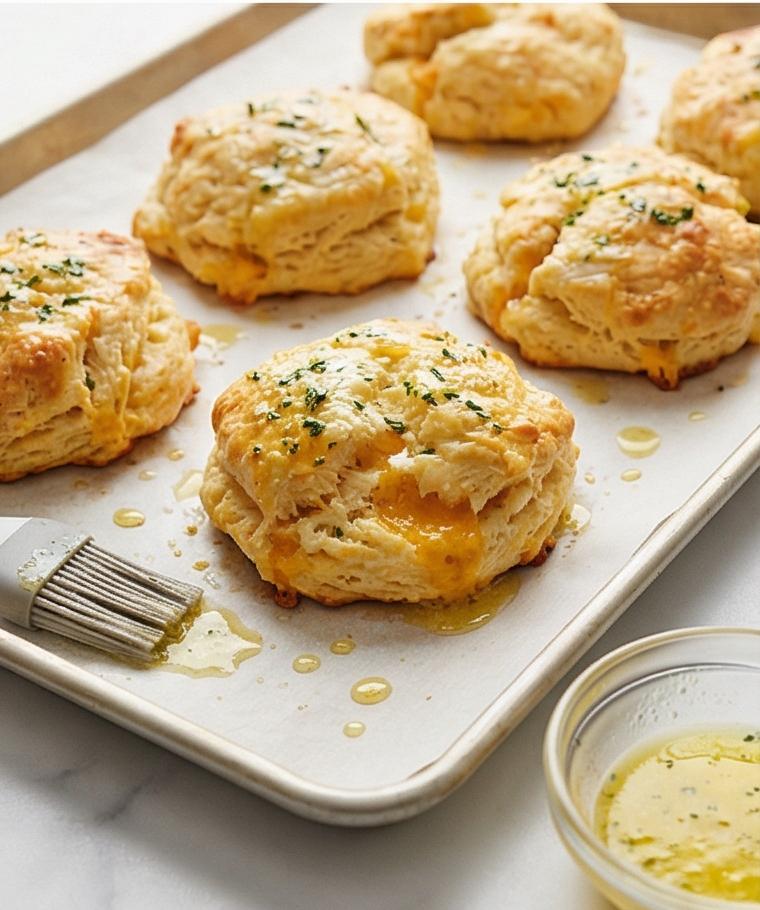
As soon as the biscuits come out, place the rectangular sheet on a wire rack and immediately brush the hot biscuit tops generously with the warm garlic-parsley butter so they glisten with a moist, shiny finish. Let them cool 3–5 minutes until still hot and steamy inside with melted cheddar pockets. Serve warm directly from the rectangular sheet within 15–20 minutes for best texture. To store leftovers, cool completely, transfer to an airtight container at room temperature for up to 2 days or refrigerate up to 4 days; freeze in a single layer until firm then bag for up to 2 months, reheating from frozen in a 350°F oven until hot.
Making It Your Own
I treat the Red Lobster Cheddar Biscuits Recipe like a small canvas for experiments. Try swapping half the cheddar for smoked cheddar or adding a tablespoon of finely chopped chives to the dough; both changes bring a new layer of flavor without changing the technique. For a lighter option, replace half the buttermilk with plain carbonated water and reduce the cheddar slightly; you’ll still get lift but with fewer dense pockets. If you want a dairy-free twist, use a plant-based butter that handles baking and a firm vegan cheddar alternative, though texture will be slightly different. Seasonal add-ins like roasted corn or finely diced jalapeno are fun and brighten the profile.
How to Serve
When I’m hosting, I lay the warm Red Lobster Cheddar Biscuits Recipe out on a large wooden board and let guests help themselves. For a casual supper, pair the biscuits with a shallow bowl of tomato soup or a crisp green salad with vinaigrette to cut through the richness. If you’re serving a crowd, double the batch and use multiple sheets so everything is warm at once; keep finished biscuits on a wire rack in a warm oven (about 200°F) for short holding.
For a brunch spread, split biscuits and add slices of ham and a smear of mustard or a runny egg. Presentation tip: brush again with a little melted butter just before serving for extra gloss.
Storage and Reheating Tips
Cool biscuits completely before storing so they don’t become soggy. I find an airtight container at room temperature keeps them best for up to 48 hours. For longer storage, freeze them in a single layer until firm and then transfer to a resealable bag for up to 2 months.
To reheat, let frozen biscuits thaw briefly on the counter or reheat from frozen in a 350°F oven until warmed through, about 8 to 12 minutes. A quick brush with a little melted butter after reheating restores that freshly-baked sheen and flavor.
Common Mistakes and How to Avoid Them
Overworking the dough will create tougher biscuits. Fold gently just until the dough comes together and stop when you still see some texture. Cold butter is your friend; letting it warm up removes the steam pockets that make the biscuits flaky.
Another common error is overcrowding the baking sheet. Give the mounds room to puff; spacing about 2 inches apart helps them brown and rise properly. Also, don’t skip the final butter brush, which keeps the tops tender and adds that classic garlicky finish.
Final Thoughts
If you try the Red Lobster Cheddar Biscuits Recipe, give yourself permission to play a little with mix-ins and serving ideas. The technique is forgiving and the results are reliably comforting. I hope these biscuits become a go-to for cozy dinners, weekend brunches, or any time you want a warm, cheesy treat.
Frequently Asked Questions.
- How long do the Red Lobster Cheddar Biscuits Recipe keep at room temperature? They keep up to 2 days in an airtight container at room temperature.
- Can I make the dough ahead of time? Yes, you can mix the dough and keep it chilled in the fridge for a few hours, but bring it to very cold or room-chilled state before scooping so the butter stays firm.
- Can I use pre-shredded cheddar? You can, but shredding a block of cheddar yields a better-melting texture and avoids anti-caking agents.
- What oven temperature should I use? Bake at 450°F (232°C) for the quick puff and golden exterior described in the recipe.
- How can I make these dairy-free? Use a solid plant-based butter for the dough and a firm vegan shredded cheddar alternative; results will be slightly different but still tasty.

Red Lobster Cheddar Biscuits Recipe
Bake the Red Lobster Cheddar Biscuits Recipe for flaky, cheesy biscuits brushed with garlic-parsley butter.
Ingredients
Instructions
Step 1: Preheat and prepare the sheet
Preheat the oven to 450°F (232°C) and prepare a large rectangular baking sheet by lining it with parchment or brushing it with a thin film of neutral oil. Place the empty sheet on the premium white Carrara marble surface while you assemble ingredients and tools so everything stays organized and within reach.
Step 2: Whisk the dry ingredients until fully uniform
In a large matte grey ceramic mixing bowl, whisk together the all-purpose flour, baking powder, baking soda, granulated sugar, fine sea salt, garlic powder, and optional onion powder until the mixture is smooth, aerated, and free of streaks—this is a fine, powdery bed that will leaven the biscuits. The bowl sits top-down on the marble with a stainless whisk resting on the rim, showing an even, pale texture and soft flour ridges.
Step 3: Cut the very cold butter into coarse, pea-sized crumbs
Add the very cold, cubed unsalted butter to the same matte grey bowl and work quickly with a pastry cutter or two knives until the mixture resembles coarse, crumbly meal with visible pea-sized butter pieces. The texture should read as cold, slightly glossy butter flecks in a dry matrix—each little chunk promises flakiness. A short-handled pastry cutter rests across the bowl rim as evidence of the action.
Step 4: Fold in the shredded sharp cheddar and form the sticky dough
Toss the shredded sharp cheddar into the bowl so each strand is lightly coated in the flour-butter crumbs, then pour the cold buttermilk and fold gently with a spatula until a thick, sticky dough forms with no dry pockets. The mixture clings to the spatula, showing strings of cheddar and pockets where the butter remains chilled; stop as soon as it’s cohesive to preserve tenderness. Let the bowl rest for 3–5 minutes on the marble to hydrate.
Step 5: Scoop rough, craggy mounds onto the prepared rectangular sheet
Using a 1/4-cup scoop or two spoons, drop uneven, craggy mounds of the dough onto the prepared parchment-lined rectangular baking sheet, spacing them about 2 inches (5 cm) apart. The raw mounds should look rustic and peaked—textural ridges and visible cheese strands—so they puff in the oven. The same rectangular baking sheet becomes the staging surface that will carry through to the final presentation.
Step 6: Bake until puffed and golden, and make the garlic-parsley butter
Place the sheet on the marble (visual only—no oven in frame) and bake until biscuits are puffed and tops are light golden with slightly deeper edges, rotating if needed. While they bake, whisk together melted unsalted butter with garlic powder, fine sea salt, and minced parsley in a small heatproof bowl until smooth and glossy; the butter should glisten and suspend the seasonings evenly.
Step 7: Brush hot biscuits, let rest briefly, serve warm, and store
As soon as the biscuits come out, place the rectangular sheet on a wire rack and immediately brush the hot biscuit tops generously with the warm garlic-parsley butter so they glisten with a moist, shiny finish. Let them cool 3–5 minutes until still hot and steamy inside with melted cheddar pockets. Serve warm directly from the rectangular sheet within 15–20 minutes for best texture. To store leftovers, cool completely, transfer to an airtight container at room temperature for up to 2 days or refrigerate up to 4 days; freeze in a single layer until firm then bag for up to 2 months, reheating from frozen in a 350°F oven until hot.
Notes
- Keep butter very cold for flakiness.
- Shred cheddar from a block for best melting.
- Do not overmix; fold until just combined.
- Freeze baked biscuits in a single layer before bagging.
- Reheat in a 350°F oven and brush with butter before serving.