I fell for Tuscan Orzo the first time I made it on a rainy weeknight when my fridge held a few forlorn ingredients and I needed something fast, comforting, and a little elegant. The dish came together in one pan and felt like a warm hug: creamy orzo studded with roasted tomatoes, wilted spinach, and salty Parmesan. Since then Tuscan Orzo has been my go-to for quick dinners, last-minute guests, and lunches that reheat beautifully. It’s reliable, easy to riff on, and somehow always feels a little fancier than the effort it takes.
How This Recipe Became My Rainy-Day Favorite
I remember the light the day I first cooked this Tuscan Orzo: it was late afternoon, rain tapping the windows and a kettle whistling in the background. The smell of garlic and butter blooming in the pan felt like a small, generous thing in a gloomy day. I chopped the onion slower than usual, watching the edges turn glossy and soft, and I stirred in the roasted tomatoes like I was tucking in a secret. When the orzo swelled and the cream turned the sauce velvety, I felt proud in a low-key kind of way. I plated it in a shallow bowl, sprinkled Parmesan until it melted in silvery threads, and the first bite tasted like a tiny celebration. That evening, a simple bowl of Tuscan Orzo felt like proof that good food can change the color of a day.
Key Ingredients That Make Tuscan Orzo Sing
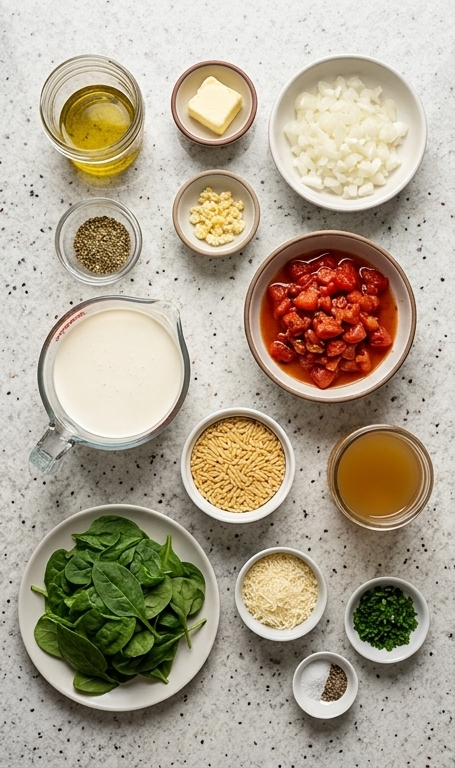
- Orzo: The base of the dish, its rice-like shape soaks up flavors and gives a creamy mouthfeel. Substitute with arborio for extra creaminess or small pasta like acini di pepe if you need a change. Pick a quality brand so grains stay tender.
- Roasted Petite Diced Tomatoes: They add bright, slightly caramelized tomato pockets. Fresh chopped tomatoes can work; roast them first for depth.
- Heavy Cream: Creates the silky sauce and helps the Parmesan emulsify. Use half-and-half for a lighter version but expect a thinner sauce.
- Parmesan: Adds salt and umami; grate it fresh for best melting and flavor.
- Baby Spinach: Brings color and a tender green note; kale can stand in if cooked a bit longer.
- Onion & Garlic: Aromatics that build the flavor foundation; shallots are a lovely swap.
- Olive Oil & Butter: The fat duo that browns aromatics and delivers richness; use all olive oil for a dairy-free tweak.
Essential Kitchen Tools and Why They Matter
A short intro: you don’t need a lot to make great Tuscan Orzo, but a few key tools make it simpler and more reliable. Each one helps control texture and timing so your orzo finishes creamy and not gluey.
- Wide, heavy-bottomed skillet or saucepan: Provides even heat and room for the orzo to cook without sticking. A Dutch oven works too.
- Wooden spoon: Gentle on nonstick and great for stirring so the orzo doesn’t clump.
- Measuring cups and spoons: Small changes in liquid change texture; measure for predictability.
- Microplane or fine grater: Freshly grated Parmesan melts and blends far better than pre-grated.
- Lid or plate: To briefly cover and let residual heat finish wilting the spinach and settling the sauce.
Step-by-Step Preparation Guide
Step 1: Sauté the aromatics and build the base
Warm a tablespoon of olive oil and two tablespoons of butter in a roomy matte cream ceramic bowl placed on the Luna Pearl granite surface, then add the chopped half onion and sauté until translucent and soft — the edges should just begin to shimmer and color, releasing sweet, glossy onion strands. Stir in minced garlic, a teaspoon of Italian seasoning, a bright teaspoon of lemon juice and a touch of Dijon; then fold in the roasted petite diced tomatoes and the uncooked orzo so the dry grains are evenly coated in the glossy, fragrant mixture. You should see the oil and tomato juices cling to each tiny rice-shaped pasta, the aroma lifting as the ingredients marry together.
Step 2: Simmer the orzo until creamy and tender
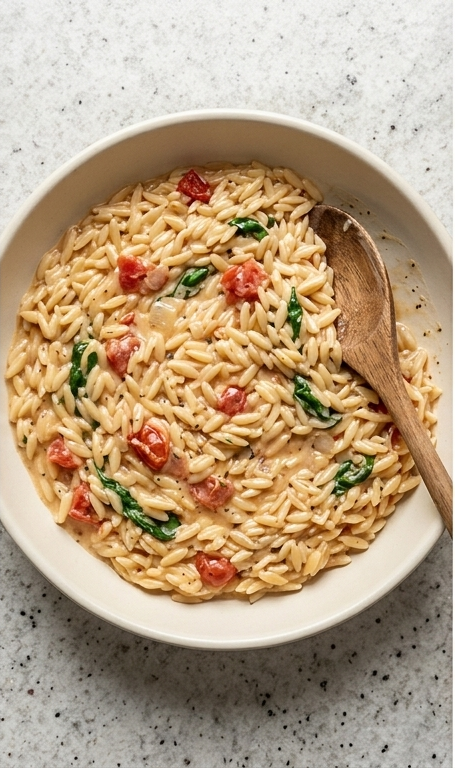
Pour in the measured vegetable broth and the room-temperature heavy cream into the same matte cream ceramic bowl with the orzo mixture; bring it to a gentle, steady simmer (no vigorous boil), then lower the heat and let the orzo absorb liquid while you stir occasionally with a wooden spoon so the pasta remains loose and glossy rather than stuck. After about ten minutes the orzo will appear creamy and plump, individual grains swollen and coated in a satiny sauce dotted with soft tomato chunks and tiny translucent onion pieces — the texture should be spoonable, slightly saucy but not soupy, with flecks of herb and seasoning throughout.
Step 3: Fold in cheese and greens to finish
Remove the bowl from heat and immediately stir in shredded Parmesan, handfuls of fresh baby spinach and minced parsley; the residual heat will wilt the spinach into tender, glossy ribbons while the cheese melts into pockets of salty creaminess, transforming the surface into a velvety finish with visible threads of melted cheese and bright green leaves. Stir briskly so the Parmesan emulsifies into the sauce, giving the orzo a clingy, luscious texture; cover briefly if you want it to thicken further as the grains continue to swell and hold on to the sauce.
Step 4: Plate and season to serve
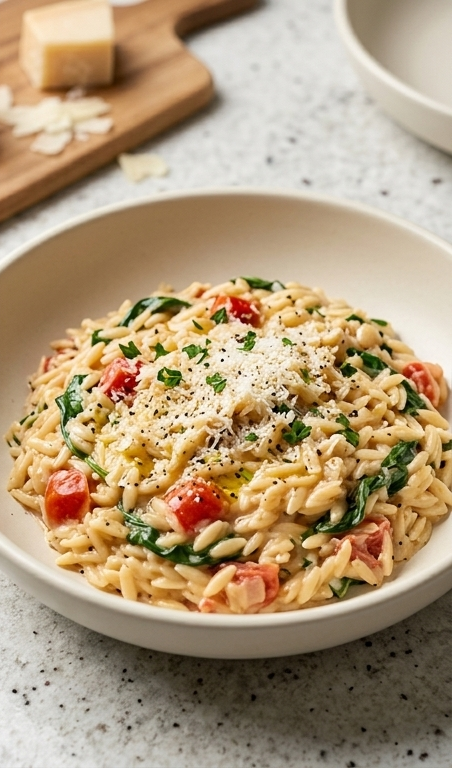
Spoon the Tuscan Orzo back into the same matte cream ceramic bowl, creating a gently heaped mound with glossy cream-coated grains, tomato chunks peeking through, wilted spinach folded in, and a generous dusting of finely grated Parmesan and minced parsley on top; finish with a light drizzle of olive oil and freshly cracked black pepper. The finished surface should read as creamy and rich with visible contrasts — white Parmesan specks against warm tomato-red pockets and bright green herb accents — ready to be enjoyed.
Making It Your Own
Treat my suggestions like experiments. Swap in cooked shredded chicken or leftover roasted vegetables for a heartier main; stir them in right after the Parmesan so they warm gently without losing texture.
For a dairy-free twist, use full-bodied canned coconut milk thinned with a splash of vegetable broth and omit the Parmesan, finishing with a sprinkle of nutritional yeast for savory depth. In spring, add peas and lemon zest to brighten things; in fall, fold in roasted butternut cubes and a scattering of toasted walnuts for crunch.
If you want a coastal spin, add a handful of chopped sun-dried tomatoes and finish with capers and a drizzle of good olive oil. Small, seasonal swaps keep the Tuscan Orzo feeling fresh.
How to Serve
Think about plating: serve Tuscan Orzo in shallow bowls so the creamy sauce spreads and each spoonful mixes orzo, tomato and spinach. For a casual meal, bowl it straight from the pan and pass extra Parmesan at the table.
For a dinner party, spoon individual portions into warmed bowls, top with a few shavings of Parmesan, a drizzle of olive oil and a sprig of parsley. Double the recipe and keep it in a wide pan on the lowest possible heat, stirring occasionally to keep the texture even for buffet-style service.
To adjust serving sizes, scale the orzo and liquids proportionally: the important part is ratio, not exact numbers. Small tweaks to cream or broth will change richness, so taste as you go.
Storage and Reheating
Cool leftover Tuscan Orzo to room temperature, then store in an airtight container in the fridge for up to 3 days. The sauce will tighten as the orzo absorbs more liquid; that is normal.
To reheat, add a splash of water, broth or milk and warm gently in a skillet over low heat, stirring so the sauce loosens and the orzo regains creaminess. Microwaving works for quick meals—stir every 30 seconds and add liquid as needed.
Common Pitfalls and How to Avoid Them
Undercooking orzo leaves a chalky center, while overcooking makes it mushy. Keep an eye on texture and taste around the ten-minute mark and adjust liquid gradually.
If the sauce separates, stir in a splash of warm cream or hot broth off the heat and whisk briskly; fresh grated Parmesan blends better than pre-shredded versions and helps the sauce come back together.
Ready to Try It?
Give this Tuscan Orzo a go tonight. It’s forgiving, fast, and endlessly adaptable, so you’ll end up with a satisfying bowl even on busy evenings. Invite someone over, or just make a big batch for easy, comforting lunches all week.
Frequently Asked Questions.
- Can I use chicken broth instead of vegetable broth? Yes, chicken broth works great and adds extra savory depth; reduce salt later if your broth is salty.
- Is there a non-dairy substitute for heavy cream? Use full-fat coconut milk thinned with a bit of broth, or try a cashew cream for a milder non-dairy option.
- Can I make Tuscan Orzo ahead of time? You can make it a day ahead; store refrigerated and loosen with a splash of broth when reheating.
- How do I make this gluten-free? Use a rice-based orzo alternative or small gluten-free pasta and monitor the texture as cooking times may differ.
- Can I add protein? Absolutely. Stir in shredded rotisserie chicken, cooked shrimp, or white beans when you fold in the Parmesan so everything warms through.
Tuscan Orzo
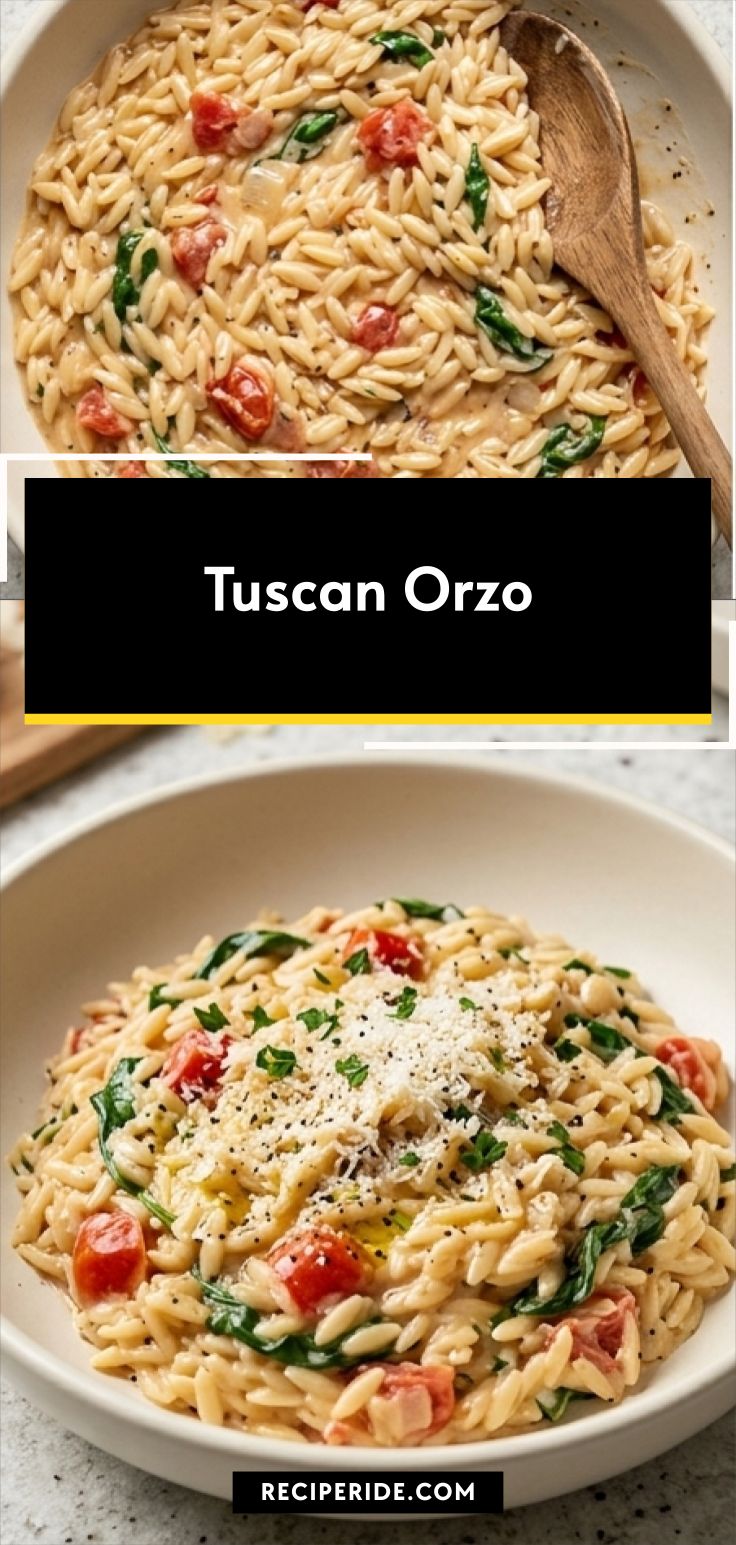
Make Tuscan Orzo in 25 minutes: creamy orzo with roasted tomatoes, spinach, and Parmesan.
Ingredients
Instructions
Step 1: Sauté the aromatics and build the base
Warm a tablespoon of olive oil and two tablespoons of butter in a roomy matte cream ceramic bowl placed on the Luna Pearl granite surface, then add the chopped half onion and sauté until translucent and soft — the edges should just begin to shimmer and color, releasing sweet, glossy onion strands. Stir in minced garlic, a teaspoon of Italian seasoning, a bright teaspoon of lemon juice and a touch of Dijon; then fold in the roasted petite diced tomatoes and the uncooked orzo so the dry grains are evenly coated in the glossy, fragrant mixture. You should see the oil and tomato juices cling to each tiny rice-shaped pasta, the aroma lifting as the ingredients marry together.
Step 2: Simmer the orzo until creamy and tender
Pour in the measured vegetable broth and the room-temperature heavy cream into the same matte cream ceramic bowl with the orzo mixture; bring it to a gentle, steady simmer (no vigorous boil), then lower the heat and let the orzo absorb liquid while you stir occasionally with a wooden spoon so the pasta remains loose and glossy rather than stuck. After about ten minutes the orzo will appear creamy and plump, individual grains swollen and coated in a satiny sauce dotted with soft tomato chunks and tiny translucent onion pieces — the texture should be spoonable, slightly saucy but not soupy, with flecks of herb and seasoning throughout.
Step 3: Fold in cheese and greens to finish
Remove the bowl from heat and immediately stir in shredded Parmesan, handfuls of fresh baby spinach and minced parsley; the residual heat will wilt the spinach into tender, glossy ribbons while the cheese melts into pockets of salty creaminess, transforming the surface into a velvety finish with visible threads of melted cheese and bright green leaves. Stir briskly so the Parmesan emulsifies into the sauce, giving the orzo a clingy, luscious texture; cover briefly if you want it to thicken further as the grains continue to swell and hold on to the sauce.
Step 4: Plate and season to serve
Spoon the Tuscan Orzo back into the same matte cream ceramic bowl, creating a gently heaped mound with glossy cream-coated grains, tomato chunks peeking through, wilted spinach folded in, and a generous dusting of finely grated Parmesan and minced parsley on top; finish with a light drizzle of olive oil and freshly cracked black pepper. The finished surface should read as creamy and rich with visible contrasts — white Parmesan specks against warm tomato-red pockets and bright green herb accents — ready to be enjoyed.
Notes
- Use freshly grated Parmesan for best melt and flavor.
- Add liquid gradually if the orzo seems dry; you can always loosen it.
- For a lighter dish, swap heavy cream for half-and-half and reduce to 1/3 cup.
- Reheat with a splash of broth or milk to restore creaminess.
- Taste and adjust salt after adding Parmesan to avoid over-salting.