I still remember the first time I coaxed the familiar sizzle from my wok while making the Thai Basil Chicken Recipe for friends. It felt effortless and a little electric – garlic, chiles, and basil in a hot pan that smelled like the best street food. Over the years this Thai Basil Chicken Recipe became my go-to for weeknight dinners and last-minute dinner guests because it is fast, bold, and forgiving. You get a glossy, savory sauce that clings to juicy pieces of chicken and bright basil that finishes everything with perfume and lift.
How This Recipe Became My Rainy-Day Favorite
When I moved to a city where rain was part of the soundtrack, late afternoons often meant craving a warm, punchy meal that came together quickly. One evening I had just enough chicken, a fistful of basil, and a stubborn craving for something spicy. The garlic hit the hot oil and the chilies popped; the tiny bowl of sauce came together in seconds. I remember tasting it with a spoon and smiling, the salty-sour-sweet triangle of flavors snapping my mood into place. The texture is what hooked me – chopped thighs that get little caramelized edges but stay tender inside, then glossy sauce that sews everything together. Serving it over jasmine rice with a runny fried egg made it feel like comfort and celebration at once, and the scent of basil in the kitchen felt like reassurance on wet days.
The Ingredients that Make It Sing
- Chicken Thighs: The star protein for juicy, forgiving texture. Thighs stay moist when seared; substitute boneless chicken breast in a pinch but reduce cook time. Choose fresh, well-trimmed pieces.
- Garlic and Bird’s Eye Chilies: Provide aromatic heat and depth. Use fewer chilies for milder flavor or red pepper flakes as a substitute.
- Fish Sauce, Soy, Oyster Sauce: The savory backbone and umami. Tamari can replace light soy for gluten free, but keep fish sauce for authentic savory notes.
- Thai Holy Basil: Adds an anise-like lift and aroma. If unavailable, Thai sweet basil works but the flavor will be milder.
- Jasmine Rice and Optional Eggs: Rice is the neutral, steamy base; crispy fried eggs add richness and texture.
Essential Kitchen Tools
A few simple tools make this come together fast and well. A roomy wok or a large heavy skillet gives you the high heat surface needed for good searing; if you don’t have a wok, a cast iron or stainless pan works well. A sharp chef’s knife matters here because you are chopping the thighs into small, irregular pieces; a dull knife slows you down and tears the meat. Small mixing bowls keep aromatics organized and speed the cooking. Use a metal spatula to scrape and sear, and a rice cooker or tight-lidded pot keeps jasmine rice fluffy. For optional eggs, a small nonstick skillet helps get crisp edges.
Step-by-Step Preparation Guide
Step 1: Trim and Chop the Chicken
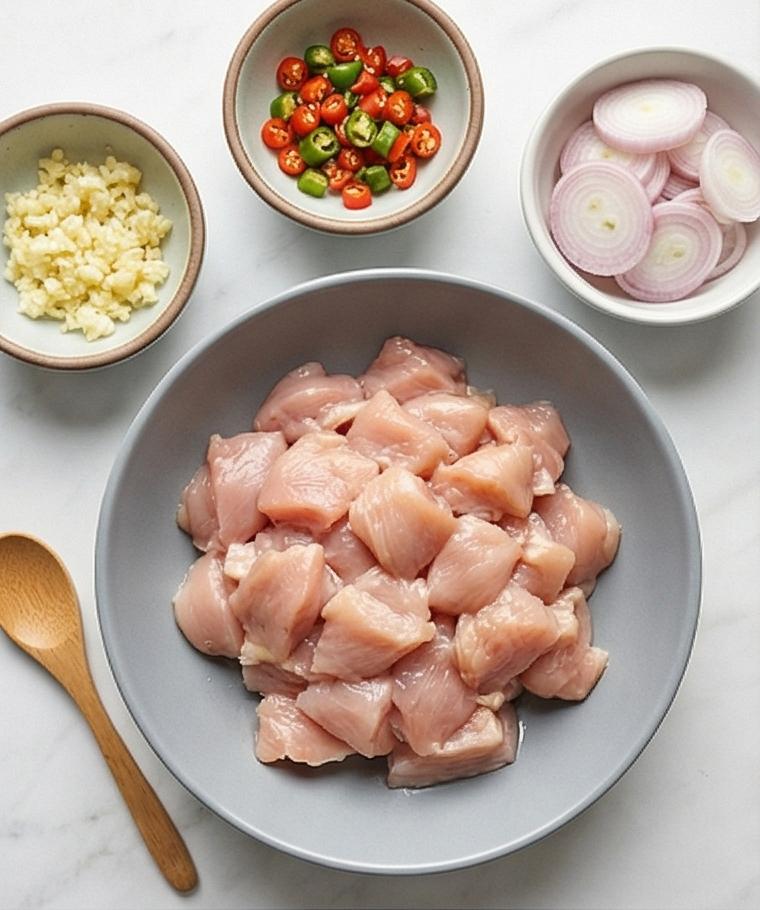
Trim any excess fat from the boneless, skinless chicken thighs and finely chop them by hand into small, slightly irregular pieces about 1/4 inch (6 mm). Aim for a texture that is chunkier than supermarket ground meat so the pieces remain juicy and develop browned edges when seared. Keep the chopped chicken loosely piled in a shallow prep bowl so the irregular surfaces and little pockets of connective tissue are visible – this is where the sauce will cling later.
Step 2: Mince Aromatics and Pick the Basil
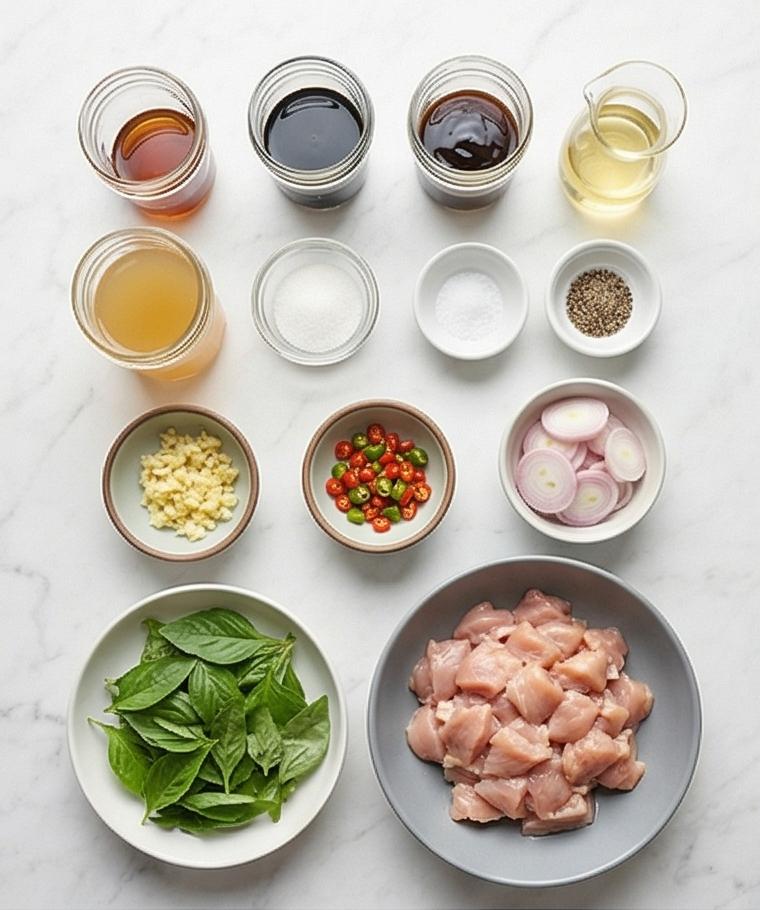
Peel and finely mince the garlic, thinly slice the Thai bird’s eye chilies, and thinly slice the shallots. Pick the Thai holy basil leaves from their stems and leave them whole, discarding the tougher stems. Arrange each component in its own small bowl: a tiny white ramekin for sugar, a small glass jar for fish sauce, a shallow ceramic bowl for the chopped chicken, and individual bowls for garlic, chilies, shallots, and basil leaves. Keep everything neatly set near the cooking area, ready to move quickly.
Step 3: Combine the Stir-Fry Sauce
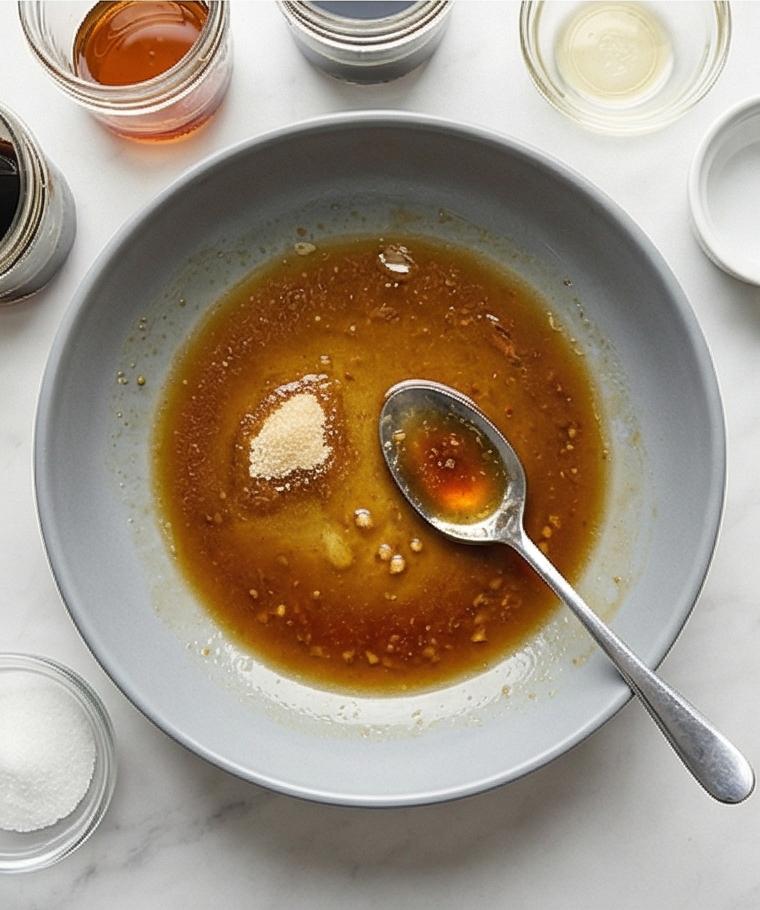
In a small matte-grey mixing bowl combine the chicken broth (or water), fish sauce, light soy sauce, oyster sauce, optional dark soy for color, granulated (or palm) sugar, and freshly ground black pepper. Stir slowly until the sugar is mostly dissolved and the liquid looks glossy and slightly viscous – the sauce should be visibly cohesive and slightly honeyed, not watery. Rest the sauce, spoon in the bowl, and leave the same matte-grey bowl in frame to maintain utensil persistence.
Step 4: Cook the Jasmine Rice and Keep Warm
Rinse and cook the jasmine rice until tender, then fluff and hold covered so the individual grains stay separate and steamy. Scoop the hot rice into a low mound on a warm plate or bowl when ready to serve; the rice’s soft, pearly grains will contrast with the sticky, glossy chicken later on. (No image here — rice appears in the final plate.)
Step 5: Stir-Fry Aromatics, Sear the Chicken, and Coat with Sauce
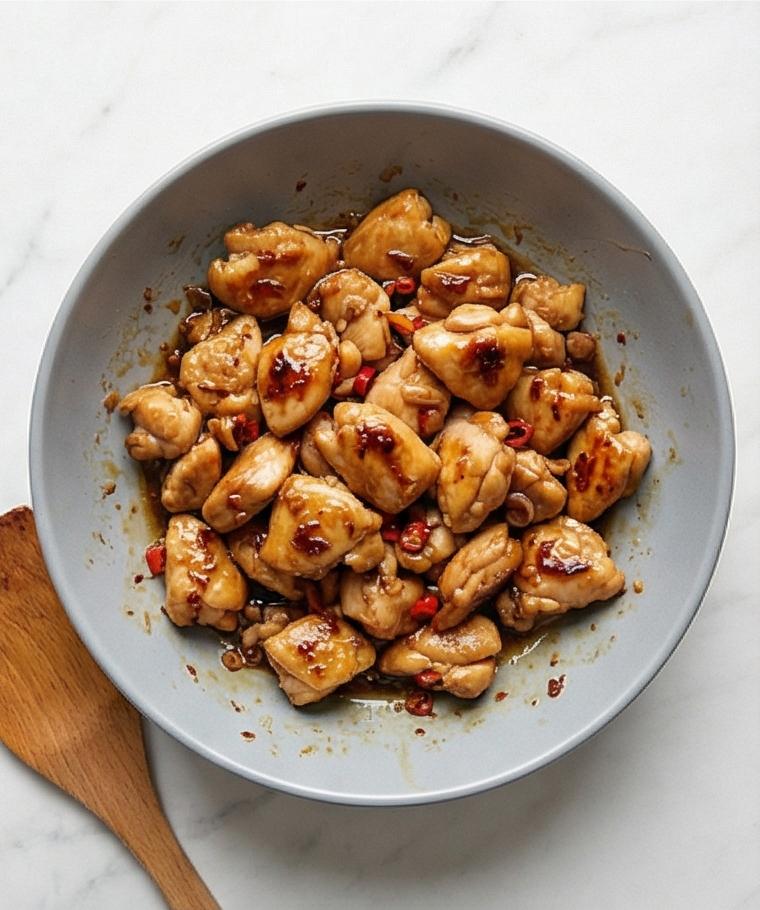
Stir-fry the garlic and sliced chilies briefly until aromatic, add the sliced shallots until translucent with lightly golden edges, then spread the chopped chicken out to sear and let it develop small browned, caramelized spots. Pour the pre-mixed sauce over the hot chicken and stir vigorously until most of the liquid reduces into a glossy glaze that clings to the meat and collects in tiny glossy pools. The result should read as hot, sizzling, and lacquered – juicy pale meat threaded with browned edges and shiny sauce. Transfer the cooked chicken to the same shallow serving bowl used earlier so the vessel persists visually.
Step 6: Toss with Fresh Basil Off the Heat and Adjust Seasoning
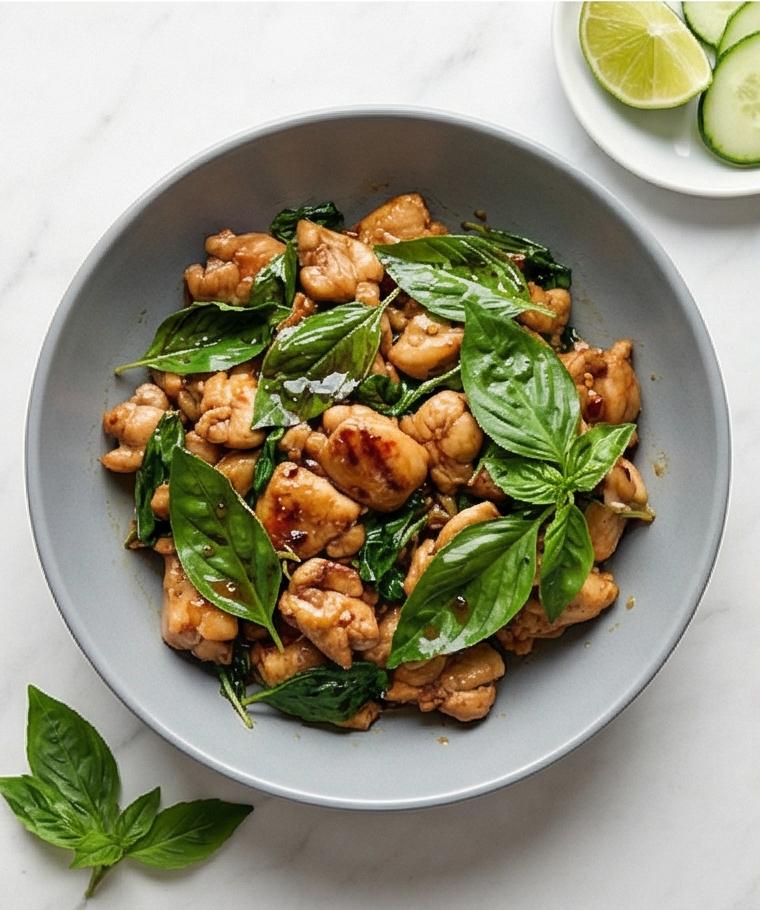
Turn off residual heat, immediately add the whole Thai basil leaves, and toss quickly until the leaves wilt yet remain vibrantly green and glossy. Taste and, if needed, adjust with a touch more fish sauce or sugar; use the residual heat to meld flavors without overcooking the basil. Present the wilted basil atop and intermingled with the chicken in the same shallow bowl, bright glossy leaves contrasting against the rich mahogany glaze of the meat.
Step 7: Optional Crispy Fried Eggs, Plate, Garnish, and Serve
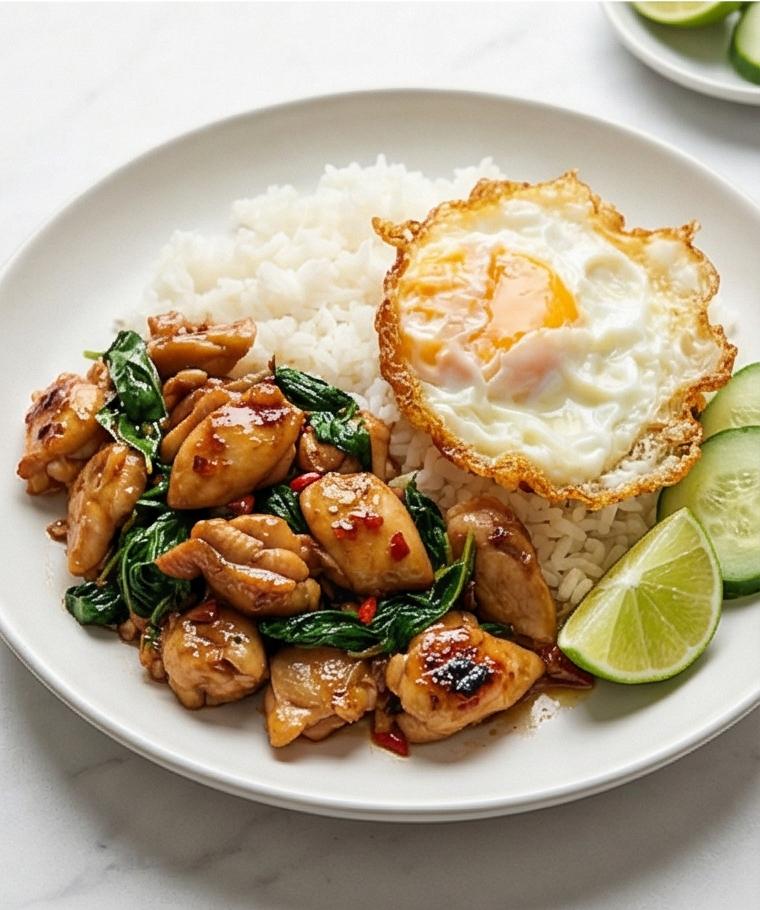
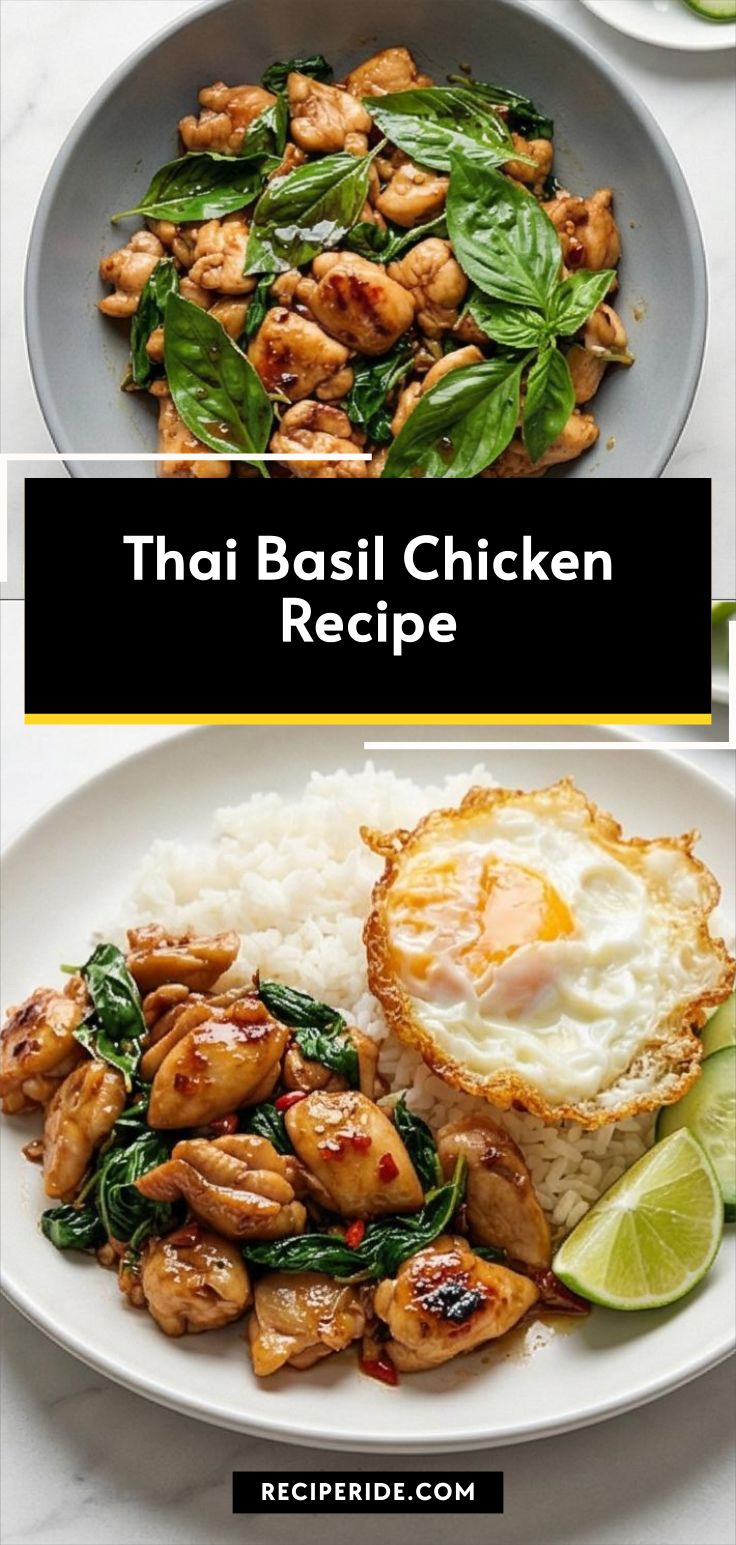
If using, fry eggs until the whites are crisp-edged and the yolks remain runny or just set, drain on paper towel and lightly salt. Plate by placing a neat mound of steaming jasmine rice beside a generous serving of the glossy Thai basil chicken on a shallow matte-white serving plate; top with wilted basil and, if desired, a crispy fried egg perched at the edge. Garnish with lime wedges, cucumber slices, and extra sliced bird’s eye chilies. The final composition should show the glossy sauce clinging to the chicken, the bright basil, the fluffy rice grains, and the golden, crisp-edged egg yolk.
Making It Your Own
Try swapping proteins for a different mood. I’ve used ground pork the same way when I wanted a richer finish, and thin slices of beef make a quick, sharper version. For a vegetarian turn, firm tofu pressed and cubed soaks up the sauce beautifully – fry until edges are golden.
Adjust heat and herbs by season. In summer I use more chilies and basil; in winter I cut back on chilies and add a splash of lime for brightness. If you like smoky depth, finish with a teaspoon of toasted sesame oil.
For dietary needs, replace light soy with tamari for gluten free and use coconut sugar instead of granulated sugar. Each little swap changes the personality but keeps the Thai Basil Chicken Recipe at its core.
How to Serve
When I host, I think about contrast and ease. Serve a generous mound of jasmine rice and spoon the Thai Basil Chicken Recipe beside it, letting the glossy sauce pool slightly so guests can mix as they like. Place lime wedges, cucumber slices, and extra chilies on a small platter so people can garnish to taste.
For a party, double the recipe and hold the sauce warm in a shallow pan over very low heat, tossing basil in batches so it stays bright. If you want family style, serve from a large shallow bowl and set bowls of rice around the table so everyone can help themselves.
Storage and Reheating Tips
Store leftovers in an airtight container in the fridge for up to 3 days. The basil will darken and soften, so if you want fresher texture, keep a small bunch of basil separate and add it when reheating.
Reheat gently in a skillet over medium-low heat with a splash of water or broth to loosen the sauce, tossing until warmed through. Avoid prolonged high heat, which will dry the chicken and flatten the flavors. Re-fry an egg fresh to top leftovers when serving.
Common Mistakes and How to Avoid Them
A common slip is overcooking the chicken so it becomes dry; keep the pieces slightly irregular and sear quickly over high heat to get brown edges while maintaining juiciness. Another mistake is cooking the basil too long; add it off the heat so it wilts but stays bright.
Also, don’t under-season the sauce – give a small taste before finishing and adjust with a touch more fish sauce or sugar as needed. Taste is the best compass here.
Final Thoughts
Give this Thai Basil Chicken Recipe a try this week – it is fast, flavorful, and forgiving. Whether you want a simple weeknight dinner or something to impress guests, this dish delivers bold flavor with minimal fuss. Cook it once and you will find little ways to make it yours.
Frequently Asked Questions.
- What is the best basil to use in Thai Basil Chicken Recipe? Use Thai holy basil for the authentic anise-like aroma; Thai sweet basil works if holy basil is unavailable.
- Can I make Thai Basil Chicken Recipe gluten free? Yes, swap light soy sauce for tamari and check that oyster sauce is gluten free or use a gluten free alternative.
- How spicy is this dish? The heat level is adjustable – start with fewer bird’s eye chilies and add more to taste; the dish can be made mild or very spicy.
- Can I use ground chicken instead of chopped thighs? You can, but chopped thighs give better texture and brown edges; if using ground chicken, watch cook time to avoid dryness.
- How long will leftovers keep? Stored in an airtight container, leftovers keep up to 3 days in the refrigerator.
Thai Basil Chicken Recipe
Make Thai Basil Chicken Recipe tonight: seared chopped thighs in a glossy, spicy basil sauce served over jasmine rice.
Ingredients
Instructions
Step 1: Trim and Chop the Chicken
Trim any excess fat from the boneless, skinless chicken thighs and finely chop them by hand into small, slightly irregular pieces about 1/4 inch (6 mm). Aim for a texture that is chunkier than supermarket ground meat so the pieces remain juicy and develop browned edges when seared. Keep the chopped chicken loosely piled in a shallow prep bowl so the irregular surfaces and little pockets of connective tissue are visible — this is where the sauce will cling later.
Step 2: Mince Aromatics and Pick the Basil
Peel and finely mince the garlic, thinly slice the Thai bird’s eye chilies, and thinly slice the shallots. Pick the Thai holy basil leaves from their stems and leave them whole, discarding the tougher stems. Arrange each component in its own small bowl: a tiny white ramekin for sugar, a small glass jar for fish sauce, a shallow ceramic bowl for the chopped chicken, and individual bowls for garlic, chilies, shallots, and basil leaves. Keep everything neatly set near the cooking area, ready to move quickly.
Step 3: Combine the Stir-Fry Sauce
In a small matte-grey mixing bowl combine the chicken broth (or water), fish sauce, light soy sauce, oyster sauce, optional dark soy for color, granulated (or palm) sugar, and freshly ground black pepper. Stir slowly until the sugar is mostly dissolved and the liquid looks glossy and slightly viscous — the sauce should be visibly cohesive and slightly honeyed, not watery. Rest the sauce, spoon in the bowl, and leave the same matte-grey bowl in frame to maintain utensil persistence.
Step 4: Cook the Jasmine Rice and Keep Warm
Rinse and cook the jasmine rice until tender, then fluff and hold covered so the individual grains stay separate and steamy. Scoop the hot rice into a low mound on a warm plate or bowl when ready to serve; the rice’s soft, pearly grains will contrast with the sticky, glossy chicken later on. (No image here — rice appears in the final plate.)
Step 5: Stir-Fry Aromatics, Sear the Chicken, and Coat with Sauce
Stir-fry the garlic and sliced chilies briefly until aromatic, add the sliced shallots until translucent with lightly golden edges, then spread the chopped chicken out to sear and let it develop small browned, caramelized spots. Pour the pre-mixed sauce over the hot chicken and stir vigorously until most of the liquid reduces into a glossy glaze that clings to the meat and collects in tiny glossy pools. The result should read as hot, sizzling, and lacquered — juicy pale meat threaded with browned edges and shiny sauce. Transfer the cooked chicken to the same shallow serving bowl used earlier so the vessel persists visually.
Step 6: Toss with Fresh Basil Off the Heat and Adjust Seasoning
Turn off residual heat, immediately add the whole Thai basil leaves, and toss quickly until the leaves wilt yet remain vibrantly green and glossy. Taste and, if needed, adjust with a touch more fish sauce or sugar; use the residual heat to meld flavors without overcooking the basil. Present the wilted basil atop and intermingled with the chicken in the same shallow bowl, bright glossy leaves contrasting against the rich mahogany glaze of the meat.
Step 7: Optional Crispy Fried Eggs, Plate, Garnish, and Serve
If using, fry eggs until the whites are crisp-edged and the yolks remain runny or just set, drain on paper towel and lightly salt. Plate by placing a neat mound of steaming jasmine rice beside a generous serving of the glossy Thai basil chicken on a shallow matte-white serving plate; top with wilted basil and, if desired, a crispy fried egg perched at the edge. Garnish with lime wedges, cucumber slices, and extra sliced bird’s eye chilies. The final composition should show the glossy sauce clinging to the chicken, the bright basil, the fluffy rice grains, and the golden, crisp-edged egg yolk.
Notes
- Keep basil separate and add off the heat for brightest flavor
- Use chicken thighs for best texture; breasts will dry faster
- Taste and adjust sauce with extra fish sauce or sugar as needed
- Press and fry tofu for a vegetarian variation
- Reheat gently with a splash of broth to loosen the sauce
- Fry eggs fresh when serving leftover portions