Cucumber Sushi Rolls Recipe is one of those easy, bright dishes I keep returning to when I want something fresh, crisp, and a little bit meditative. I first learned to make this Cucumber Sushi Rolls Recipe on a slow Sunday afternoon and it quickly became my go-to when friends drop by. The combination of seasoned sushi rice, cool cucumber matchsticks, and a hint of toasted sesame seeds makes it surprisingly satisfying. You don’t need fancy tools to get great results, just patience and good rice.
I love how this Cucumber Sushi Rolls Recipe reads like a small ritual: rinse, soak, shape, roll, slice. The textures are clean and the flavors are subtle, which is why I often serve these at gatherings as a light centerpiece. They’re also forgiving if you want to add avocado or swap fillings, so you can make them your own without losing that essential freshness.
How This Recipe Became My Rainy-Day Favorite
The first time I made these rolls it was raining, and the kitchen smelled of warm rice vinegar and toasted sesame. I remember standing at the counter, my fingers damp between turns, feeling oddly calm as the bamboo mat compressed each roll. The sound of the knife slicing through a clean log felt precise and satisfying. Friends arrived with tea and we ate slowly, passing soy sauce and trading small tips about trimming cucumber seeds. That evening stuck with me because the recipe felt like care in small bites: simple ingredients turned into something gentle and social. Ever since, whenever storm clouds gather or I need a quiet moment, I make a batch of Cucumber Sushi Rolls Recipe and let the process slow me down.
Primary Ingredients and What They Do
- Sushi Rice: The foundation; it needs to be sticky but not mushy. Substitute with short-grain rice if you must, and rinse thoroughly to remove excess starch.
- Rice Vinegar: Seasons the rice and adds brightness. Use unseasoned rice vinegar and dissolve sugar and salt into it.
- English Cucumber: Provides the crunch and clean flavor. Seed and dry the pieces to avoid soggy rolls.
- Nori Sheets: Hold everything together; choose full-size sheets for neat rolls.
- Avocado (optional): Adds creaminess; pick slightly firm fruit so slices hold shape.
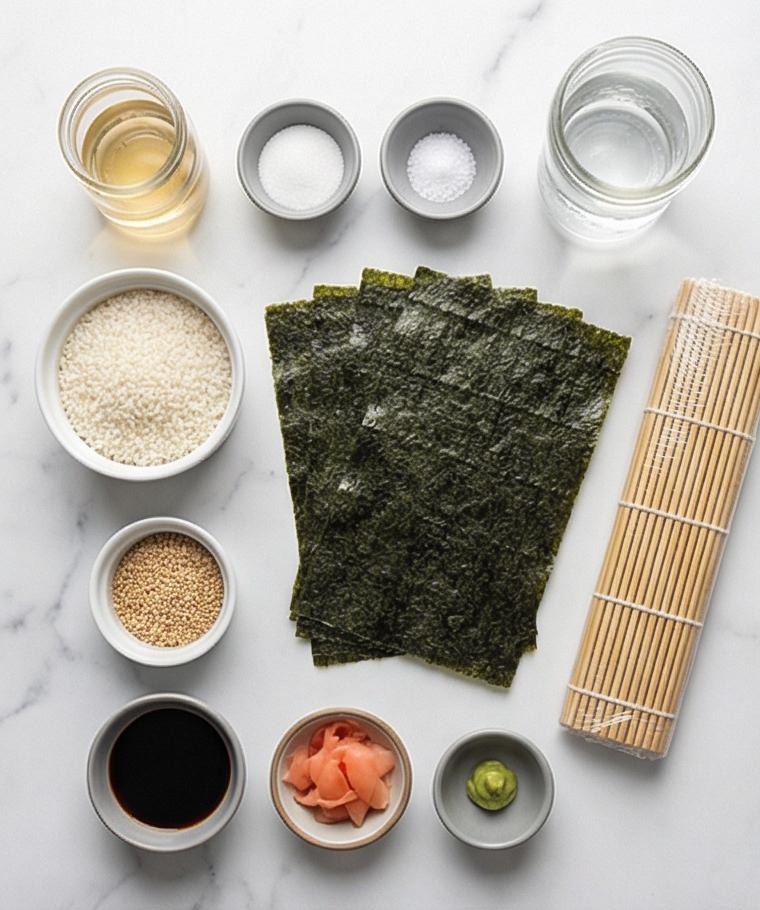
Essential Kitchen Tools and Why They Matter
A few simple tools make a big difference when you want consistent rolls. A rice paddle or wooden spoon helps you fold the seasoned vinegar into warm rice without smashing the grains. A bamboo mat gives shape and even pressure, but if you don’t have one, a clean dish towel wrapped around a cutting board works in a pinch. A sharp knife is non-negotiable for clean slices; keep a damp cloth handy to wipe the blade between cuts. Finally, a fine-mesh strainer speeds rice rinsing and keeps the countertop tidy.
- Rice Paddle or Wooden Spoon: For folding rice without crushing it.
- Bamboo Sushi Mat: For shaping tight, uniform rolls; wrap it in plastic for easy cleanup.
- Sharp Chef’s Knife: For precise, clean slices; dampen blade between cuts.
- Fine-Mesh Strainer: For rinsing rice quickly and evenly.
- Small Ceramic Bowl of Vinegar Water: Keeps fingers from sticking while shaping rice.
Step-by-Step Preparation Guide.
Step 1: Rinse, soak, cook, and season the sushi rice
Start by rinsing the sushi rice under cold running water in a fine-mesh strainer, gently rubbing the grains with your fingers until the water runs mostly clear; drain well and transfer the drained rice to a small saucepan, cover with the measured cold water and let it sit to soak so the grains hydrate evenly. Cook covered, then let it steam off heat until tender. While hot, move the rice into a wide non-metallic bowl and gently spread it to increase surface area. In a small ceramic bowl dissolve rice vinegar, sugar, and salt, then drizzle the cooled dressing over the hot rice and use a rice paddle with a slicing-and-lifting motion to fold and fan until the rice is glossy, sticky, and slightly warmer than room temperature. Cover the bowl with a slightly damp towel to keep it from drying.
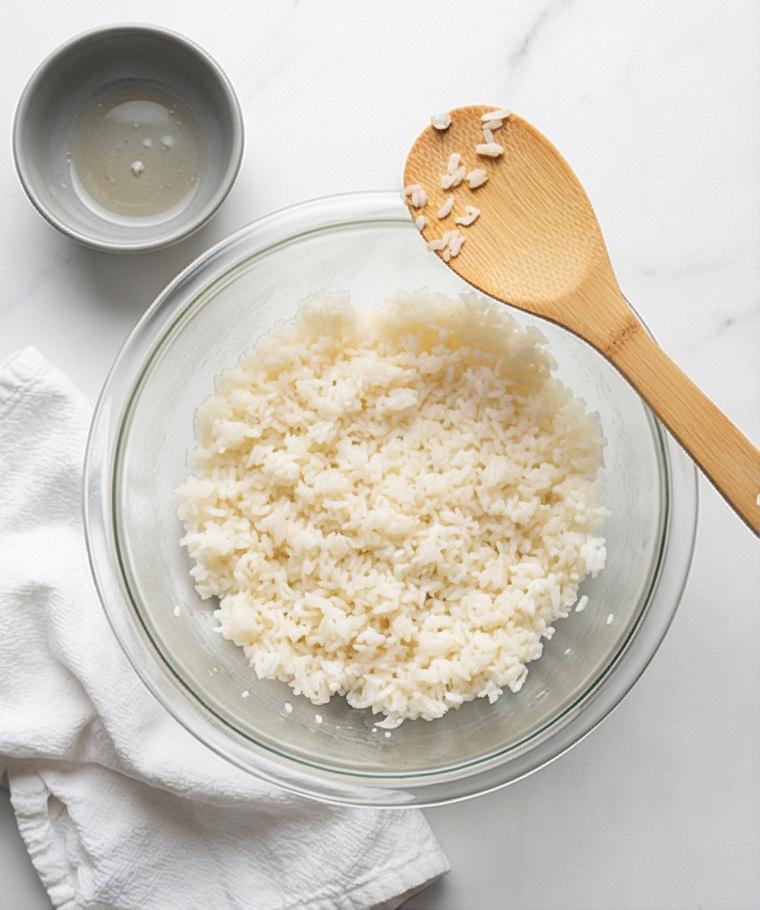
Step 2: Trim and cut the cucumber (and optional avocado) into neat matchsticks and slices
Trim the cucumber ends, halve into 3-inch sections, scoop out seeds with a small spoon so the pieces stay crisp and dry, then slice each section into very thin 1/8-inch matchsticks that stack cleanly. If using avocado, peel and pit it and cut into similar-length, even slices—keep them snug and uniform so the roll assembly will be tidy. Arrange the prepared cucumber matchsticks and avocado slices into neat piles on a small plate, and keep a shallow ceramic bowl of cool water mixed with rice vinegar nearby for dampening fingertips while shaping rice.
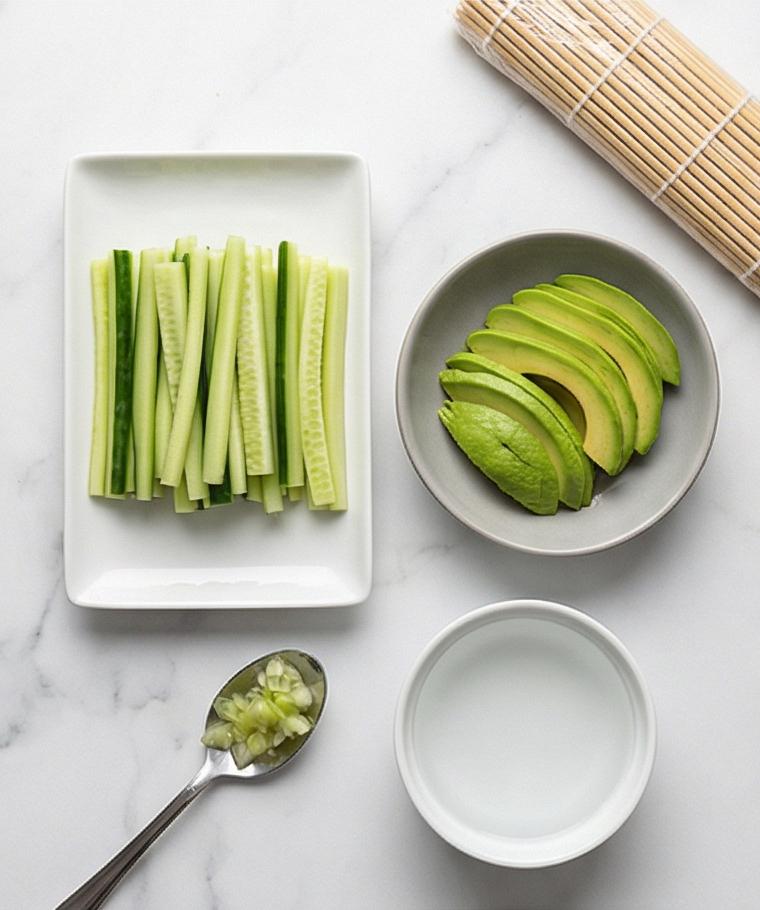
Step 3: Set up the rolling station and build the nori layer with rice and fillings
Lay a bamboo sushi mat wrapped tightly in plastic wrap on the marble surface and place one nori sheet shiny side down with the long edge facing you. Dip your fingertips in the small bowl of cool vinegar water, take an even portion of seasoned rice and distribute it in a thin, consistent layer across the nori leaving a ¾-inch strip of bare nori at the far edge. Press gently so the grains cling without being smashed, then dust with a small pinch of toasted sesame seeds and arrange a tidy line of cucumber matchsticks (and avocado, if using) about an inch from the near edge—aim for a compact, ½–¾-inch high filling ridge so the roll will form a uniform cylinder.
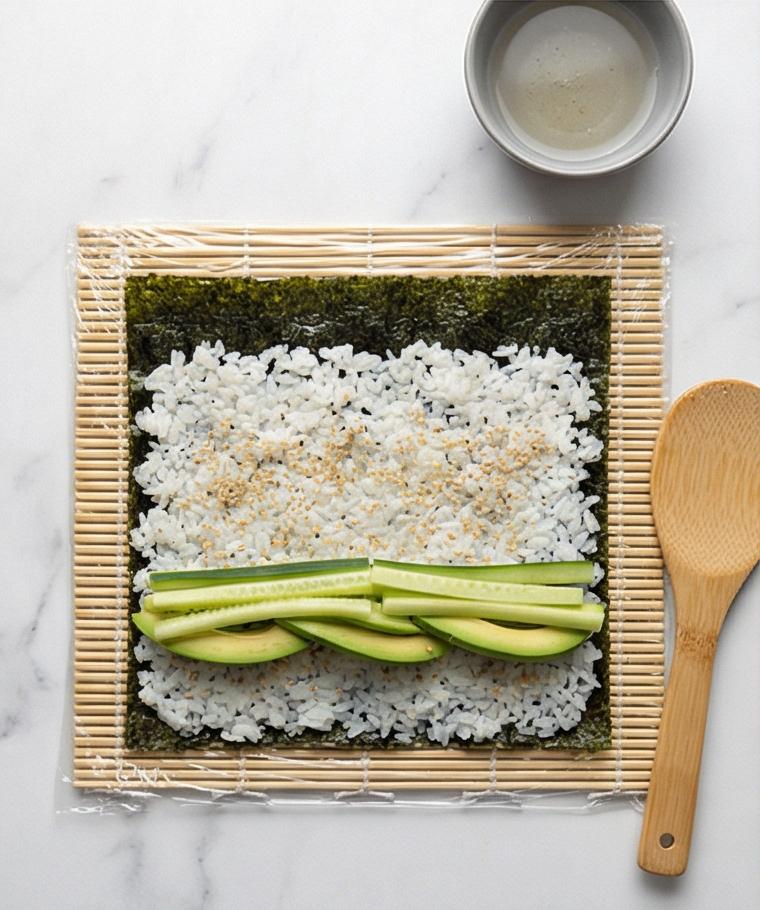
Step 4: Roll, seal, and shape uniform sushi logs
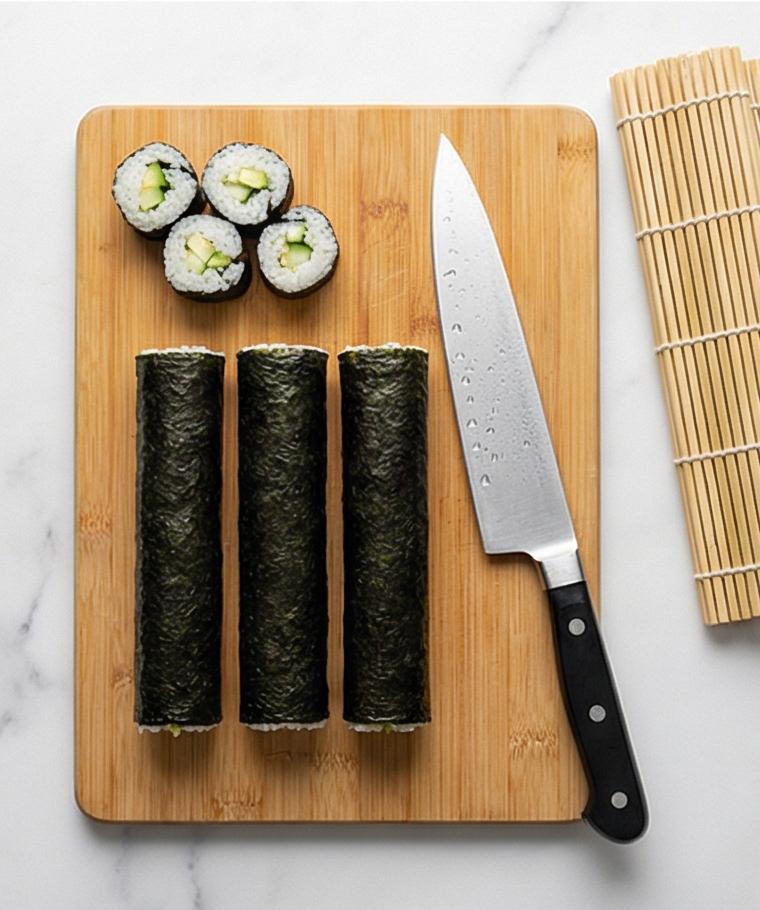
Lift the mat edge with your thumbs, tuck the near nori edge over the fillings and roll away from you, using the mat to compress the log evenly as you go until the bare strip meets and seals; lightly moisten the bare edge to finish the seal, then rest the completed roll seam-side down on a clean cutting board. Repeat the same measured assembly with the remaining sheets to yield four uniform rolls. Keep the same bamboo mat, rice paddle, and small ceramic water bowl visible and consistent across assemblies so the scene reads as a single session of work.
Step 5: Trim, slice, arrange, and serve the cucumber sushi rolls
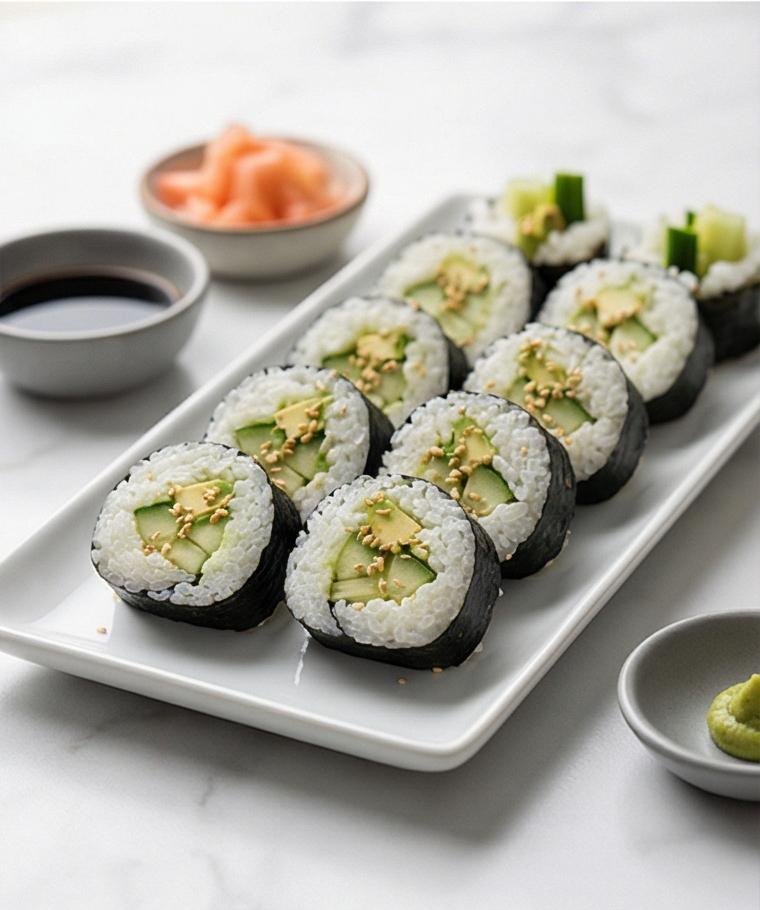
Dampen a very sharp knife and trim the ragged ¼-inch ends from each roll, then cut each log in half and each half into three equal pieces to make neat bite-sized rounds—wipe and rewet the blade between cuts for clean edges. Arrange the cut sushi pieces cut-side up on a long, low rectangular serving plate so the spiraled rice and clean cucumber core read clearly; sprinkle any remaining toasted sesame seeds over the tops and place small dipping dishes of soy sauce with pickled ginger and a dab of wasabi alongside. Serve immediately for best texture.
Making It Your Own
I often experiment by swapping or adding a single ingredient to see how it changes the roll. Try roasted shiitake strips and a thin smear of miso mayo for an umami boost. For a vegan-friendly party, skip wasabi and offer a citrus-soy dipping sauce with a splash of yuzu or lemon.
If it is summer, add thin carrot ribbons or pickled daikon for color. In colder months I like to add a thin layer of smoked salmon or marinated tofu to warm up the flavor profile.
How to Serve
When I host, I plate the rolls on a long platter with alternating colors and a small mound of pickled ginger between each set. For a small gathering of four, make the full recipe and present two rolls per person so everyone can sample without overfilling. For larger groups, double the rice and have a rolling station where guests assemble simple rolls themselves; it turns dinner into an activity.
Pair the rolls with chilled green tea or a light, aromatic white wine. Arrange small dipping bowls so guests can mix soy sauce and a touch of wasabi to taste.
Storage and Reheating Tips
Sushi is best eaten fresh, but if you must store leftovers, wrap uncut rolls tightly in plastic wrap and refrigerate for up to 24 hours. Keep soy sauce and garnishes separate to maintain texture.
Avoid reheating sushi. If you want warm rice later, keep rice and fillings separate and assemble just before serving; freshly dressed rice holds up best at room temperature.
Common Mistakes and How to Avoid Them
Overworking the rice will make it mushy; fold gently and stop when the grains are glossy and sticky. Use a light hand and a rice paddle.
Soggy cucumber or unripe avocado can ruin a roll. Pat ingredients dry, remove seeds from cucumber, and use slightly firm avocado for the best mouthfeel.
Final Thoughts
These Cucumber Sushi Rolls Recipe are simple, elegant, and endlessly adaptable. Give them a try the next time you want a light, hands-on recipe that rewards patience and small rituals. I think you will love the clean flavors and the calm focus of rolling perfect little bites.
Frequently Asked Questions.
- Q: Can I use regular rice instead of sushi rice? A: You can, but short-grain sushi rice gives the best stickiness and texture; rinse and cook carefully if substituting.
- Q: How long can I store prepared rolls? A: Store uncut rolls wrapped for up to 24 hours in the refrigerator for best texture; cut pieces lose quality faster.
- Q: Is avocado necessary? A: No; avocado is optional and adds creaminess, but cucumber alone is bright and refreshing.
- Q: Can I make these gluten-free? A: Yes; swap tamari or a gluten-free soy sauce for regular soy sauce to make them gluten-free.
- Q: How do I stop rice from sticking to my hands? A: Keep a small bowl of cool water with rice vinegar to dampen your fingertips while handling rice.
Cucumber Sushi Rolls Recipe
Make Cucumber Sushi Rolls Recipe: crisp cucumber, seasoned sushi rice, and toasted sesame — roll, slice, and serve in under an hour.
Ingredients
Instructions
Step 1: Rinse, soak, cook, and season the sushi rice
Start by rinsing the sushi rice under cold running water in a fine-mesh strainer, gently rubbing the grains with your fingers until the water runs mostly clear; drain well and transfer the drained rice to a small saucepan, cover with the measured cold water and let it sit to soak so the grains hydrate evenly. Cook covered, then let it steam off heat until tender. While hot, move the rice into a wide non-metallic bowl and gently spread it to increase surface area. In a small ceramic bowl dissolve rice vinegar, sugar, and salt, then drizzle the cooled dressing over the hot rice and use a rice paddle with a slicing-and-lifting motion to fold and fan until the rice is glossy, sticky, and slightly warmer than room temperature. Cover the bowl with a slightly damp towel to keep it from drying.
Step 2: Trim and cut the cucumber (and optional avocado) into neat matchsticks and slices
Trim the cucumber ends, halve into 3-inch sections, scoop out seeds with a small spoon so the pieces stay crisp and dry, then slice each section into very thin 1/8-inch matchsticks that stack cleanly. If using avocado, peel and pit it and cut into similar-length, even slices—keep them snug and uniform so the roll assembly will be tidy. Arrange the prepared cucumber matchsticks and avocado slices into neat piles on a small plate, and keep a shallow ceramic bowl of cool water mixed with rice vinegar nearby for dampening fingertips while shaping rice.
Step 3: Set up the rolling station and build the nori layer with rice and fillings
Lay a bamboo sushi mat wrapped tightly in plastic wrap on the marble surface and place one nori sheet shiny side down with the long edge facing you. Dip your fingertips in the small bowl of cool vinegar water, take an even portion of seasoned rice and distribute it in a thin, consistent layer across the nori leaving a ¾-inch strip of bare nori at the far edge. Press gently so the grains cling without being smashed, then dust with a small pinch of toasted sesame seeds and arrange a tidy line of cucumber matchsticks (and avocado, if using) about an inch from the near edge—aim for a compact, ½–¾-inch high filling ridge so the roll will form a uniform cylinder.
Step 4: Roll, seal, and shape uniform sushi logs
Lift the mat edge with your thumbs, tuck the near nori edge over the fillings and roll away from you, using the mat to compress the log evenly as you go until the bare strip meets and seals; lightly moisten the bare edge to finish the seal, then rest the completed roll seam-side down on a clean cutting board. Repeat the same measured assembly with the remaining sheets to yield four uniform rolls. Keep the same bamboo mat, rice paddle, and small ceramic water bowl visible and consistent across assemblies so the scene reads as a single session of work.
Step 5: Trim, slice, arrange, and serve the cucumber sushi rolls
Dampen a very sharp knife and trim the ragged ¼-inch ends from each roll, then cut each log in half and each half into three equal pieces to make neat bite-sized rounds—wipe and rewet the blade between cuts for clean edges. Arrange the cut sushi pieces cut-side up on a long, low rectangular serving plate so the spiraled rice and clean cucumber core read clearly; sprinkle any remaining toasted sesame seeds over the tops and place small dipping dishes of soy sauce with pickled ginger and a dab of wasabi alongside. Serve immediately for best texture.
Notes
- Rinse sushi rice until water runs clear to avoid gummy texture.
- Pat cucumber and avocado dry to prevent soggy rolls.
- Keep a small bowl of vinegar water to dampen fingers while handling rice.
- Use a very sharp, dampened knife and wipe between cuts for clean slices.
- Wrap bamboo mat in plastic wrap for easy cleanup and consistent rolling.