Ube Crinkle Cookies Recipe is a purple-hued twist on a classic crinkle cookie that I fell for the first time at a neighborhood bake sale. The moment I bit into one, the chewy center and cracked powdered sugar top felt like a warm hug. I make this Ube Crinkle Cookies Recipe whenever I want something festive, slightly nostalgic, and a little unexpected. It has become my go-to when I want to bring a colorful plate to potlucks or to lift a gray afternoon with something sweet and cheerful.
I love how the flavor is familiar yet new, and how the bright violet color makes people smile before they even taste it.
How These Cookies Became My Rainy-Day Comfort
There was a rainy Saturday when I first tried to recreate these Ube Crinkle Cookies Recipe at home. The kitchen steamed up as I softened the ube halaya, and the scent of vanilla and warm butter blurred with the sound of rain on the window. Rolling the chilled dough into sugar-coated orbs felt oddly soothing, like shaping little planets. When they came out of the oven, the powdered sugar had cracked into lace and little purple moons peeked through. I remember tasting one hot, the center tender and slightly chewy, and feeling unexpectedly giddy. Baking them that day turned a gloomy afternoon into something bright and celebratory, and they have kept that small, joyful magic every time since.
Ingredients That Make the Magic
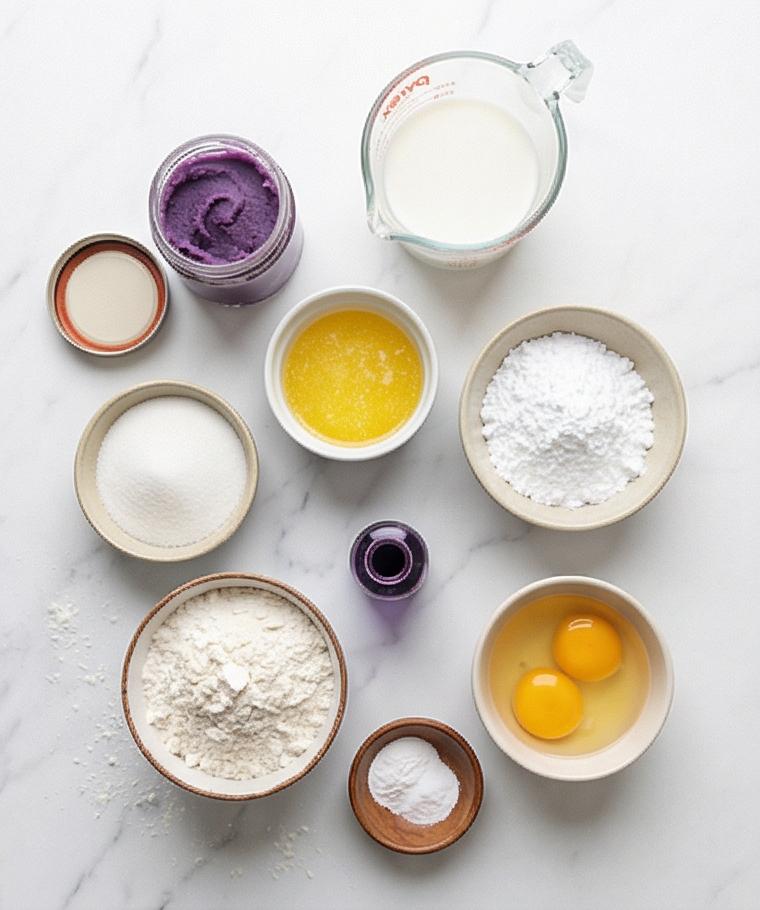
Each ingredient plays a clear part here: texture, structure, moisture, flavor, and that distinctive ube character. Choose ingredients that are fresh and at the right temperature for best results. Substitutes can work, but they shift texture or flavor, so adjust expectations accordingly.
- All-purpose flour: Provides structure and chew; use a spoon-and-level measure for accuracy, or substitute half with pastry flour for a lighter crumb.
- Baking powder: Leavens and helps cracks form; make sure it is fresh.
- Fine sea salt: Balances sweetness; kosher salt works if reduced slightly.
- Unsalted butter: Adds richness; clarified butter will change texture.
- Granulated and brown sugars: Give sweetness and chew; brown sugar adds moisture and caramel notes.
- Eggs: Bind and enrich; room temperature eggs emulsify better.
- Ube extract and ube halaya: The star flavors; quality extract boosts color and aroma.
Essential Tools and Why They Matter
A few simple tools make these cookies straightforward and more consistent. You do not need fancy gadgets, but the right basics save time and reduce frustration.
- Mixing bowls: Use medium and large bowls for dry and wet separation; glass or metal are fine.
- Whisk: Aerates the dry mix and smooths wet ingredients; a fork can substitute in a pinch.
- Spatula: For gentle folding so the dough stays tender; a wooden spoon is an okay backup.
- Cookie scoop (1.5 tbsp): Ensures uniform cookies; use a measuring tablespoon if needed.
- Baking sheet and parchment paper: Prevent sticking and promote even baking; silicone mats are a good alternative.
- Wire rack: For cooling to keep edges crisp; use a clean cutting board if you do not have a rack.
Step-by-Step Preparation Guide
Step 1: Combine and aerate the dry mix
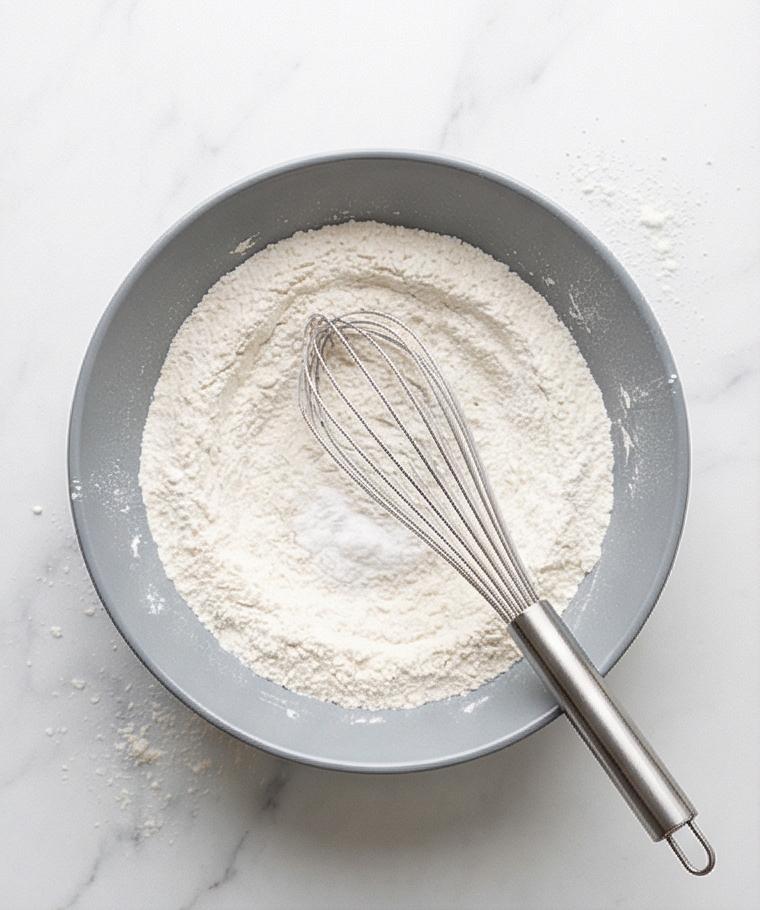
Whisk the all-purpose flour with baking powder and fine sea salt in a medium matte grey ceramic bowl until the powder is evenly distributed and the flour looks light and powdery — no lumps, just a soft, slightly billowy pile. This dry mix is the airy backbone of the cookies and should appear uniform, pale, and finely sifted, with faint flour dust on the rim of the bowl and a clean metal whisk resting across it.
Step 2: Cream butter and sugars, add eggs and extracts
In the same matte grey bowl (keep the vessel consistent) combine melted butter, granulated sugar and light brown sugar and whisk until the mixture looks slightly thickened and grainy. Add the room-temperature eggs one by one, whisking until smooth and slightly pale. Fold in the vanilla and ube extract so the mixture shifts from pale cream to an even, soft violet — glossy, emulsified, and homogeneous. Let the bowl show a few streaks and a resting stainless whisk to imply motion.
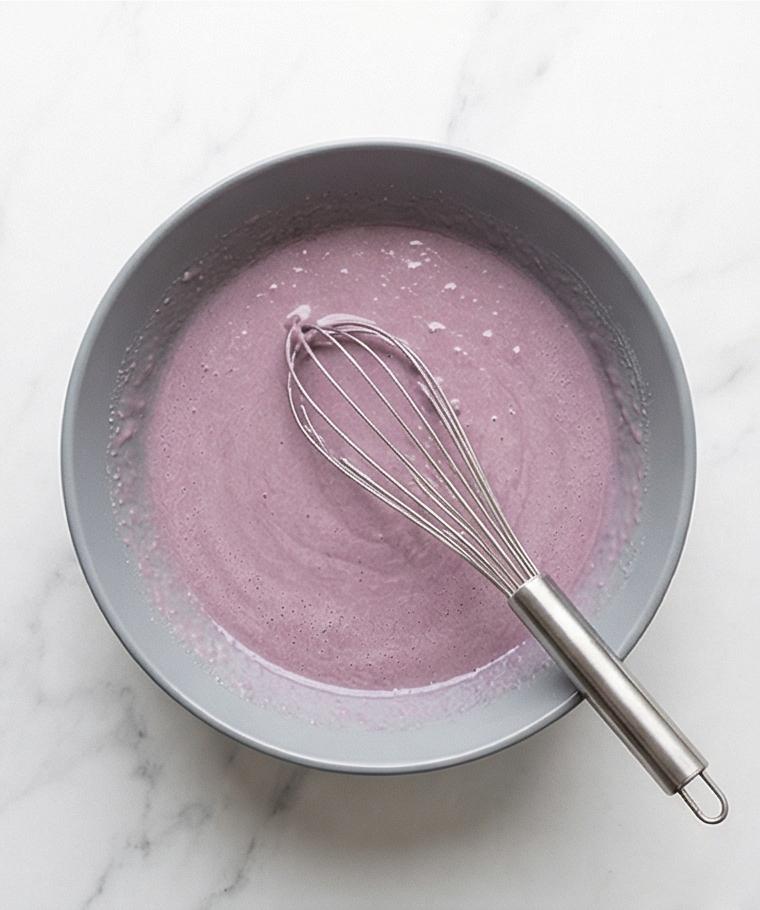
Step 3: Incorporate ube halaya and milk to form a glossy purple batter
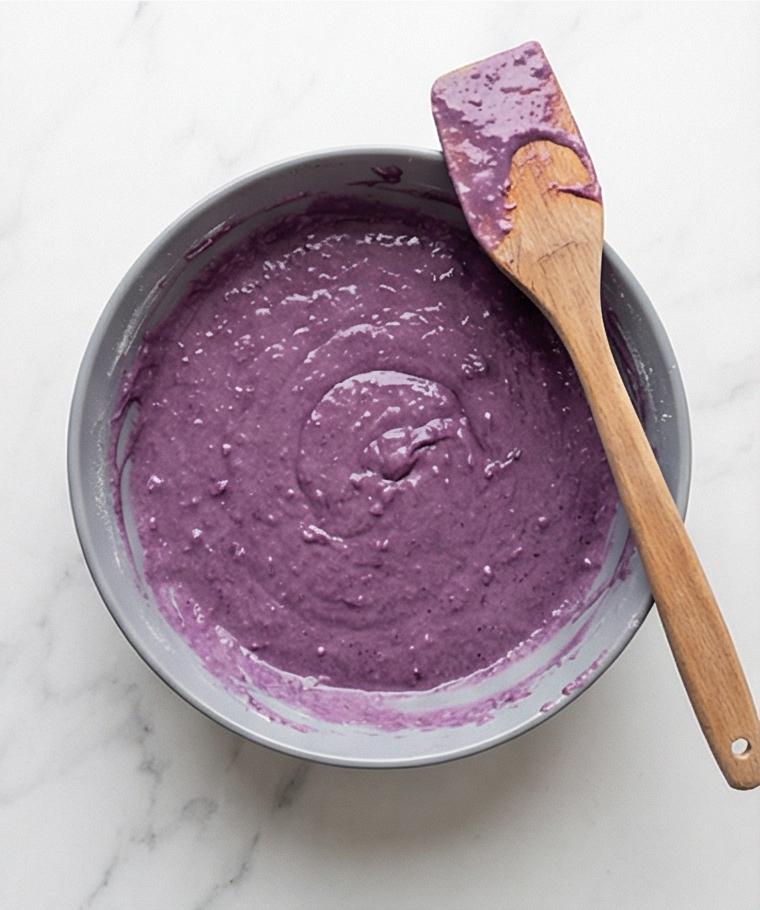
Add the softened ube halaya and a splash of milk, beating or folding until the purple is rich and uniform but still shows the jam’s slightly denser texture: tiny, softened flecks of halaya suspended in a glossy batter. The mixture should read as thick, silky, and slightly sticky — not watery — with subtle ripples where the spatula scraped the bowl. A wooden spatula or silicone scraper rests on the rim, evidence of folding.
Step 4: Fold in the dry ingredients to create a thick, scoopable dough and chill
Gently fold the dry flour mixture into the purple batter in two additions, using a spatula until no dry streaks remain. The resulting mass should be a dense, tacky dough — somewhere between thick batter and firm cookie dough — with a satiny surface and small, tender air pockets visible. Scrape down the sides, cover tightly with plastic wrap, and chill until the dough is firm and scoopable; the chilled dough will hold shape better when portioned.
Step 5: Portion, shape, and coat the dough balls in two sugars
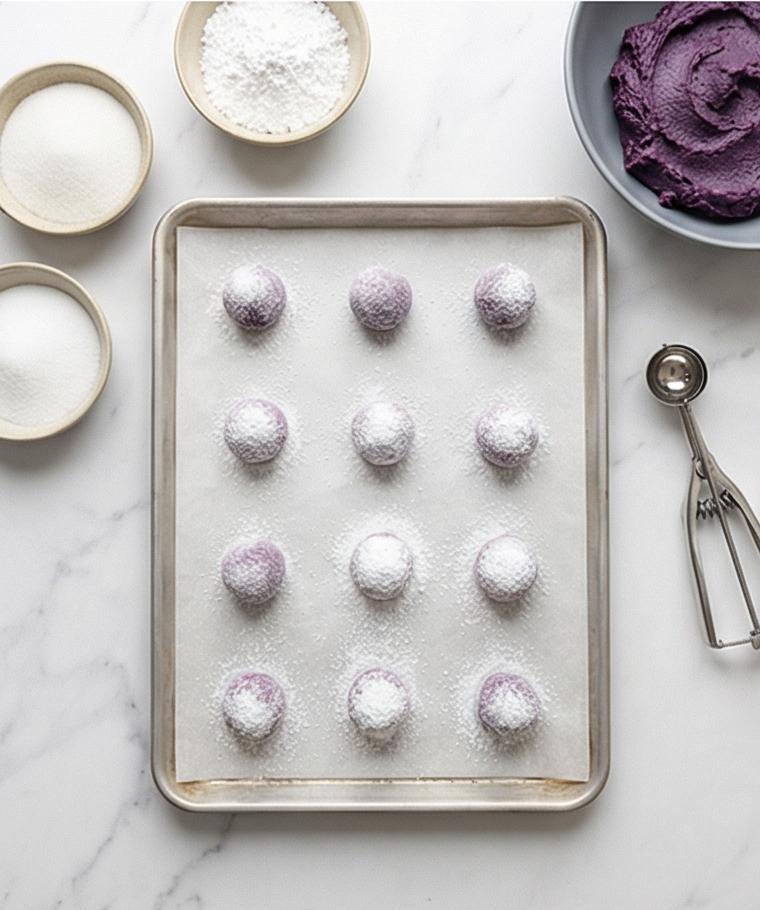
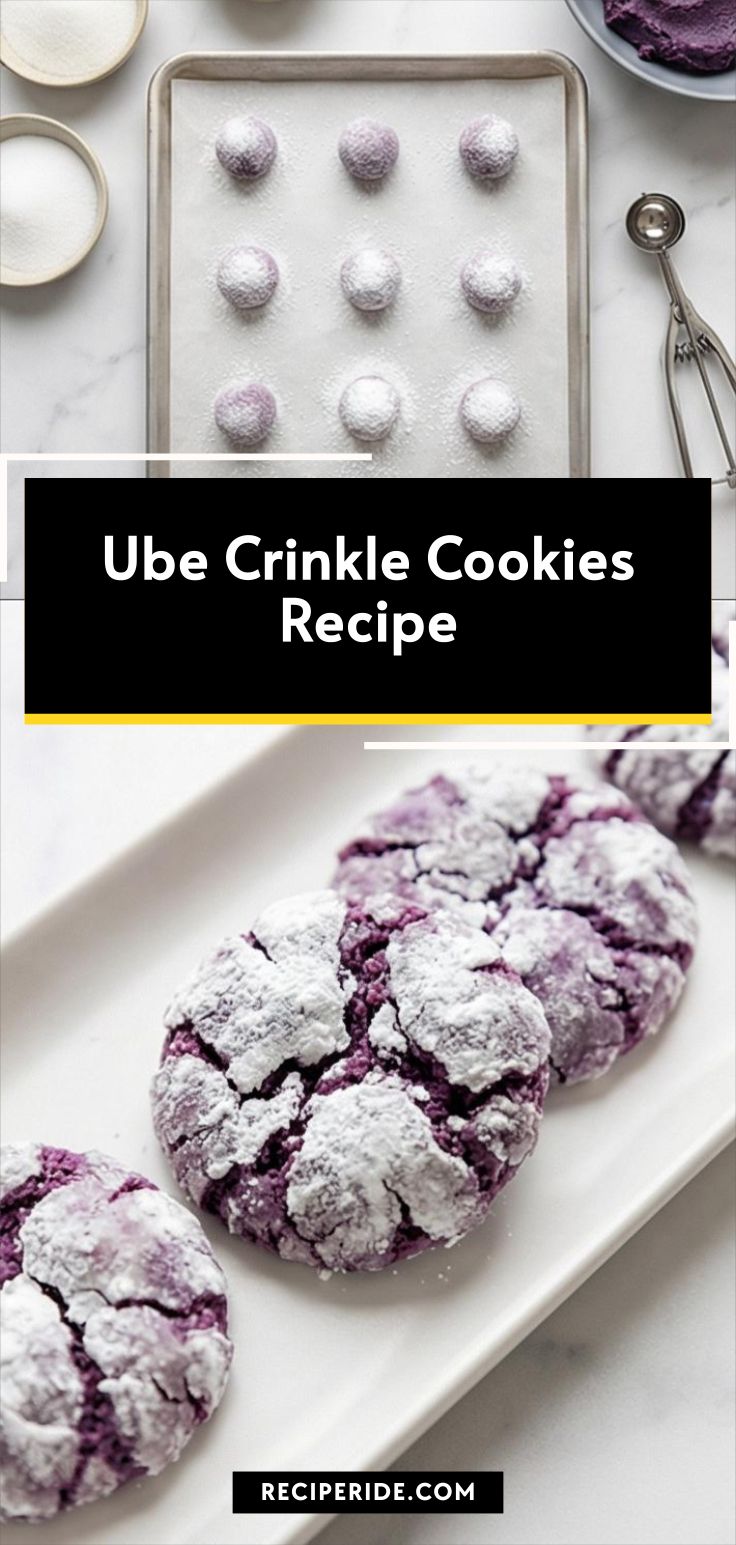
Scoop the cold, firm dough into uniform portions (about 1½ tablespoons each) and roll into smooth, compact balls; if the dough clings, dust fingertips very lightly with confectioners’ sugar. Set up two shallow bowls: one with granulated sugar and one with sifted powdered sugar. First roll each ball in granulated sugar for a dry, crystalline outer layer, then immediately roll in a generous coat of powdered sugar so each ball appears bright white, thickly coated, and spherical. Arrange the coated balls on a rectangular parchment-lined baking sheet, spaced about 2 inches apart, with a stainless cookie scoop and the two sugar bowls nearby — all tidy, no hands.
Step 6: Bake, cool, and present the final rectangular-plated crinkle cookies
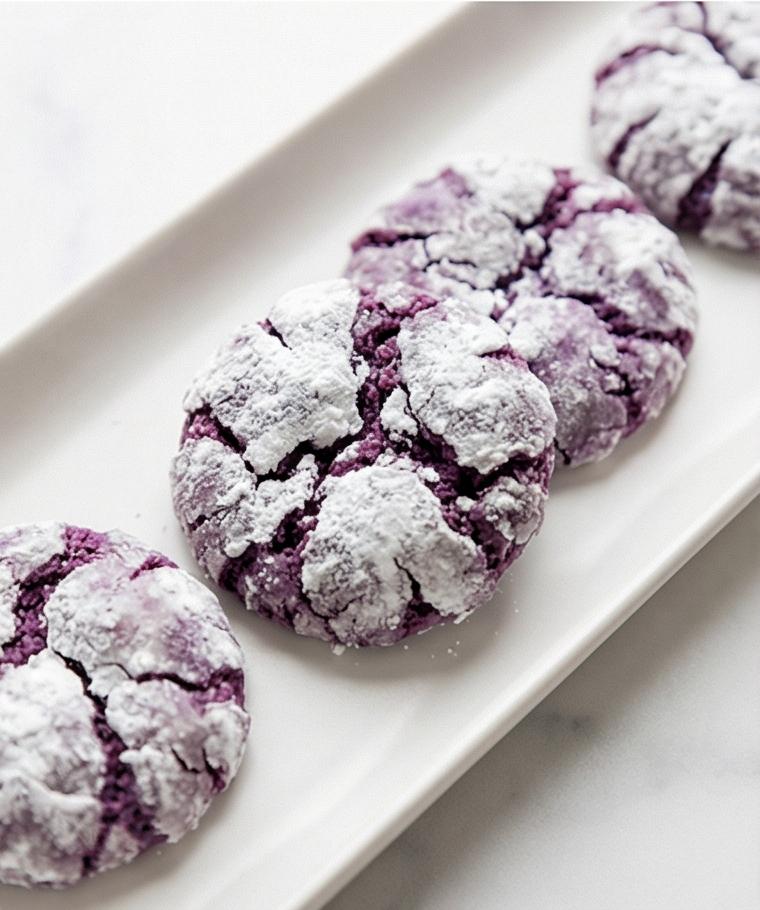
Bake the cookies until puffed, deeply cracked, and set at the edges, then cool briefly on the sheet and transfer to a wire rack to finish. The finished ube crinkle cookies should be chewy at the center with crisp, cracked tops revealing purple fissures under a delicate white veil of powdered sugar. Serve three to four cookies arranged on a long rectangular matte white platter (matching the baking sheet’s geometry), lightly dusted again if needed; the platter sits on the Carrara marble, the cookies showing contrast between vivid violet interiors and bright white cracked tops.
Making It Your Own
I treat variations like little experiments. Swap part of the flour for almond meal for a nuttier chew; the cookies will spread and brown slightly differently, so chill the dough a bit longer. For a dairy-free twist, use melted coconut oil and full-fat coconut milk in place of butter and whole milk; the flavor shifts but the texture stays delightfully soft. Try folding in chopped macadamia nuts or white chocolate chips for texture and contrast. For a seasonal spin, add a pinch of cinnamon and orange zest in fall, or swap ube extract for pandan plus matcha for an island-inspired duo.
How to Serve
If I am hosting, I arrange these Ube Crinkle Cookies Recipe on a long platter with a mix of heights: small cake stands for visual interest and a scattering of additional powdered sugar for drama. For a casual tea, serve three cookies per person with a small cup of hot milk tea or espresso. For a party, double the batch and place cookies in small paper cups so guests can grab and go. If you need to stretch servings, slice thicker cookies in half and pair with ice cream or whipped cream for an elegant plated dessert.
Storage and Reheating Tips
Store cooled cookies in an airtight container at room temperature for up to 4 days; add a sheet of parchment between layers so they do not stick. If you need them longer, freeze in a single layer on a tray until firm, then transfer to a freezer bag for up to 2 months.
To refresh chilled or frozen cookies, warm them in a 300 F oven for 4 to 6 minutes from room temperature, or 8 to 10 minutes from frozen, just until the centers are slightly soft. Let them cool briefly; they will regain some chew while the edges crisp.
Common Slip-Ups and How to Dodge Them
Under-chilling the dough usually leads to flat, thin cookies. Give the dough time to firm up so the balls hold shape in the oven. If your dough is sticky, a short chill or lightly dusting your hands with confectioners’ sugar helps.
Overbaking steals chewiness and makes the cookies dry. Pull them when the edges look set and the centers still feel a touch soft. They will continue to set on the sheet as they cool.
Final Thoughts
Give these Ube Crinkle Cookies Recipe a try the next time you want a small baking adventure. They are forgiving, festive, and reliably good company on a plate. I hope they bring the same bright little thrill to your kitchen that they do to mine.
Frequently Asked Questions.
-
Q: Can I use frozen ube halaya for this recipe?
A: Yes, thaw it fully and bring it to room temperature so it blends smoothly; if it is too cold it will create lumps in the batter. -
Q: How do I get the cracks on top to look dramatic?
A: Roll the chilled dough generously in granulated then powdered sugar, and do not overbake; the contrast happens as the cookie puffs and the surface splits. -
Q: Can I make these dairy-free or vegan?
A: Swap butter for coconut oil and milk for a plant milk; for vegan eggs, try a commercial egg replacer or a flax egg, but texture will be slightly different. -
Q: Why did my cookies spread too much?
A: Likely the dough was too warm or the baking powder was old; chill the dough and check your leavening agents’ freshness. -
Q: Can I color them more vibrantly?
A: Use a high-quality ube extract and a touch of purple gel food coloring if needed, but taste as you go so flavor stays balanced.
Ube Crinkle Cookies Recipe
Bake colorful Ube Crinkle Cookies Recipe: chewy purple centers and crackled powdered sugar tops, perfect for parties and tea.
Ingredients
Instructions
Step 1: Combine and aerate the dry mix
Whisk the all-purpose flour with baking powder and fine sea salt in a medium matte grey ceramic bowl until the powder is evenly distributed and the flour looks light and powdery — no lumps, just a soft, slightly billowy pile. This dry mix is the airy backbone of the cookies and should appear uniform, pale, and finely sifted, with faint flour dust on the rim of the bowl and a clean metal whisk resting across it.
Step 2: Cream butter and sugars, add eggs and extracts
In the same matte grey bowl (keep the vessel consistent) combine melted butter, granulated sugar and light brown sugar and whisk until the mixture looks slightly thickened and grainy. Add the room-temperature eggs one by one, whisking until smooth and slightly pale. Fold in the vanilla and ube extract so the mixture shifts from pale cream to an even, soft violet — glossy, emulsified, and homogeneous. Let the bowl show a few streaks and a resting stainless whisk to imply motion.
Step 3: Incorporate ube halaya and milk to form a glossy purple batter
Add the softened ube halaya and a splash of milk, beating or folding until the purple is rich and uniform but still shows the jam’s slightly denser texture: tiny, softened flecks of halaya suspended in a glossy batter. The mixture should read as thick, silky, and slightly sticky — not watery — with subtle ripples where the spatula scraped the bowl. A wooden spatula or silicone scraper rests on the rim, evidence of folding.
Step 4: Fold in the dry ingredients to create a thick, scoopable dough and chill
Gently fold the dry flour mixture into the purple batter in two additions, using a spatula until no dry streaks remain. The resulting mass should be a dense, tacky dough — somewhere between thick batter and firm cookie dough — with a satiny surface and small, tender air pockets visible. Scrape down the sides, cover tightly with plastic wrap, and chill until the dough is firm and scoopable; the chilled dough will hold shape better when portioned.
Step 5: Portion, shape, and coat the dough balls in two sugars
Scoop the cold, firm dough into uniform portions (about 1½ tablespoons each) and roll into smooth, compact balls; if the dough clings, dust fingertips very lightly with confectioners’ sugar. Set up two shallow bowls: one with granulated sugar and one with sifted powdered sugar. First roll each ball in granulated sugar for a dry, crystalline outer layer, then immediately roll in a generous coat of powdered sugar so each ball appears bright white, thickly coated, and spherical. Arrange the coated balls on a rectangular parchment-lined baking sheet, spaced about 2 inches apart, with a stainless cookie scoop and the two sugar bowls nearby — all tidy, no hands.
Step 6: Bake, cool, and present the final rectangular-plated crinkle cookies
Bake the cookies until puffed, deeply cracked, and set at the edges, then cool briefly on the sheet and transfer to a wire rack to finish. The finished ube crinkle cookies should be chewy at the center with crisp, cracked tops revealing purple fissures under a delicate white veil of powdered sugar. Serve three to four cookies arranged on a long rectangular matte white platter (matching the baking sheet’s geometry), lightly dusted again if needed; the platter sits on the Carrara marble, the cookies showing contrast between vivid violet interiors and bright white cracked tops.
Notes
- Chill the dough for at least 30 minutes to prevent excessive spreading.
- Use room-temperature eggs and milk for better emulsification and texture.
- Sift powdered sugar to avoid clumps when coating.
- Check baking powder freshness; replace if older than 6 months.
- Warm cookies briefly in a low oven to refresh texture.