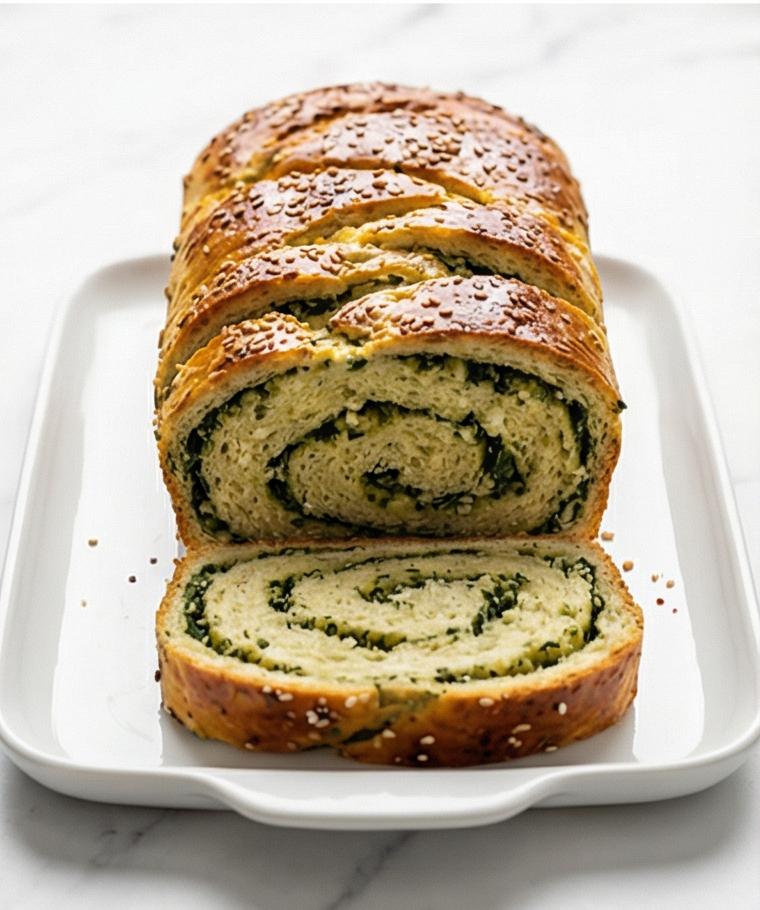
Everything Bagel Bread Recipe has become my go-to weekend bake, and it always draws a crowd. I love how the seeded, glossy top gives the loaf instant personality, while the interior stays tender and versatile. I learned to balance the seeds and salt over many attempts, and now the Everything Bagel Bread Recipe comes out consistently satisfying. If you like bagel flavor with sandwich bread comfort, this recipe is the one to try — it rewards patience and a few simple techniques.
How This Recipe Became My Rainy-Day Favorite
The first time I made this Everything Bagel Bread Recipe it was raining and I needed something to warm the kitchen and my head at once. The scent of butter and toasted seeds filled the house while the dough rose by the window, and I remember pressing a chilled fingertip into the puffy surface and smiling at how soft it felt. Baking it felt like slow, reliable work and the reward was immediate: glossy, seeded crust and pillowy slices that tasted like comfort with a little city grit. Friends who came by that afternoon ended up staying for dinner and taking home slices; it felt like a small, perfect ritual.
Main Ingredients and Why They Matter
- Warm Water: Activates the yeast and dissolves sugar; use filtered water if your tap tastes metallic.
- Instant Yeast: Provides leavening; substitute active dry yeast (use a brief proofing step) if needed.
- Bread Flour: Gives structure and chew; all-purpose will work but expect a slightly softer crumb.
- Unsalted Butter: Adds richness; swap for olive oil for a dairy-free twist.
- Everything Bagel Seasoning: The signature flavor; you can mix sesame, poppy, garlic, onion and salt yourself if store-bought is unavailable.
- Egg (for wash): Creates a shiny crust and helps seeds adhere; use milk for a softer sheen.

Essential Kitchen Tools and Why They Help
A few tools make this Everything Bagel Bread Recipe smoother and more predictable. A sturdy mixing bowl and a dough scraper keep the workspace tidy and make combining and turning the dough effortless. A stand mixer with a dough hook is a great shortcut for consistent kneading, but a firm surface and a little elbow grease work just fine. A 9×5 metal loaf pan gives that classic shape and even browning; if you only have a glass or ceramic pan, reduce oven temperature by 10 degrees F and watch the bake time. A wire rack is essential so the loaf cools evenly and the crumb sets properly.
- Mixing bowl: For combining and rising.
- Dough scraper or wooden spoon: To handle the shaggy dough.
- Stand mixer (optional): For easier kneading.
- 9×5 loaf pan: For shaping and even baking.
- Wire cooling rack: To cool the bread fully.
Step-by-Step Preparation Guide
Step 1: Activate the Yeast
Warm the water to a cozy 105–115°F (40–46°C) and dissolve the sugar in a clear measuring jug or small glass bowl, then sprinkle the instant yeast over the surface and give it a gentle stir. Set the vessel aside on the marble while the yeast blooms into a bubbly, fragrant foam — you’re looking for that soft yeasty aroma and a field of tiny, lively bubbles that indicate the yeast is alive and ready. If the mixture stays flat, discard and start again with fresh yeast; this small check saves time and guarantees a springy loaf.

Step 2: Enrich the Liquid and Bloom Flavors
Once the yeast is foamy, stir in the lukewarm melted butter and two tablespoons of everything bagel seasoning so the fat and seeds are evenly dispersed in the liquid. The butter should look satin and the seasoning should float and soften slightly as it hydrates — this is a concentrated moment of flavor that will be built into the dough. Transfer this seasoned liquid into the matte ceramic mixing bowl you’ll keep using through the process, ready to meet the flour.
Step 3: Combine Dry Ingredients and Form a Shaggy Dough
Whisk the bread flour and fine sea salt together in a separate bowl until the salt is distributed, then add the flour to the seasoned yeast mixture in two to three additions. Stir with a sturdy wooden spoon or dough scraper until a shaggy, slightly damp mass forms and there’s no dry flour left on the bottom of the bowl. The texture here should be rough and patchy — a promise of gluten to be developed rather than a finished surface.
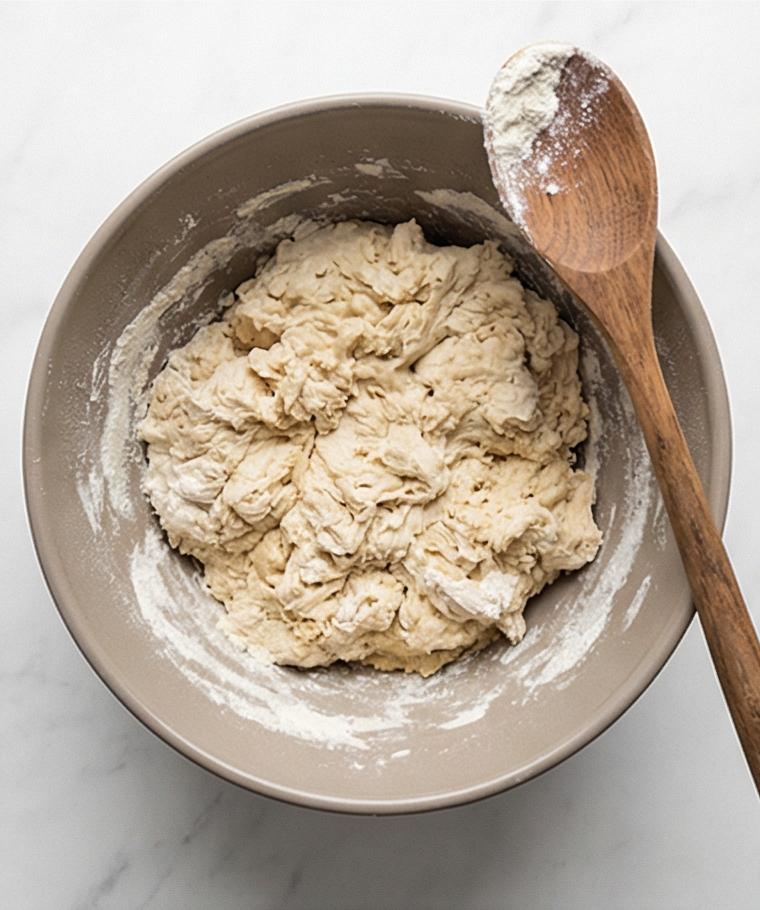
Step 4: Knead to a Smooth, Elastic Ball
Turn the shaggy dough onto the Carrara marble dusted with a little flour and knead for 8–10 minutes by hand (or use your stand mixer on low). Work until the dough becomes smooth, elastic, and slightly tacky but not sticky, adding a tablespoon of flour at a time only if absolutely necessary. Shape the dough by tucking the edges under to form a tight, smooth ball that has surface tension on top, and place it briefly beside the familiar matte ceramic bowl you’ve oiled for rising — the contrast of the taut, satiny dough against the cool marble is striking.
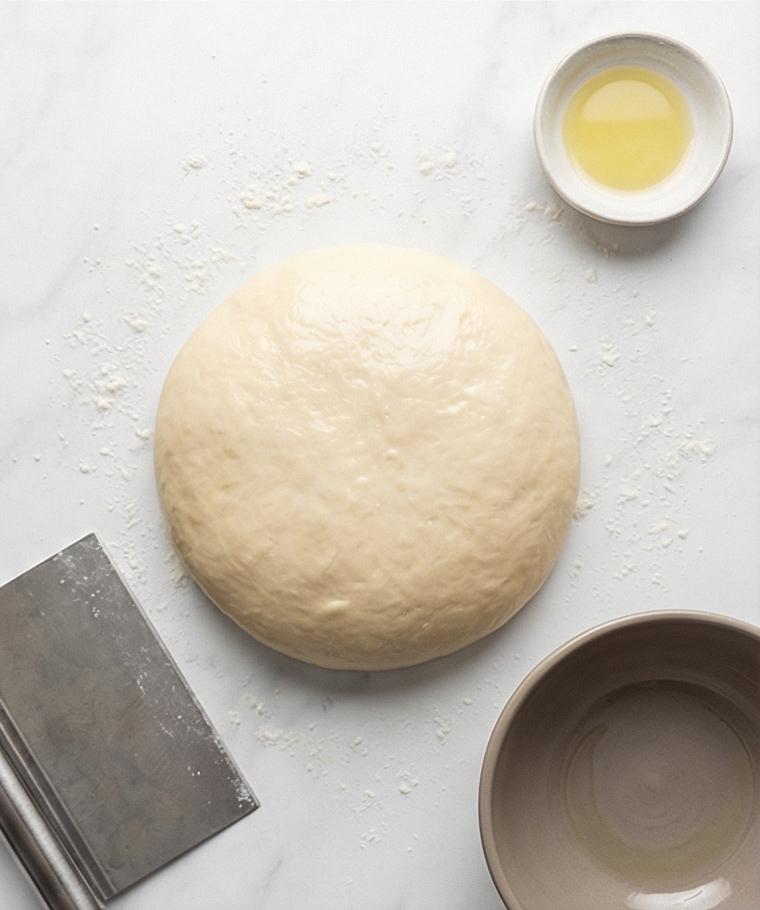
Step 5: First Rise and Prepare the Loaf Pan
Lightly coat the same mixing bowl with neutral oil, set the dough ball inside and turn it once so every side is oiled. Cover and let it rise in a warm, draft-free spot until doubled — the dough should feel pillowy and leave a slow-springing indentation when pressed. While it rests, grease a 9×5 metal loaf pan and, if you like, line it with a parchment sling and sprinkle 1–2 teaspoons of everything bagel seasoning across the bottom for extra bottom crust texture. After the first rise, gently deflate, roll the dough into an 8×12″ rectangle, then roll tightly into a log, seal the seam and ends, and set seam-side down in the prepared rectangular pan so it fills into the corners for an even bake.

Step 6: Final Rise, Egg Wash, and Everything Topping
Let the shaped loaf rise again until it’s about an inch above the rim and looks puffy. Whisk an egg with a tablespoon of water for a glossy wash and very gently brush the top and exposed sides, careful not to deflate the puff. Immediately and evenly sprinkle three tablespoons of everything bagel seasoning over the egg-washed surface, pressing only slightly so the seeds adhere without compressing the crumb. Slide the pan aside on the marble ready for baking (the oven itself is not pictured here) and admire the seeded, glossy top — the contrast between the pale dough interior pressing up against the dark, glossy seasoning is where texture and aroma promise the final loaf.
Step 7: Bake, Cool, and Serve
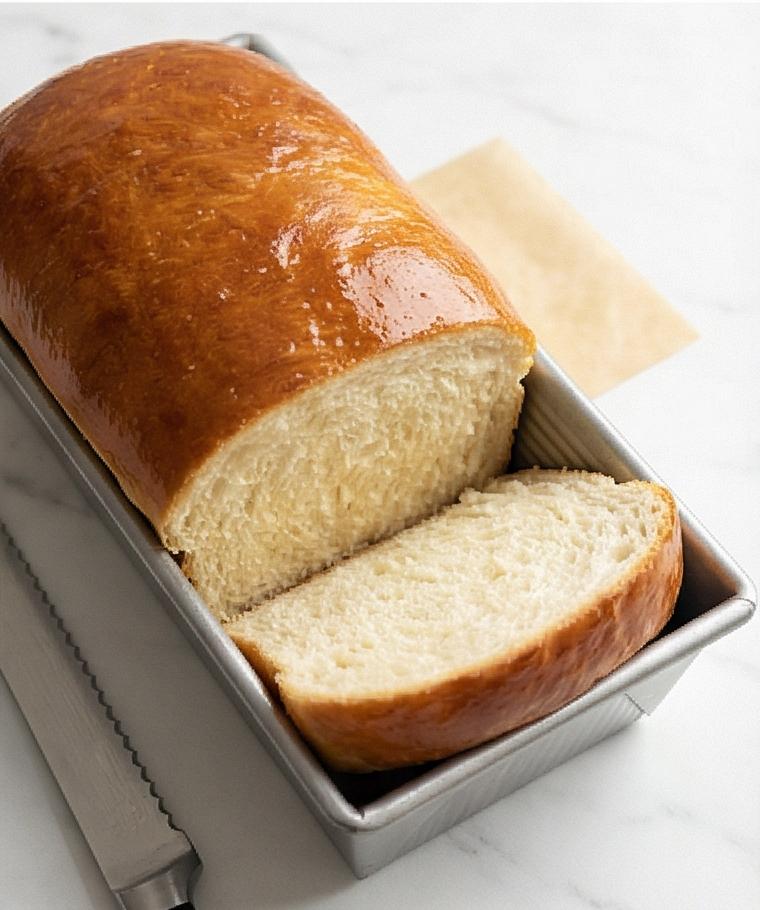
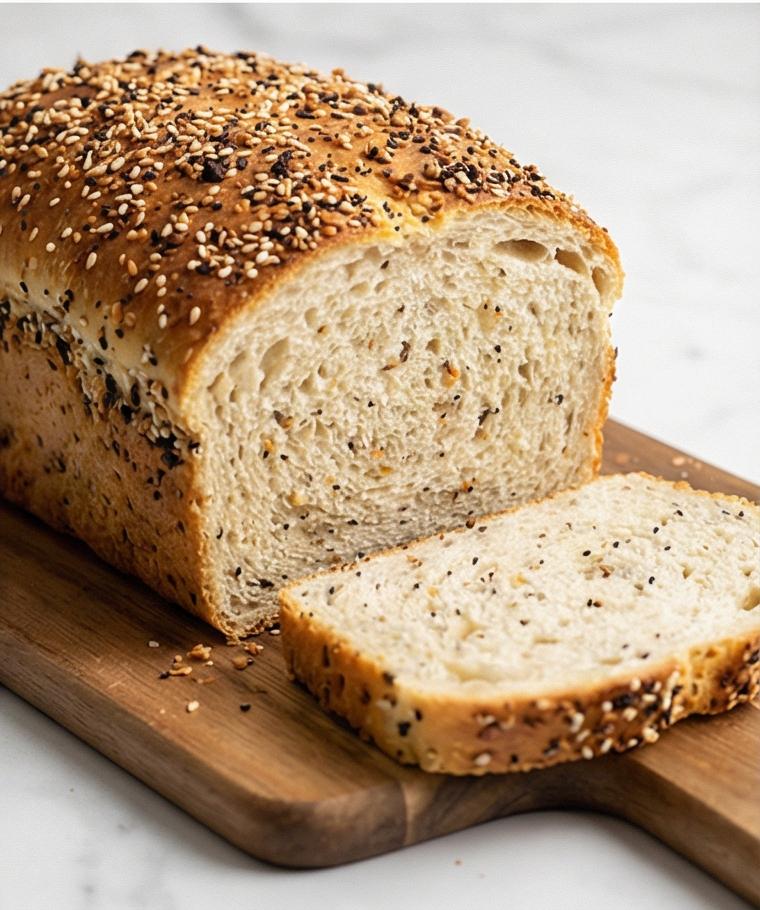
After the bake and a brief 10-minute rest in the pan, unmold the loaf onto a wire rack or a rectangular cutting board and allow it to cool completely so the crumb sets; when sliced with a serrated knife it should reveal a soft, slightly open crumb flecked with toasted seeds and a deeply golden, crisp crust. Serve slices plain, buttered, or toasted — the glossy, seed-studded top contrasts beautifully with the tender interior and holds up well for sandwiches or avocado toast.
Making It Your Own
Try swapping and tweaking small elements to see how the loaf responds. For a dairy-free loaf, use olive oil in place of butter and a plant-based milk for an egg wash; the crust will brown differently but remain delicious. In winter, fold in a tablespoon of roasted garlic paste for warmth; in spring, toss in a handful of chopped fresh chives with the seeds for a fresh lift. To make it heartier, add 1/4 cup of cooked quinoa or millet to the dough for texture.
Try regionally inspired spice blends too. A pinch of smoked paprika and roasted sesame makes a southwestern take, while zaatar gives a Mediterranean lean. Each experiment changes the crumb and crust in a small, fun way.
How to Serve
When I host, I slice the Everything Bagel Bread Recipe into thick slabs and arrange them on a wooden board with bowls of softened butter, herbed cream cheese, and pickled vegetables. For brunch, toast slices and top with smashed avocado, lemon, and a sprinkle of flaky salt. To scale up for a dinner party, bake two loaves and serve a sandwich station with roasted turkey, crisp lettuce, and quick pickles so guests assemble what they like.
For sandwiches, thin slices hold up well to moist fillings. For toast, aim for a medium-thick cut so it crisps evenly without losing the tender crumb. Presentation is simple: stacked slices, a butter dish, and small spoons for spreads make it feel curated without fuss.
Storage and Reheating Tips
Store cooled loaves wrapped in a clean kitchen towel or in a paper bag for 1-2 days at room temperature to preserve crust texture. For longer storage, slice the loaf and freeze in airtight bags; this keeps the crumb fresh and makes it easy to pull out individual slices.
Reheat slices by toasting directly from frozen or defrosting briefly at room temperature and warming in a 350 F oven for 6-8 minutes. If you prefer a soft, just-baked feel, wrap a slice in foil with a little butter and heat for 10 minutes in a low oven.
Common Mistakes and How to Avoid Them
Underproofing yields tight crumb and a dense loaf; be patient and look for a clear, slow-springing indentation when you press the dough. Over-flouring while kneading can dry the crumb, so add extra flour sparingly.
Pushing too hard when brushing the egg wash will deflate the final rise. Use a light hand and gentle strokes. If your seeds slide off after baking, press them a touch more before baking and make sure the wash is evenly applied.
Final Thoughts and Invitation
If you love seeded flavors and a glossy, show-stopping loaf, give this Everything Bagel Bread Recipe a go. It is forgiving, adaptable, and makes mornings feel a little more celebratory. Bake a loaf, share slices, and tweak the seasoning until it feels like yours.
Frequently Asked Questions.
- What is Everything Bagel Bread Recipe best used for? – It is perfect for toast, sandwiches, and serving with spreads.
- Can I use all-purpose flour instead of bread flour? – Yes, you can. Expect a slightly softer, less chewy crumb.
- How long can I store the baked loaf? – At room temperature, 1-2 days wrapped; freeze slices for longer storage.
- Can I make this dairy-free? – Yes, replace butter with oil and use a milk substitute or skip the egg wash.
- My seeds fall off after baking – What should I do? – Press seeds lightly into the wash and ensure the egg wash is evenly applied before baking.
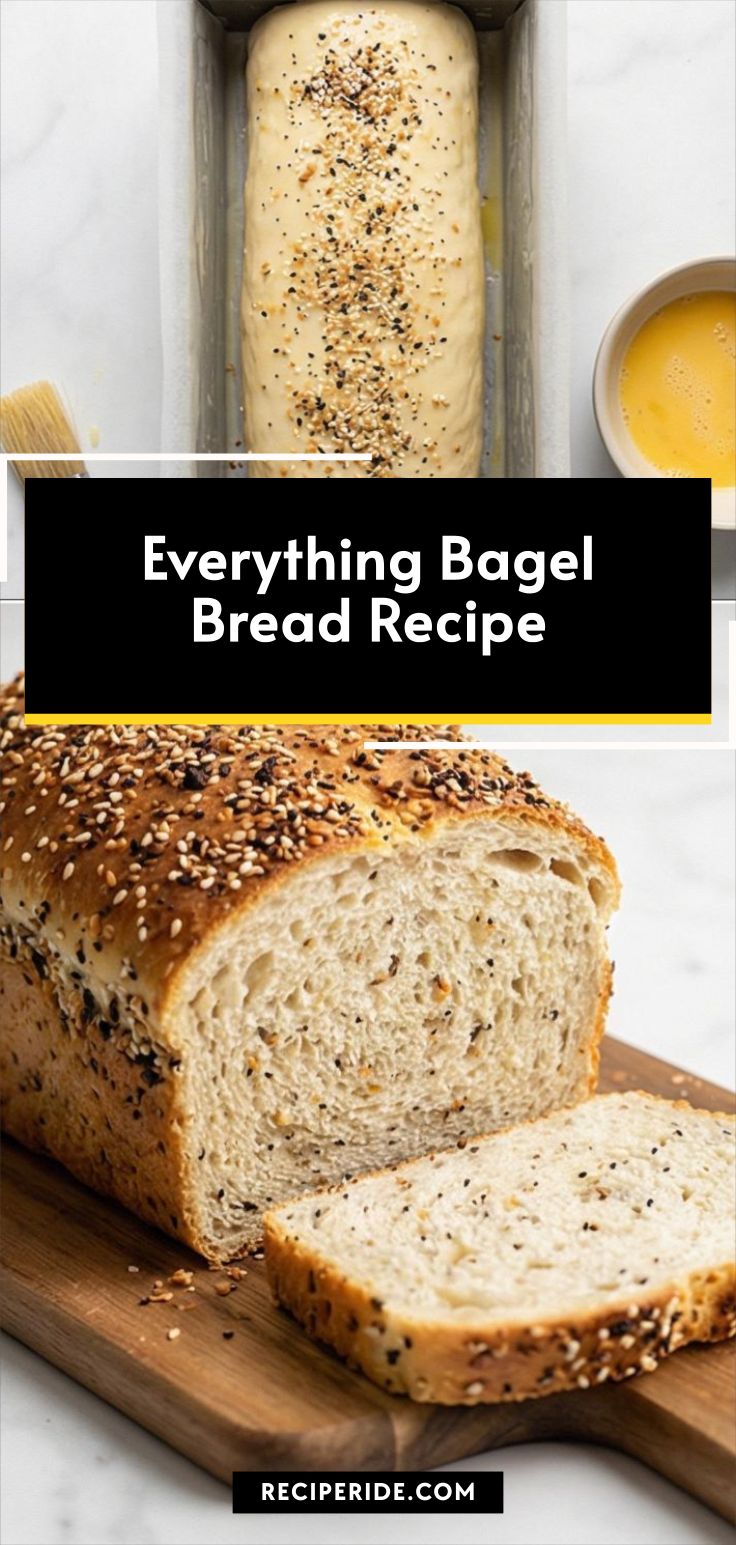
Everything Bagel Bread Recipe
Bake an Everything Bagel Bread Recipe loaf with a seeded, glossy crust—perfect for toast and sandwiches.
Ingredients
Instructions
Step 1: Activate the Yeast
Warm the water to a cozy 105–115°F (40–46°C) and dissolve the sugar in a clear measuring jug or small glass bowl, then sprinkle the instant yeast over the surface and give it a gentle stir. Set the vessel aside on the marble while the yeast blooms into a bubbly, fragrant foam — you’re looking for that soft yeasty aroma and a field of tiny, lively bubbles that indicate the yeast is alive and ready. If the mixture stays flat, discard and start again with fresh yeast; this small check saves time and guarantees a springy loaf.
Step 2: Enrich the Liquid and Bloom Flavors
Once the yeast is foamy, stir in the lukewarm melted butter and two tablespoons of everything bagel seasoning so the fat and seeds are evenly dispersed in the liquid. The butter should look satin and the seasoning should float and soften slightly as it hydrates — this is a concentrated moment of flavor that will be built into the dough. Transfer this seasoned liquid into the matte ceramic mixing bowl you’ll keep using through the process, ready to meet the flour.
Step 3: Combine Dry Ingredients and Form a Shaggy Dough
Whisk the bread flour and fine sea salt together in a separate bowl until the salt is distributed, then add the flour to the seasoned yeast mixture in two to three additions. Stir with a sturdy wooden spoon or dough scraper until a shaggy, slightly damp mass forms and there’s no dry flour left on the bottom of the bowl. The texture here should be rough and patchy — a promise of gluten to be developed rather than a finished surface.
Step 4: Knead to a Smooth, Elastic Ball
Turn the shaggy dough onto the Carrara marble dusted with a little flour and knead for 8–10 minutes by hand (or use your stand mixer on low). Work until the dough becomes smooth, elastic, and slightly tacky but not sticky, adding a tablespoon of flour at a time only if absolutely necessary. Shape the dough by tucking the edges under to form a tight, smooth ball that has surface tension on top, and place it briefly beside the familiar matte ceramic bowl you’ve oiled for rising — the contrast of the taut, satiny dough against the cool marble is striking.
Step 5: First Rise and Prepare the Loaf Pan
Lightly coat the same mixing bowl with neutral oil, set the dough ball inside and turn it once so every side is oiled. Cover and let it rise in a warm, draft-free spot until doubled — the dough should feel pillowy and leave a slow-springing indentation when pressed. While it rests, grease a 9×5 metal loaf pan and, if you like, line it with a parchment sling and sprinkle 1–2 teaspoons of everything bagel seasoning across the bottom for extra bottom crust texture. After the first rise, gently deflate, roll the dough into an 8×12" rectangle, then roll tightly into a log, seal the seam and ends, and set seam-side down in the prepared rectangular pan so it fills into the corners for an even bake.
Step 6: Final Rise, Egg Wash, and Everything Topping
Let the shaped loaf rise again until it’s about an inch above the rim and looks puffy. Whisk an egg with a tablespoon of water for a glossy wash and very gently brush the top and exposed sides, careful not to deflate the puff. Immediately and evenly sprinkle three tablespoons of everything bagel seasoning over the egg-washed surface, pressing only slightly so the seeds adhere without compressing the crumb. Slide the pan aside on the marble ready for baking (the oven itself is not pictured here) and admire the seeded, glossy top — the contrast between the pale dough interior pressing up against the dark, glossy seasoning is where texture and aroma promise the final loaf.
Step 7: Bake, Cool, and Serve
After the bake and a brief 10-minute rest in the pan, unmold the loaf onto a wire rack or a rectangular cutting board and allow it to cool completely so the crumb sets; when sliced with a serrated knife it should reveal a soft, slightly open crumb flecked with toasted seeds and a deeply golden, crisp crust. Serve slices plain, buttered, or toasted — the glossy, seed-studded top contrasts beautifully with the tender interior and holds up well for sandwiches or avocado toast.
Notes
- Use filtered water for cleaner yeast activation.
- Add extra flour sparingly while kneading to avoid a dry crumb.
- Press seeds lightly into the egg wash so they adhere during baking.
- Freeze sliced loaf in airtight bags for easy breakfasts.
- Reduce oven temperature by 10 F for glass or ceramic pans.