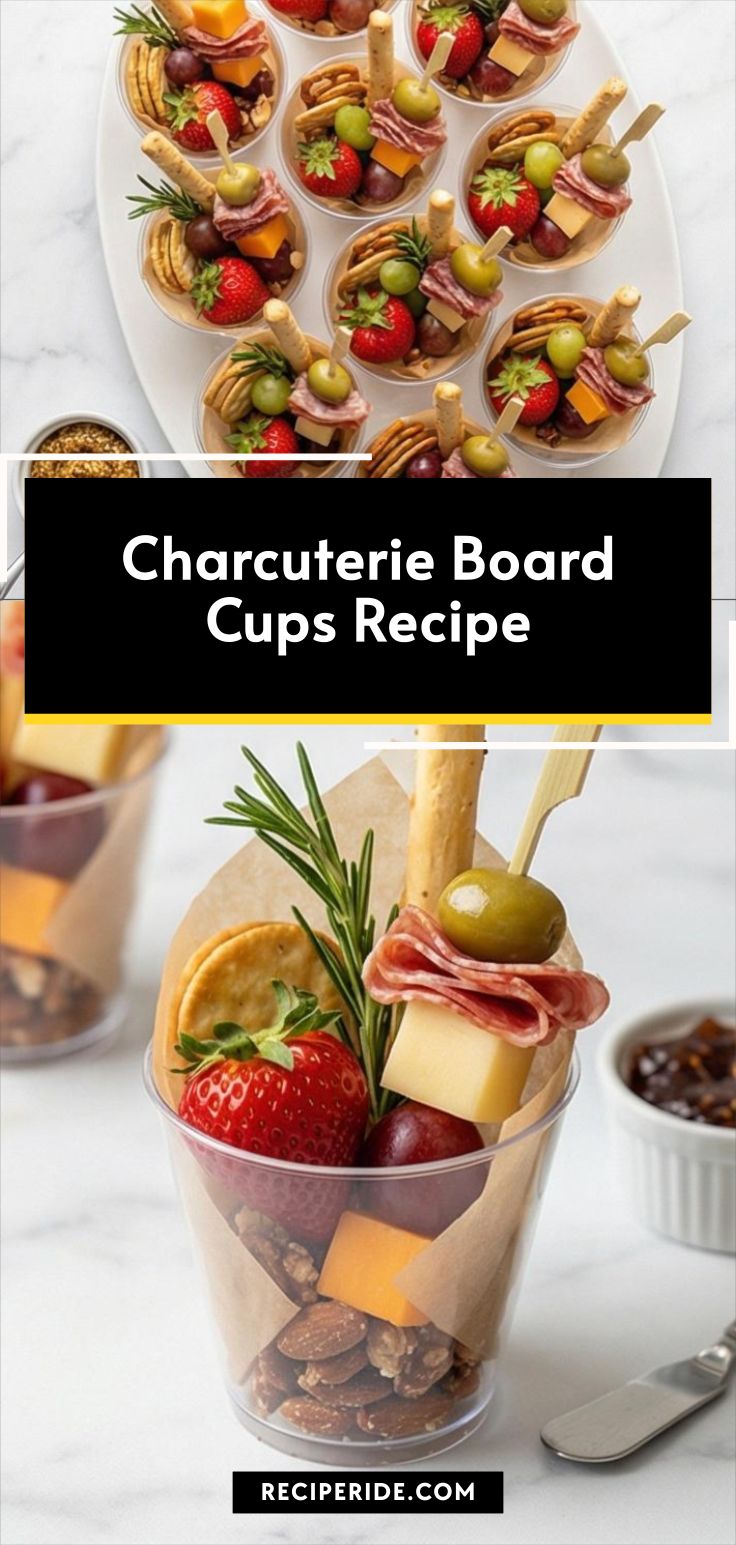
Charcuterie Board Cups Recipe are my go-to party trick when I want something that looks elegant but comes together fast. I first made this version for a small holiday get-together and watched people gravitate to the cups like magnets. The bright grapes and ribboned prosciutto always catch compliments, and the cups stay tidy on a crowded buffet. If you love flavors that are salty, sweet and crunchy all at once, this Charcuterie Board Cups Recipe will become a staple in your entertaining kit.
How This Recipe Became My Rainy-Day Favorite
I remember the first time I made the Charcuterie Board Cups Recipe on a gray, rainy afternoon and brought them into the living room for a movie night. There was a comfort in arranging little edible scenes in plastic cups while rain tapped the windows; the rosemary smelled like a tiny garden, and the prosciutto felt almost like wrapping a present. Guests picked at the cups between scenes and conversations, and the room filled with quiet appreciation rather than rushed plates. I liked how each cup was a small, complete bite: crunchy almonds, chewy salami, bright fruit and a dab of fig jam that made you smile. That memory made this recipe feel like a warm bookmark in my entertaining repertoire, something I reach for when I want food that’s relaxed but thoughtful.
Meet the Main Players
- Sharp Cheddar: Provides tang and a firm cube that stands up on skewers; substitute with aged cheddar or a crumbly white cheddar if you prefer a sharper bite.
- Gouda or Manchego: Adds creaminess and subtle nuttiness; try Asiago or young pecorino for a different texture.
- Genoa Salami and Prosciutto: Salami gives structure on skewers while prosciutto offers silky contrast; thin-sliced soppressata or Serrano ham work as swaps.
- Fruit (grapes, strawberries): Brightens the cup and balances salt; use apple slices or dried apricots in winter.
- Crunchy elements (almonds, candied nuts, crackers, pretzels, breadsticks): Build texture and a base to protect crackers from moisture; use mixed nuts or pita chips.
- Condiments and herbs (whole-grain mustard, fig jam, rosemary, thyme): Finish and lift flavors; swap honey for fig jam for simpler sweetness.
Essential Kitchen Tools and Why They Matter
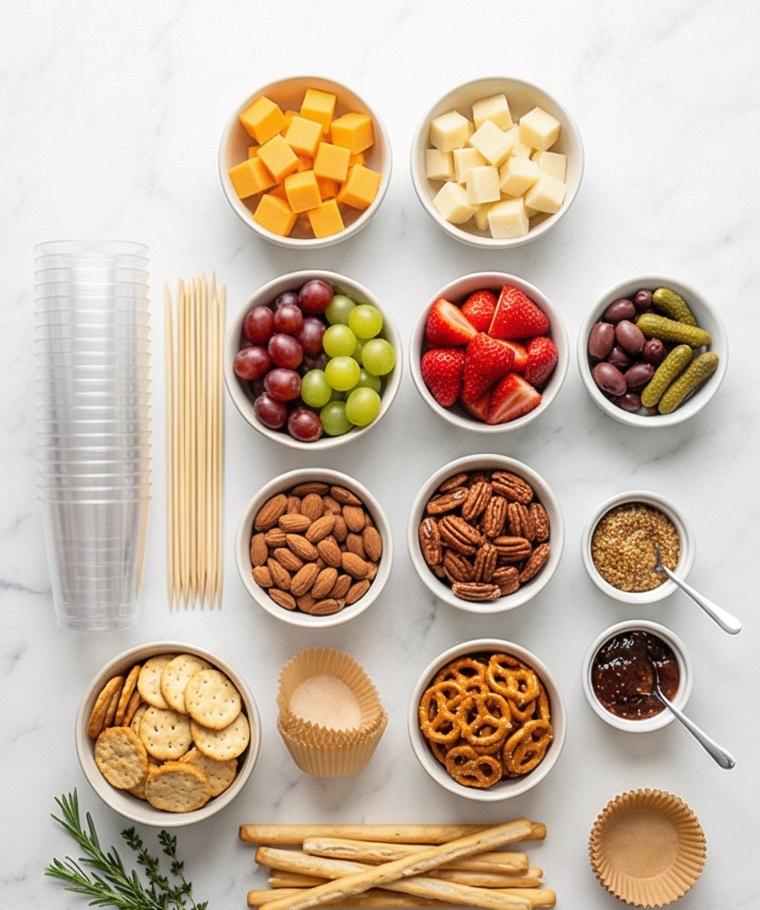
A few simple tools make these Charcuterie Board Cups Recipe effortless and keep assembly fast. A sharp chef’s knife speeds cutting cheeses into uniform cubes so skewers sit straight and look tidy. Small bowls and plates help keep flavors separate during mise en place and make it easy to replenish without mixing tastes. Bamboo skewers of the right length are necessary for balance; too-short sticks make cups awkward to eat, too-long sticks look clumsy. Optional muffin liners are a tiny investment that prevents sogginess and makes cleanup easier.
- Sharp chef’s knife: Cuts even cheese cubes quickly and safely.
- Cutting board: A stable surface helps you work faster and cleaner.
- Small bowls or ramekins: Organize prepped ingredients and condiments.
- Bamboo skewers (6-inch): Provide perfect handling and presentation.
- Parchment or muffin liners: Keep the base crisp and simplify service.
Step-by-Step Preparation Guide
Step 1: Chill perishables and prepare the cups
Keep all perishable components refrigerated until the moment you start assembling so cheeses, meats and fruit stay firm and bright. If you’re using parchment or decorative muffin liners, press one into the bottom of each clear 9-ounce plastic cup now — the liner will absorb any stray moisture and keep crackers and pretzels crisp. Lay out the clean cups in neat rows on the marble surface so they’re within easy reach during assembly; this small staging step keeps the flow calm and efficient.
Step 2: Cut, fold, wash and dry — mise for assembly
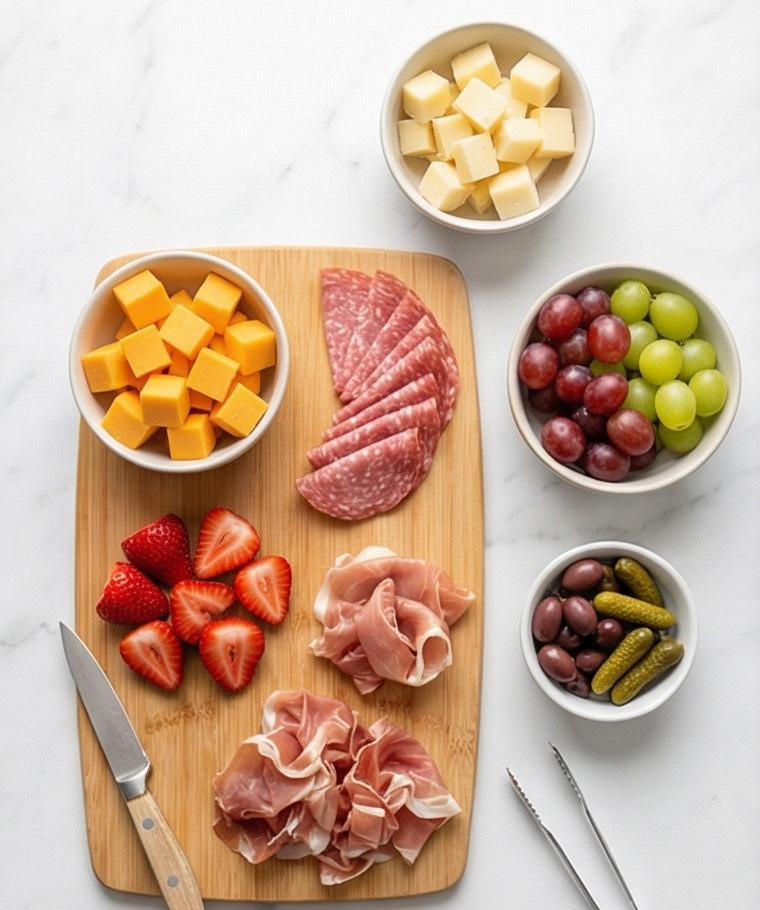
On a clean cutting board, cut the sharp cheddar and the gouda/manchego into tidy 1/2-inch cubes and place each cheese in its own small bowl so flavors remain distinct. Stack the salami and fold each slice into quarters for compact, fan-like bites; place them in a separate bowl. Tear prosciutto into 2–3 long ribbons and gently ruffle or loosely coil them on a plate to preserve their delicate texture. Thoroughly wash grapes and strawberries under cool running water, then dry every piece completely on towels — halve the strawberries lengthwise and remove blemished fruit. Drain the olives and cornichons and pat them bone-dry on paper towels. Arrange these prepped components in matching small ceramic bowls or plates so each ingredient’s texture and color reads clearly before assembly.
Step 3: Build the skewers
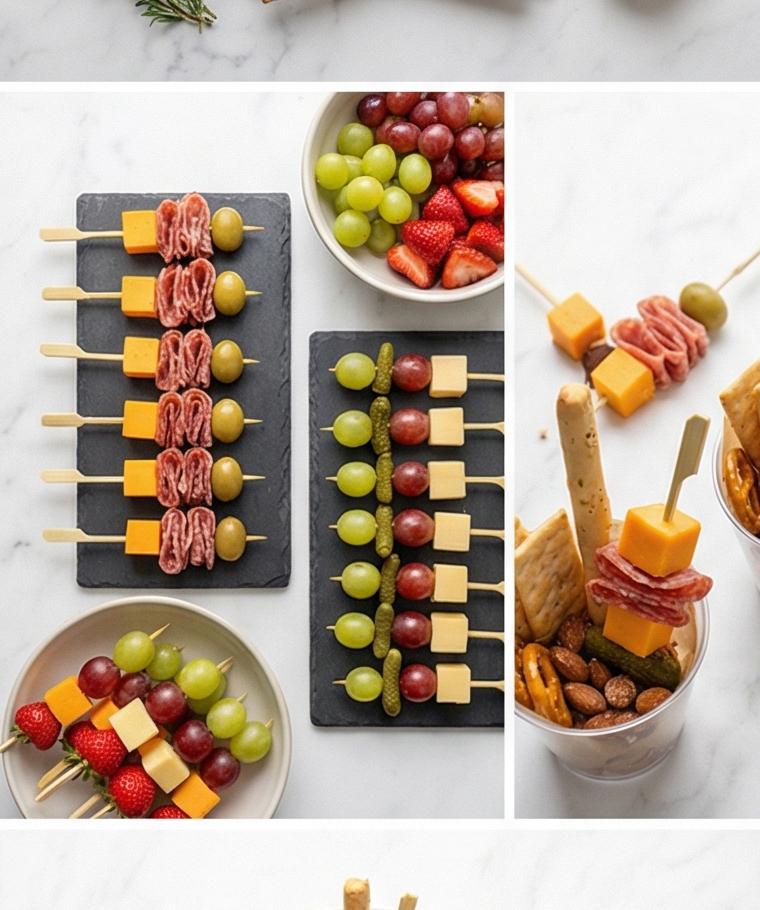
Thread the first style of skewer with one cheddar cube, one folded salami quarter and one olive, leaving about an inch of bare skewer at the bottom for handling; make twelve. For the second style, thread a gouda/manchego cube, one seedless grape and one cornichon onto another set of bamboo skewers, again leaving the bottom exposed; make twelve. If you like, make a third fruit-only skewer by pairing a strawberry half with a grape on remaining sticks. Arrange finished skewers neatly on a rectangular dish or stood upright in a shallow bowl so their shapes and juxtapositions are obvious — glossy fruit skins, matte cheese cubes, dry salami folds and briny olives should all be visible.
Step 4: Build the crunchy base and nest the meats
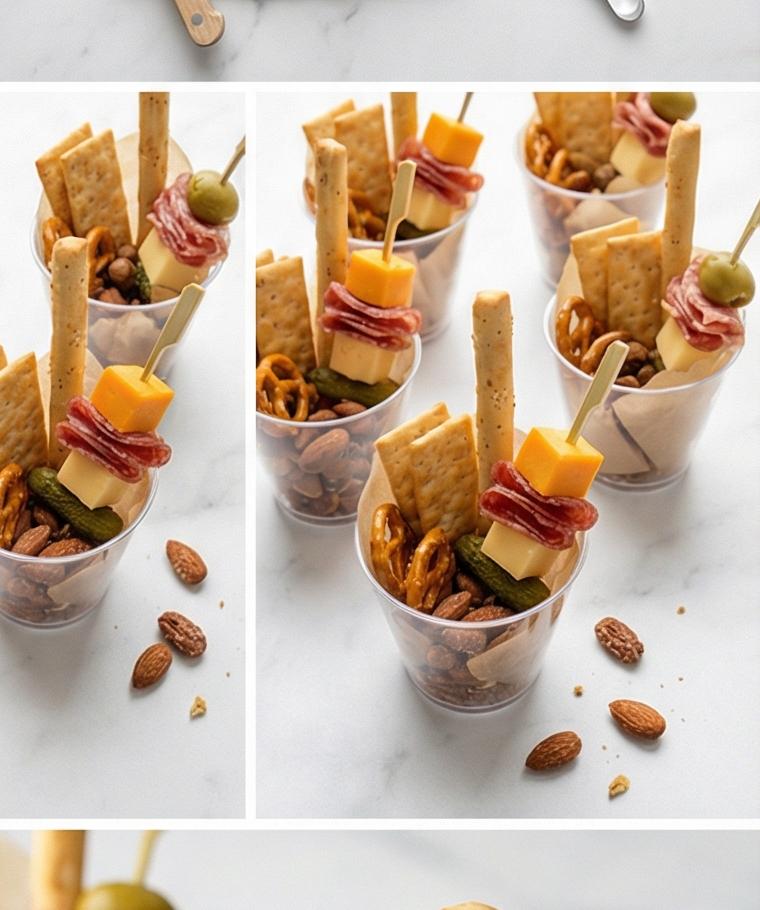
Create a crunchy foundation inside each lined cup: add about a tablespoon of roasted salted almonds and a teaspoon of candied nuts into the bottom of every cup. Add the starch layer next from the cracker and pretzel bowls, slipping pieces upright around the cup’s edge so they’re visible and easy to grab. Coil or ruffle a prosciutto ribbon into a small rosette and tuck one into each cup above the crackers and nuts so the silky meat peeks out like a soft flower. Slide one or two broken breadstick halves vertically into each cup to introduce height and movement. With this base in place the cups are stable and ready to accept skewers.
Step 5: Insert skewers, finish with fruit and herbs, portion condiments
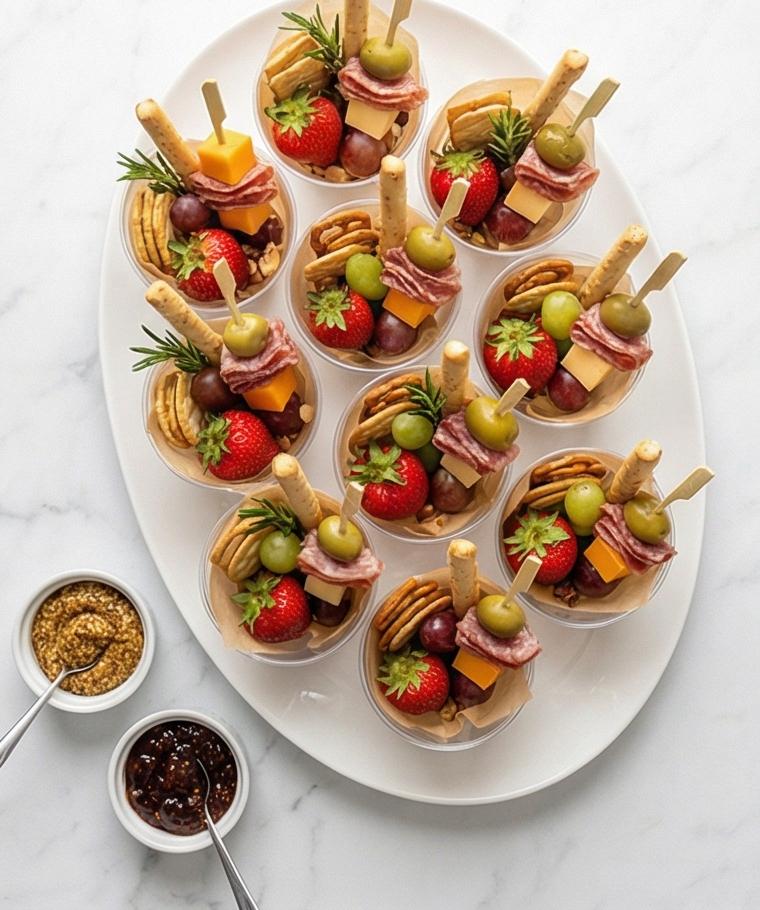
Seat one cheddar–salami–olive skewer and one cheese–grape–cornichon skewer upright in each cup, angling them to fan slightly and to avoid tipping. Add a fruit-focused skewer to each cup or tuck in an extra strawberry half and a few loose grapes for color and freshness. Tuck a small fresh rosemary sprig (and optional thyme) into the back or side of each cup, anchoring the stem among the nuts or crackers so the herb stands upright. Transfer chilled whole-grain mustard and fig jam or honey into two small serving ramekins and position them nearby with tiny spreaders. If the room is warm, arrange completed cups on a platter set over a shallow bed of crushed ice to keep everything cool until service.
Step 6: Serve and safeguard — the guest-ready cup
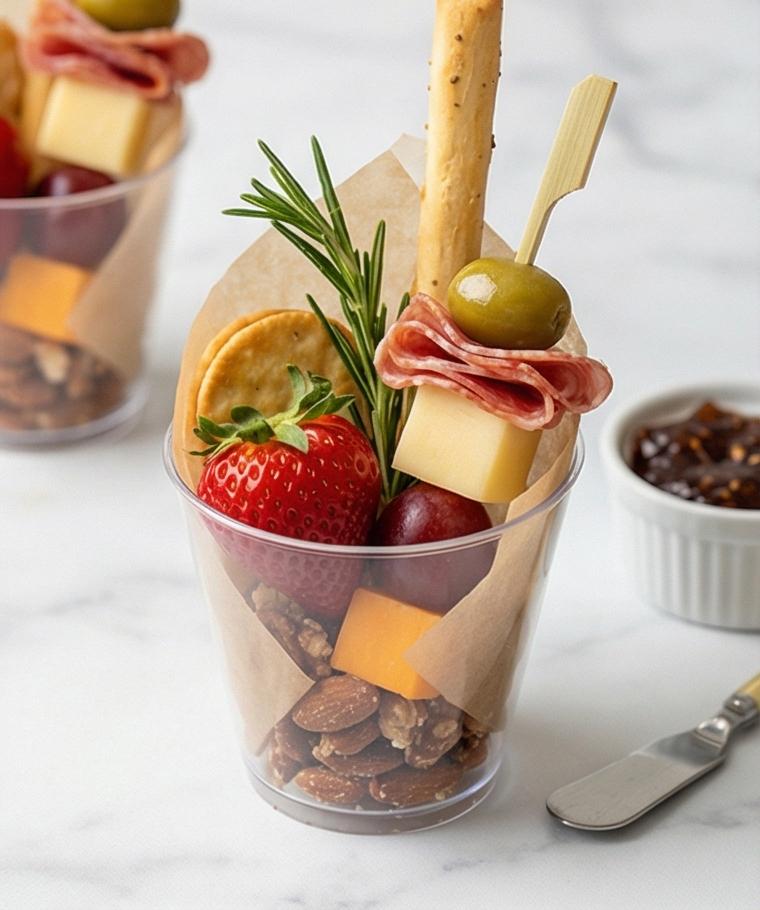
Present one charcuterie board cup per person as an individual appetizer: encourage guests to start with crisp items on top and add a small dollop of mustard or fig jam to meats and cheeses as they wish. For food safety, do not leave assembled cups at room temperature beyond recommended times and refrigerate any leftovers promptly. Plate a single, finished cup for service showing the layered textures — crunchy nuts and crackers at the base, silky prosciutto, compact cheese cubes, glossy fruit and briny accents, tall breadsticks and an aromatic rosemary sprig as the crown.
Making It Your Own
I often vary the Charcuterie Board Cups Recipe by season. In summer I lean into stone fruit or fresh figs instead of strawberries; the cups feel bright and summery. In colder months I swap grapes for pear slices and use apricot jam in place of fig jam for warmth.
For dietary changes, try vegetarian cups: replace meats with marinated grilled vegetables or smoked tofu and use nut-free crunch like baked chickpeas if needed.
Regional twists are fun: add spicy chorizo and manchego for a Spanish nod, or swap in smoked gouda and pickled jalapenos for a Texas-friendly version.
How to Serve
When I host, I line up a platter of finished Charcuterie Board Cups Recipe arranged by color and height so guests can grab what they like. For a small party of six, one cup each plus a shared board works great. For larger buffets, set them in groups of four on trays across the table to avoid crowding.
If you want a plated first course, place a cup on a small salad plate with a linen napkin and a tiny bread knife. For cocktail hours, keep cups on ice and refresh herbs every 30 to 45 minutes to preserve appearance.
Storage and Reheating Tips
These cups are best enjoyed fresh. Store any assembled cups in an airtight container in the refrigerator and eat within 24 hours to keep crackers from softening. If you must hold them longer, pack toasted elements separately and assemble just before serving.
Reheating is not necessary since this is a cold appetizer, but if you warm a component like nuts briefly to intensify flavor, let them cool completely before returning them to the cups so chilled ingredients stay safe.
Common Mistakes and How to Avoid Them
One frequent mistake is overfilling cups so skewers tip and presentation collapses. Keep the base shallow and use two skewers per cup for balance. Another is mixing wet ingredients with crackers too early; line cups or keep crunchy elements separate until last minute.
Also avoid uneven cheese cubes. Cut uniform 1/2-inch cubes so skewers sit straight and the finished cups look polished. A little mise en place goes a long way.
Final Thoughts
Give this Charcuterie Board Cups Recipe a try the next time you want something festive without fuss. It brings variety, color and flavor to any gathering and is easy to scale. I think you will love how quickly it becomes a party staple.
Frequently Asked Questions.
- Can I make the Charcuterie Board Cups Recipe ahead of time? Yes, you can prep the components ahead and assemble cups up to 2 hours before serving; keep them chilled.
- What can I use instead of prosciutto? Try Serrano ham, Serrano or thinly sliced smoked turkey for a lighter option.
- How long will leftovers keep? Store in an airtight container in the refrigerator and eat within 24 hours for best texture.
- Can I make these nut-free? Yes, replace nuts with roasted chickpeas or extra crackers to avoid tree nuts.
- Are the cups suitable for outdoor parties? Yes, but keep them on ice and out of direct sun to prevent spoilage.
Charcuterie Board Cups Recipe
Make Charcuterie Board Cups Recipe for easy, individual appetizers that wow guests and are simple to assemble.
Ingredients
Instructions
Step 1: Chill perishables and prepare the cups
Keep all perishable components refrigerated until the moment you start assembling so cheeses, meats and fruit stay firm and bright. If you’re using parchment or decorative muffin liners, press one into the bottom of each clear 9-ounce plastic cup now — the liner will absorb any stray moisture and keep crackers and pretzels crisp. Lay out the clean cups in neat rows on the marble surface so they’re within easy reach during assembly; this small staging step keeps the flow calm and efficient.
Step 2: Cut, fold, wash and dry — mise for assembly
On a clean cutting board, cut the sharp cheddar and the gouda/manchego into tidy 1/2-inch cubes and place each cheese in its own small bowl so flavors remain distinct. Stack the salami and fold each slice into quarters for compact, fan-like bites; place them in a separate bowl. Tear prosciutto into 2–3 long ribbons and gently ruffle or loosely coil them on a plate to preserve their delicate texture. Thoroughly wash grapes and strawberries under cool running water, then dry every piece completely on towels — halve the strawberries lengthwise and remove blemished fruit. Drain the olives and cornichons and pat them bone-dry on paper towels. Arrange these prepped components in matching small ceramic bowls or plates so each ingredient’s texture and color reads clearly before assembly.
Step 3: Build the skewers
Thread the first style of skewer with one cheddar cube, one folded salami quarter and one olive, leaving about an inch of bare skewer at the bottom for handling; make twelve. For the second style, thread a gouda/manchego cube, one seedless grape and one cornichon onto another set of bamboo skewers, again leaving the bottom exposed; make twelve. If you like, make a third fruit-only skewer by pairing a strawberry half with a grape on remaining sticks. Arrange finished skewers neatly on a rectangular dish or stood upright in a shallow bowl so their shapes and juxtapositions are obvious — glossy fruit skins, matte cheese cubes, dry salami folds and briny olives should all be visible.
Step 4: Build the crunchy base and nest the meats
Create a crunchy foundation inside each lined cup: add about a tablespoon of roasted salted almonds and a teaspoon of candied nuts into the bottom of every cup. Add the starch layer next from the cracker and pretzel bowls, slipping pieces upright around the cup’s edge so they’re visible and easy to grab. Coil or ruffle a prosciutto ribbon into a small rosette and tuck one into each cup above the crackers and nuts so the silky meat peeks out like a soft flower. Slide one or two broken breadstick halves vertically into each cup to introduce height and movement. With this base in place the cups are stable and ready to accept skewers.
Step 5: Insert skewers, finish with fruit and herbs, portion condiments
Seat one cheddar–salami–olive skewer and one cheese–grape–cornichon skewer upright in each cup, angling them to fan slightly and to avoid tipping. Add a fruit-focused skewer to each cup or tuck in an extra strawberry half and a few loose grapes for color and freshness. Tuck a small fresh rosemary sprig (and optional thyme) into the back or side of each cup, anchoring the stem among the nuts or crackers so the herb stands upright. Transfer chilled whole-grain mustard and fig jam or honey into two small serving ramekins and position them nearby with tiny spreaders. If the room is warm, arrange completed cups on a platter set over a shallow bed of crushed ice to keep everything cool until service.
Step 6: Serve and safeguard — the guest-ready cup
Present one charcuterie board cup per person as an individual appetizer: encourage guests to start with crisp items on top and add a small dollop of mustard or fig jam to meats and cheeses as they wish. For food safety, do not leave assembled cups at room temperature beyond recommended times and refrigerate any leftovers promptly. Plate a single, finished cup for service showing the layered textures — crunchy nuts and crackers at the base, silky prosciutto, compact cheese cubes, glossy fruit and briny accents, tall breadsticks and an aromatic rosemary sprig as the crown.
Notes
- Keep crunchy elements separate until assembly to avoid sogginess.
- Use uniform 1/2-inch cheese cubes for neat skewers.
- Keep cups chilled on crushed ice for warm-weather service.
- Prep components ahead and assemble within 2 hours of serving for best texture.
- Substitute ingredients for dietary needs: grilled vegetables for vegetarian cups.